


Key Takeaways
- 01 Capital discipline is reshaping commodity supply curves into 2026.
- 02 AI infrastructure capex is becoming a primary macro variable.
- 03 Central bank policy across AU, CA and US is converging on neutral.
ASX lithium stocks are under fresh pressure this month, for reasons that go beyond one weak week. Liontown Resources Ltd (ASX: LTR), Pilbara Minerals Ltd (ASX: PLS) and IGO Ltd (ASX: IGO) slipped over the past month. Core Lithium Ltd (ASX: CXO) and Mineral Resources Ltd (ASX: MIN) recorded similar losses in that same window. Behind all of it sits one main cause: a sharp reversal in lithium carbonate prices after months of gains.
Lithium Carbonate Prices Retreat After A Rapid Run-Up
- Lithium carbonate prices are still up seventy-nine per cent compared with a year ago
- Prices have dropped thirty-four per cent from their multi-year high in mid-May
- That decline sped up further, dropping seventeen per cent since the first of September
- Higher prices earlier this year pushed miners to increase output, which now looks like oversupply
That price pullback explains most of the share price weakness across ASX lithium stocks this month.
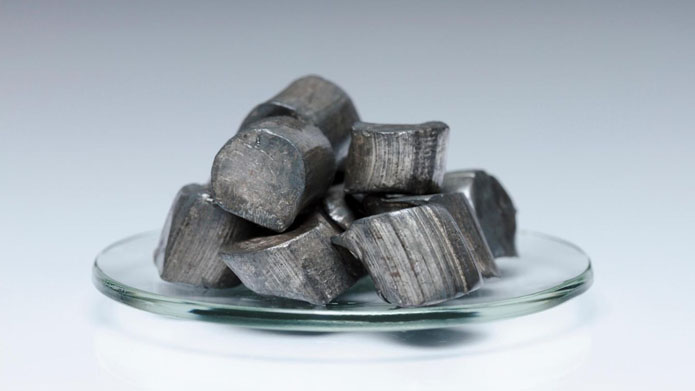
Figure 1: Raw lithium metal pieces on a laboratory dish [Courtesy: eTimes]
Sodium Ion Batteries Could Chip Away At Lithium’s Market Share
- CATL Australia chairman John Kwon raised this at the Australian Financial Review Asia Summit
- He said sodium-ion battery prices could be similar to lithium-ion prices by early 2027
- Kwon added that he still thinks lithium batteries are the better choice for electric vehicles
- He said sodium batteries could suit data centre storage better, since they handle temperature swings well
- Kwon forecast that sodium batteries would become commercially available across Australia by the middle of 2027
Kwon told the summit that sodium-ion technology is shifting from development into commercial deployment: “Sodium-ion is now moving from development towards commercial deployment.”
Global Investment In Battery Metals Has Pulled Back Sharply
Investment in critical minerals fell nine per cent in 2025, the first real drop since 2020. That figure comes from the International Energy Agency’s Global Critical Minerals Outlook 2025 report. Companies focused on lithium, nickel and cobalt drove that decline, cutting their combined investment by around twenty per cent.
Lithium specialists alone cut their investment by close to forty per cent over the same year. Copper-focused companies moved in the opposite direction, lifting their investment by around eight per cent.
| Company Focus | Investment Change (2025) |
| Battery metals (lithium, nickel, cobalt) | Down about 20% |
| Lithium specialists | Down about 40% |
| Copper-focused companies | Up about 8% |
| Overall critical minerals | Down 9% |
Lithium Demand Is Still Forecast To Triple By 2040
The pullback in prices and spending does not mean lithium demand itself is fading away. Under the IEA’s Stated Policy Scenario (STEPS), lithium demand is expected to more than triple by 2040. Lithium demand is growing faster than any other energy mineral the report tracks.
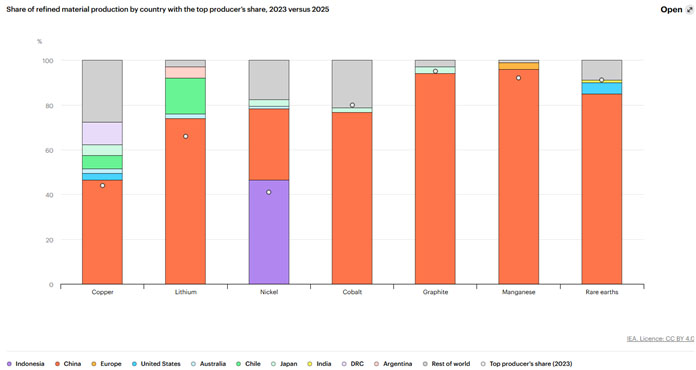
Figure 2: Country level concentration in refined battery metal production across copper, lithium, nickel and other key minerals [Courtesy: IEA]
Global battery demand jumped by more than thirty-five per cent in 2025, passing 1.5 terawatt-hours. Battery storage is now one of the biggest single drivers behind that overall demand growth. Energy-related uses accounted for around seventy-five per cent of all mineral demand growth in 2025.
Mining Growth Is Outpacing Refining Capacity
The IEA’s project pipeline shows a clear gap between mining capacity and refining capacity for lithium. Lithium mining capacity outside the top refiners is expanding faster than refining capacity in the same regions.
Cathode material production capacity is growing even more slowly than either mining or basic refining. This trend is replicated across rare earths, graphite, nickel and cobalt. That gap could be an issue for ASX lithium stocks tied to processing and not extraction over the decade ahead.
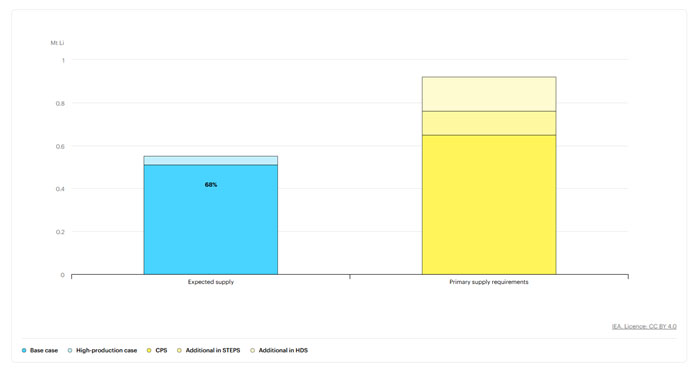
Figure 3: Projected lithium mine supply against primary demand requirements to 2035 [Courtesy: IEA]
Why It Matters For ASX Lithium Investors
This squeeze shows how fast sentiment can turn once supply finally catches up with prices. It also shows that lithium’s long-term demand story and its short-term price cycle are separate things.
Investors watching ASX lithium stocks are now living through a top lithium miners reset, and need to separate that structural growth case from today’s earnings pressure.
Top ASX Lithium Miners Show Sharp One-Month Declines
Share prices below reflect the year and month to 17 September 2026, drawn from External Sources.
| Company | 1 Year Change | 1 Month Change |
| All Ordinaries Index (ASX: XAO) | Down 2.1% | Down 4.0% |
| Liontown Resources Ltd (ASX: LTR) | Up 12.2% | Down 22.3% |
| Pilbara Minerals Ltd (ASX: PLS) | Up 85.2% | Down 17.9% |
| IGO Ltd (ASX: IGO) | Up 40.7% | Down 17.4% |
| Core Lithium Ltd (ASX: CXO) | Up 224.6% | Down 6.1% |
| Mineral Resources Ltd (ASX: MIN) | Up 41.7% | Down 19.0% |
Key Risks Facing The Sector
Price swings in commodities remain the biggest worry. Lithium prices are still up sharply over the year, but the recent monthly slide shows how fast that can reverse. If companies keep increasing output quicker than buyers use it, then there may be too much supply. In that case, prices could slide further.
Sodium-ion competition remains early-stage but adds genuine long-term uncertainty. Funding costs and project execution risk also remain relevant across the wider lithium sector.
Future Direction And Impact On ASX Lithium Investors
Mining Herald will keep tracking how these two forces play out across the ASX lithium sector.
- Kwon’s mid-2027 timeline for sodium batteries is CATL’s own forecast, not yet a confirmed reality.
- Lithium prices need to stabilise before ASX lithium stocks can recover from this month’s sharp declines.
- Watch for fresh CATL updates on sodium battery commercialisation over the coming quarters.
- Any updated production guidance from Australian lithium producers will matter for near-term earnings.
- Wider refining capacity growth remains the key structural factor behind lithium’s long-term supply gap.
ALSO READ: Nickel Power Play Under Fire: EU Challenges MMG’s Strategic Grip on Anglo Assets
FAQs
Q1. What is driving the pressure on ASX lithium stocks right now?
Ans. A sharp reversal in lithium carbonate prices, combined with early signs of sodium battery competition.
Q2. How much have lithium prices fallen since their peak?
Ans. Lithium carbonate prices have dropped thirty-four per cent from their mid-May high.
Q3. Could sodium batteries replace lithium batteries entirely?
Ans. Kwon expects lithium to remain the stronger choice for electric vehicles, even as sodium grows elsewhere.
Q4. When could sodium batteries become commercially available in Australia?
Ans. CATL is targeting mid 2027 for commercial sodium battery availability across the Australian market.
Disclaimer
This article is intended for informational purposes only. If you pay attention to the ASX lithium sector as an investor, all data in this content is from third-party sources. Please check out the complete share price and market data info. Investing carries a high risk, and you should only invest at your own risk. Mining Herald has no involvement in the above-listed companies.
Filed under

About the author
Jonathon Brown
Jonathon Brown began his career as a broadcaster, working across markets in British Columbia before moving into financial journalism. Since 2017, he has specialised in stock market reporting, covering emerging companies across the healthcare, technology, mining and consumer sectors. He brings more than 15 years' experience to his reporting. A graduate of Vancouver Island University and the British Columbia Institute of Technology, Jonathon is focused on delivering clear, balanced reporting for investors.