
Key Takeaways
- 01 Capital discipline is reshaping commodity supply curves into 2026.
- 02 AI infrastructure capex is becoming a primary macro variable.
- 03 Central bank policy across AU, CA and US is converging on neutral.
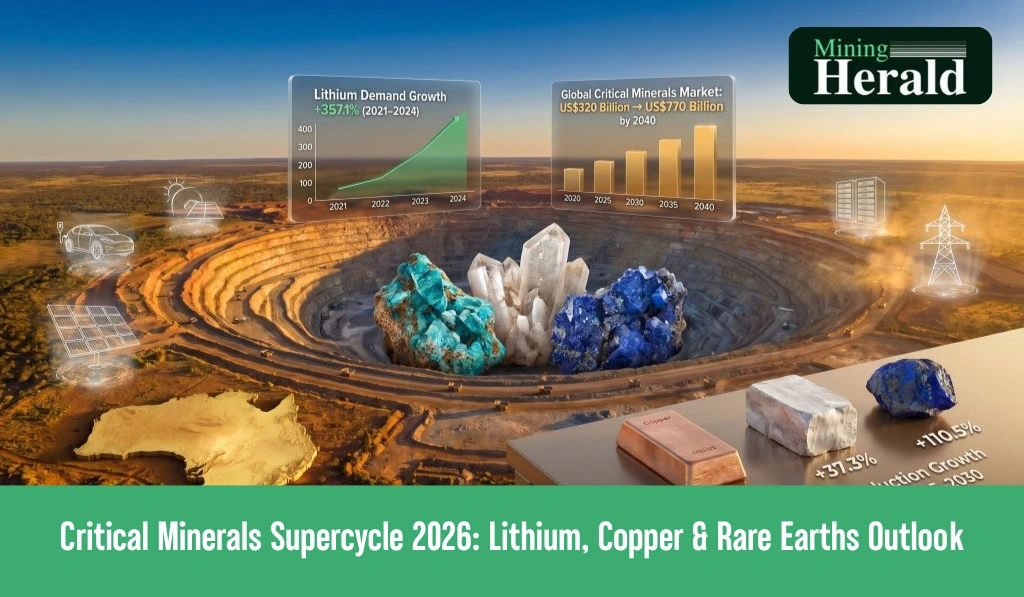
The Critical Minerals Supercycle concept rests on a gap between the demand from the industry and the time taken to build mines. As demand increases, battery manufacture, the electrical grid and digital infrastructure need materials that often can’t come fast enough.
The March 2026 reference assessment describes these forces as the foundations of a sustained mining cycle. Its outlook extends into the 2030s, although that remains a forecast rather than a confirmed sequence of rising prices.
For investors, the distinction matters. Growing demand can support development without making every deposit profitable. Lithium’s recent oversupply concerns show why a favourable long-term theme can coexist with difficult conditions for individual producers.
What Is Driving the Supercycle Argument
Several sources of demand underpin the reference assessment:
- Renewable generation: Wind and solar deployment require materials for equipment and electrical connections.
- Grid modernisation: Expanding electricity networks adds another source of copper consumption.
- AI infrastructure: Data centres require electricity supply and distribution systems, increasing attention on copper availability.
These uses overlap, but they do not affect every commodity equally. Copper has broad exposure to electrification, while lithium is closely connected to batteries and certain rare earth elements serve permanent-magnet applications.
The International Energy Agency’s overview of critical minerals in energy technologies provides supplementary context for those different roles.
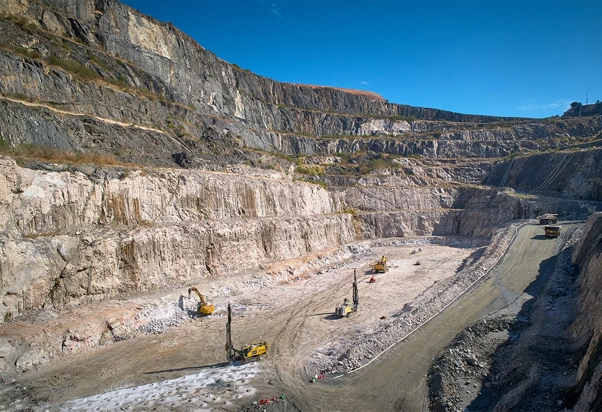
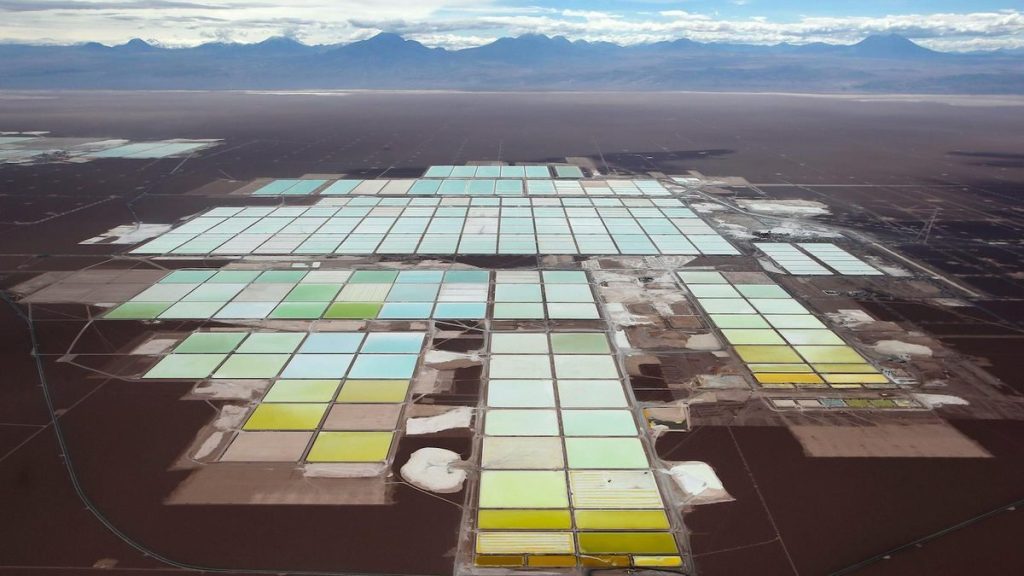
Figure 1: Open-pit workings at Greenbushes, Western Australia, lithium mining infrastructure. Image credit: Macmahon.
How Copper Connects the Main Demand Themes
Copper links several parts of the transition through its electrical applications. The reference identifies EV wiring, charging infrastructure, renewable generation and data centres as contributors to demand.
Its March assessment projects global copper consumption growth of 3–4% annually through 2030. That figure should be treated as the reference’s forecast, rather than a guaranteed outcome.
AI adds another demand channel to an existing electrification story. The significance lies in the infrastructure required to power computing facilities, alongside the equipment installed inside them.
The reference argues that new supply may struggle to keep pace. For investors, the useful follow-up is whether mine development and expansion schedules support that expectation.
A demand forecast alone cannot establish the size or timing of a future deficit.
Where Rare Earths Differ From Battery Metals
Rare earths enter the outlook primarily through permanent magnets used in EV motors and wind turbines.
The reference places particular emphasis on processing concentration and efforts to establish alternative supply chains. This means the investment discussion extends beyond finding mineral deposits.
A mine development must be considered alongside the processing route required to produce material customers can use. The existence of a resource does not by itself establish a complete supply chain.
For the Critical Minerals Supercycle, this creates a different challenge from simply increasing extraction. Companies must demonstrate how their projects fit into downstream production.
Readers can consult the US Geological Survey’s mineral commodity summaries for supplementary commodity background.
How the Three Markets Compare
The reference’s arguments can be separated into three investment questions:
| Mineral | Demand Connection | Main Question for Producers |
| Lithium | EV batteries and stationary storage | Can output grow without prolonged oversupply? |
| Copper | Electrification, networks and data centres | Can new production keep pace with consumption? |
| Rare earths | Permanent magnets | Can projects connect extraction with viable processing? |
This comparison helps explain why the Lithium Copper Rare Earths Outlook should be assessed commodity by commodity.
Exposure to the same industrial trends does not imply identical pricing, financing or development conditions. Producers and explorers also face different decisions depending on their stage of development.
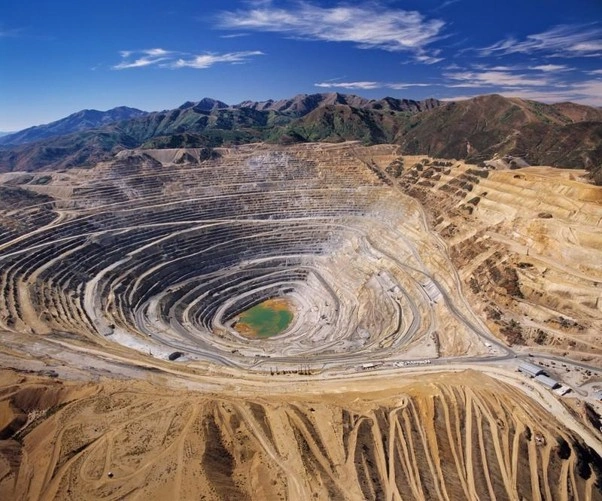
Figure 2: Bingham Canyon copper mine in Utah, illustrating the scale of open-pit copper extraction. Image source: Clio.
What Could Interrupt the Investment Case
The Minerals Market Forecast 2026 needs to account for several risks:
- Commodity oversupply: Additional capacity can pressure prices despite rising consumption.
- Development delays: Permitting and community issues can extend schedules.
- Processing concentration: Restrictions or disruptions can affect access to materials.
- Technology changes: Battery chemistry choices can alter demand between minerals.
- Financing constraints: Junior companies may struggle to fund development during weaker markets.
These risks can occur together. A delayed project may require more financing just as commodity prices weaken, changing its commercial prospects even if the broader demand theme remains intact.
How This Cycle Compares With Earlier Mining Booms
The reference contrasts the current investment thesis with the China-led commodity expansion of the 2000s.
There are similarities too: expectations of future shortages can attract capital, encourage exploration and support development proposals.
The lesson is to examine delivery alongside enthusiasm. A broader demand base may support the sector, but it does not remove commodity cycles or the consequences of investing at an unsuitable cost.
What Industry Readers Should Watch Next
Company reporting can help test the wider thesis:
- Development progress: Are projects meeting their stated milestones?
- Funding readiness: Is capital available for the next stage?
- Processing evidence: Can the proposed route deliver a saleable product?
- Commercial relationships: Are partnerships helping projects advance?
- Cost discipline: Do operating assumptions remain workable through price corrections?
These questions turn a sector narrative into a project assessment. They are particularly useful when comparing companies at different stages, from exploration through to established production.
What Happens Next
The Critical Minerals Supercycle remains a case for sustained demand and investment, rather than a promise of uniform returns.
The March reference expects the transition to develop over several phases. Actual outcomes will depend on technology adoption, supply additions and the ability of companies to finance and operate their projects.
For mining readers, those developments matter more than the label attached to the cycle.
Also Read: Why Critical Minerals Are Key to the Global Energy Transition
FAQ
Q1. Does a supercycle mean prices rise continuously?
No. Corrections and commodity-specific oversupply can occur.
Q2. Why is copper linked to AI?
Data centres require electrical infrastructure.
Q3. What distinguishes rare earths?
Processing access is central to their supply-chain outlook.
Q4. Is lithium demand tied only to vehicles?
No. Grid storage also contributes.
Disclaimer
Prepared for Mining Herald for informational purposes only. This article does not constitute investment advice. The outlook reflects the supplied March 2026 reference, rather than live market conditions. Readers are advised to do their own independent research of business filings and market information before making any investment choices.
Filed under
About the author
Hasan MH
Senior markets editor at Mining Herald. Covers resources, macro and corporate strategy across Australia and North America with two decades of capital markets experience.