


Key Takeaways
- 01 Capital discipline is reshaping commodity supply curves into 2026.
- 02 AI infrastructure capex is becoming a primary macro variable.
- 03 Central bank policy across AU, CA and US is converging on neutral.
Mining shares on the ASX fell after fresh talk of higher rates. Investors looked cautious, and the mood turned soft across local markets. The ASX 200 dropped 77.40 points, down 0.88%, to finish at 8672.50. The All Ordinaries also eased, down 74.60 points, or 0.84%, closing at 8849.30.
On Tuesday, six of the 11 sectors ended the day in the red. Materials and financial stocks were among the weakest areas. The Australian dollar slid versus the US greenback. It traded at 71.19 US cents. Overall, the day showed stronger strain for big resource firms and major bank names.
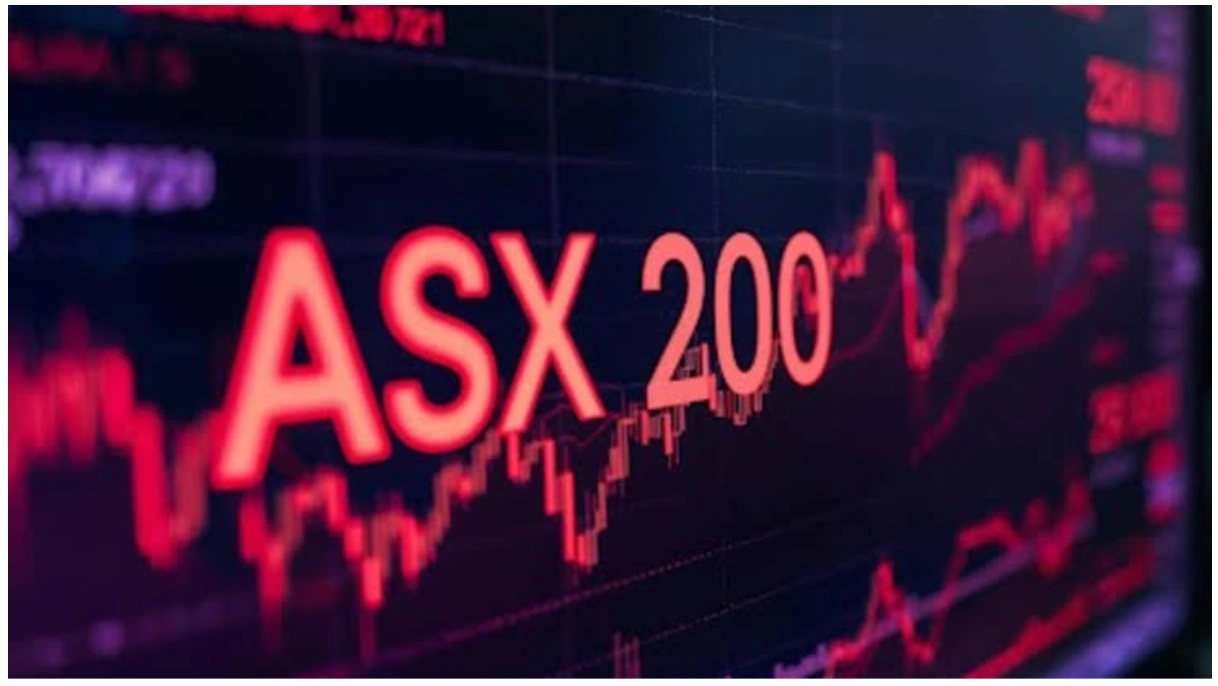 The ASX 200 dropped 0.88 per cent as resource and financial stocks took a hit. [Courtesy: The Australian]
Mining Heavyweights Drag The Benchmark Lower
There was strong price pressure from major Australian miners. BHP shares dropped 2.21 per cent to $59.25, while Rio Tinto fell 2.20 per cent to $164.50.
Fortescue also gave back 1.88 per cent to $16.22. The weakness was a general sell-off of heavyweight material stocks. Global bond yields were also higher, and oil prices were also on the rise for investors.
These developments made people worry about interest rates and the costs of business. The selling pressure thus spread beyond the companies themselves to the broader market sentiment.
The major mining and financial transactions were:
- BHP shares dropped 2.21 per cent to $59.25
- Rio Tinto fell 2.20 per cent to $164.50
- Fortescue declined 1.88 per cent to $16.22
- The share price of the Commonwealth Bank fell 1.59 per cent to $152.50
- National Australia Bank, which had been the biggest hitter in the group, dipped 1.29 per cent to $38.22
- Westpac slipped 0.52 per cent to $34.35
- ANZ declined 1.12 per cent to $37.12
Rate Hike Fears Rise With Higher Bond Yields
The US 10-year yield climbed to over 5.02 per cent, raising rate-hike concerns. Yield hit an all-time high since 2007 Tuesday afternoon in Asia.
IG senior market analyst Tony Sycamore described the market performance as a “horror show”. He attributed the weakness to the increase in interest rates and the general monetary tightening issues.
The developments occurred before the Federal Reserve and Bank of Japan were expected to raise rates. The ECB’s decision last week further fueled the anticipation of further tightening.
 Higher U.S. Treasury yields and rate hike worries weighed on all interest-sensitive U.S. shares. [Courtesy: WSJ]
Oil Price Surge Impact Hits Resource Sector
During trading on Tuesday, the oil price surge impact was added to the list of concerns in the market. The price of Brent Crude futures rose above $US107 ($A150.26) a barrel.
The action was a response to the ongoing fighting in the vital Strait of Hormuz and the Red Sea. The higher energy prices can lead to cost pressure in both the economy and in businesses.
Higher oil prices and bond yields added to the uncertainty for investors. This news was yet another negative for resource stocks and Australian equities overall.
The market scenario was characterised by various opposing dynamics:
- Brent Crude futures advanced to more than $US107 ($A150.26) per barrel.
- The ASX 200 fell 77.40 points to 8672.50
- All Ords fell 74.60 points to 8849.30
- CSL gained 1.57 per cent to $174.26
- ResMed soared 2.85 per cent to $31.37
- Sonic Healthcare rose by 1.57 per cent to $19.35
Company Moves Add Further Market Signals
Other company moves also influenced the trading session. Nickel Industries tumbled 1.26 per cent to $0.78.
Dry conditions impacted the company’s water supply, the company warned. It is expecting a 30 per cent drop in output. New Hope Coal, on the other hand, rose 3.03 per cent to $6.47. Its sales increased by 11.8 per cent.
Net profit after tax increased to $161m in 2026, however. This is compared to $439.4m in the previous year. The results were contrasting, indicating different conditions for resource companies.
 Australian resource stocks ranged from positive to negative as the company-specific news played out. [Courtesy: The Economic Times]
What The ASX Mining Selloff Means For Investors
The recent session saw various influences on ASX mining stocks. The higher bond yields added to the pressure on rate-sensitive stocks.
An increase in oil prices brought another layer of economic uncertainty. The ASX 200 also covered ground last week, dropping 264 points. The index fell 4.50 per cent for the month to the 50 per cent mark.
A relief for the healthcare stocks. Telix Pharmaceuticals shot up by 8.63 per cent to $17.75 on the back of US FDA approval of Pixclara. Zip also gained 2.38 per cent to $2.15.
The following are the immediate factors that create markets:
- Shares sensitive to rates were under pressure due to fears of further rate hikes.
- Favourable harvests pushed pressures higher throughout the equities.
- The price of oil rose above $US107 per barrel.
- Heavyweight miners weighed on the ASX 200.
- Nickel Industries had predicted a 30 per cent cut in production.
- New Hope Coal is up after reporting sales growth of 11.8 per cent.
- Zip has started its announced share buyback program of $50m.
For more such insights, please visit Mining Herald.
Also Read: BHP’s Climate and Safety Priorities Take Centre Stage at ESG Roundtable
FAQs
Q1. What happened to ASX mining stocks on Tuesday?
A1: Shares in ASX mining stocks edged down. Bond yields rose, and that weighed on the sector. Some traders also feared another rate hike. Oil prices were stronger too. BHP, Rio Tinto, and Fortescue all ended the session lower.
Q2. What did oil do during the day?
A2: Brent Crude futures moved over US$107 a barrel. That is roughly A$150.26. The higher oil price fed fresh worries about inflation. People also pointed to added pressure on the wider economy.
Q3. Who warned that output could fall?
A3: Nickel Industries said dry conditions hurt its water supply. It added that production may drop by 30%.
Disclaimer
The information provided in this article is derived from a NewsWire article dated September 15, 2026, and does not represent all the facts regarding the market. Any figures, share prices, percentages, production guidance and financial results are reproduced without any changes. The value of the components in a stock may fluctuate rapidly, and history is not a reliable predictor of future results. This is an informational article only and does not constitute any financial, investment, trading, legal advice or taxation advice for any reader.
Source Links
Filed under

About the author
Jonathon Brown
Jonathon Brown began his career as a broadcaster, working across markets in British Columbia before moving into financial journalism. Since 2017, he has specialised in stock market reporting, covering emerging companies across the healthcare, technology, mining and consumer sectors. He brings more than 15 years' experience to his reporting. A graduate of Vancouver Island University and the British Columbia Institute of Technology, Jonathon is focused on delivering clear, balanced reporting for investors.