

Key Takeaways
- 01 Capital discipline is reshaping commodity supply curves into 2026.
- 02 AI infrastructure capex is becoming a primary macro variable.
- 03 Central bank policy across AU, CA and US is converging on neutral.
The EV revolution lithium mining story is entering a period where demand growth and production discipline matter equally. Electric vehicles need battery materials, but expanding supply means miners cannot assume that increasing consumption will deliver continuously rising prices.
The June 2026 Resources and Energy Quarterly projects growth across both sides of the market. Australia is expected to remain the largest supplier of extracted lithium, while Argentina gains market share as brine projects enter production.
For mining companies and investors, the question is which operations can deliver that additional supply commercially. The report presents an expanding industry, with different outcomes for established mines, new developments and processing facilities.
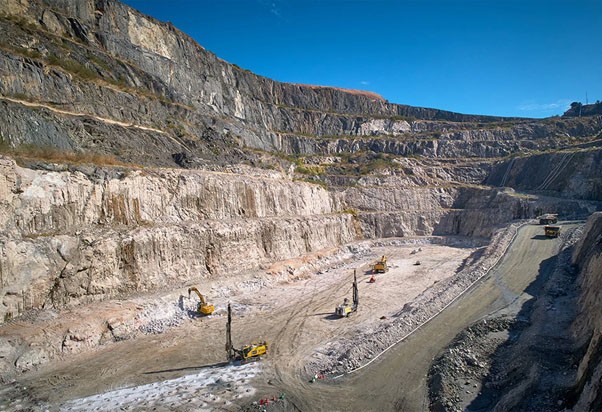
Figure 1: Open-pit workings at Greenbushes in Western Australia. Image credit: Macmahon.
Where Additional Lithium Supply Is Expected
The report identifies several contributors to production growth:
- Australia: Expansions at Greenbushes and Pilgangoora are expected to support continued increases in mine output.
- Argentina: New brine operations are projected to lift the country’s share of global extraction to almost 12% by 2031.
- China: Additional brine and hard-rock projects are expected to increase extraction despite a modest decline in global market share.
- Other producers: New capacity in countries including Canada adds competition beyond the Australian and South American comparison.
The lithium mining race Australia South America therefore sits within a wider supply expansion. Neither region develops in isolation from competitors or downstream processing markets.
How Australia Plans to Retain Its Position
Australian lithium mine output is projected to grow by about 8% annually to 2031. Expansions at existing operations provide much of the expected increase.
Nevertheless, Australia’s global extraction share is projected to ease to approximately 31%. Production can rise while market share falls if competing suppliers expand faster.
| Indicator | June 2026 Report Outlook |
| Global lithium demand growth | More than 11% annually to 2031 |
| Global lithium extraction growth | Approximately 10% annually |
| Global extraction in 2031 | Almost 2.4 million tonnes LCE |
| Australian mine output growth | Approximately 8% annually |
| Australian extraction share in 2031 | Approximately 31% |
| Argentine extraction share in 2031 | Almost 12% |
The outlook also follows a difficult period. Earlier low prices prompted closures or suspensions at several Australian operations, partly offset by output from newer mines.
For company-level context, Mining Herald’s coverage of Pilbara Minerals and the lithium price rebound offers related reading.
Why Argentina Matters to South American Growth
Argentina provides the report’s clearest example of expanding South American supply. Its global extraction share is expected to roughly double as additional brine operations commence production.
One identified development is Rio Tinto’s A$3.51 billion Rincon Lithium Project. The report is proposing initial production in 2028, with a three-year ramp-up to annual capacity of 60,000 tonnes of battery-grade lithium carbonate.
The schedule shows the time lag between construction and full output. First production does not mean a project immediately operates at its planned capacity.
For investors assessing the lithium mining race Australia South America, this distinction is essential.
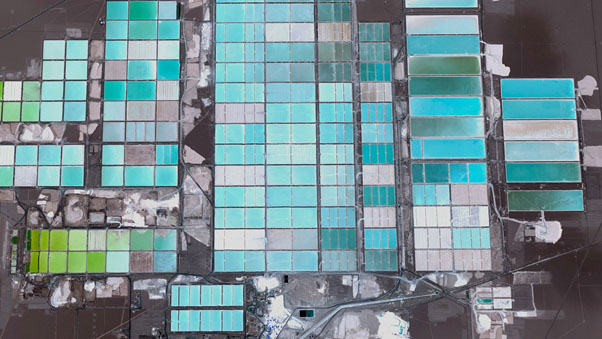
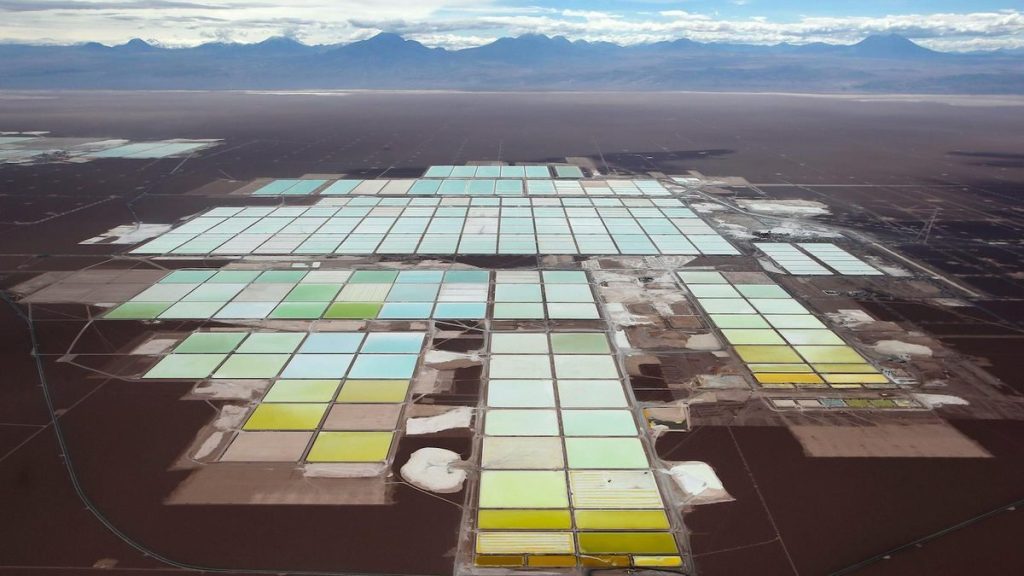
Figure 2: Satellite view of lithium evaporation ponds at Salar de Atacama, Chile. Image source: ButlerNature/Mongabay image collection.
Why Demand Growth Does Not Guarantee Higher Prices
The report’s supply outlook creates several qualifications:
- Early oversupply: Global extraction is projected to expand sufficiently to keep the market oversupplied early in the forecast period.
- Later rebalancing: Demand growth is expected to move the market back towards balance by around 2030.
- Price moderation: Additional supply is projected to bring prices down from elevated near-term levels.
- Uneven commercial outcomes: Mine expansions, restarts and new projects will enter the market at different times.
The investment implication is that volume growth and earnings growth need separate assessment. A producer can sell more material while receiving less per tonne.
How Battery Storage Broadens the Opportunity
The EV revolution lithium mining theme is more than transportation battery storage; it also provides a source of consumption so the utility of judging lithium demand by car sales alone is diminished.
Storage batteries are dominated by lithium iron phosphate chemistry. Their expansion therefore supports lithium consumption alongside EV adoption.
For producers, the demand outlook depends on several end markets developing together. Strong storage deployment may support consumption even when vehicle sales soften in particular regions, although it does not remove the risk of excess supply.
Why Export Earnings Need Careful Interpretation
Australian lithium export earnings are projected to rise from A$9.9 billion in 2025–26 to approximately A$12.5 billion in 2026–27, before moderating to A$10.0 billion in 2030–31, in real terms.
The projected decline after the peak reflects easing prices despite expanding production.
Processing also presents a mixed picture. Remaining Australian refineries are expected to increase output over time, but the report identifies Kemerton’s placement into care and maintenance as a constraint on 2026 production.
Expanding extraction therefore does not guarantee uninterrupted downstream growth. Mining and refining have distinct operating requirements and commercial outcomes.
What Industry Readers Should Watch Next
The following measures can help assess progress:
- Production delivery: Are expansions achieving planned throughput and recovery?
- Project schedules: Are construction and commissioning milestones being met?
- Market balance: Is new supply arriving faster than consumption grows?
- Demand composition: How are EV sales and stationary storage contributing?
- Realised prices: Are higher sales volumes translating into improved earnings?
These questions connect the demand narrative with measurable performance. They also help separate a sector forecast from the prospects of an individual company.
What Happens Next
The report supports continued expansion across Australia and Argentina, but also a competitive market in which supply growth restrains prices.
For EV driven lithium demand growth, the opportunity is substantial. Turning that opportunity into earnings depends on delivery, operating costs and the conditions producers encounter when new capacity becomes available.
Also Read: Why Critical Minerals Are Key to the Global Energy Transition
FAQ
Q1. Will Australia remain the largest lithium extractor?
The report projects that it will through 2031.
Q2. Which South American country is highlighted for growth?
Argentina, through additional brine production.
Q3. Does rising demand eliminate oversupply?
No. Early-period oversupply remains projected.
Q4. Are electric vehicles the only demand source?
No. Battery storage also supports consumption.
Disclaimer
Prepared for Mining Herald for informational purposes only. This is not investment advice. Forecasts based on the June 2026 report, subject to change. Readers are advised to independently verify company disclosures and market conditions before making investment decisions.
Filed under

About the author
Jonathon Brown
Jonathon Brown began his career as a broadcaster, working across markets in British Columbia before moving into financial journalism. Since 2017, he has specialised in stock market reporting, covering emerging companies across the healthcare, technology, mining and consumer sectors. He brings more than 15 years' experience to his reporting. A graduate of Vancouver Island University and the British Columbia Institute of Technology, Jonathon is focused on delivering clear, balanced reporting for investors.