


Key Takeaways
- 01 Capital discipline is reshaping commodity supply curves into 2026.
- 02 AI infrastructure capex is becoming a primary macro variable.
- 03 Central bank policy across AU, CA and US is converging on neutral.
For tens of millions of years, a spectacular secret lay buried beneath the sun-baked, crimson soils of the Australian outback. Today, Australia produces about 95 per cent of the world’s precious opal. Opal is a gemstone so deeply woven into the country’s identity that it stands as the official national gemstone of the nation.
The history of the Australian opal is a grand narrative, stretching from the ancient spiritual paths of Indigenous heritage through to a rough-and-tumble commercial boom that shaped the rugged character of modern outback towns.
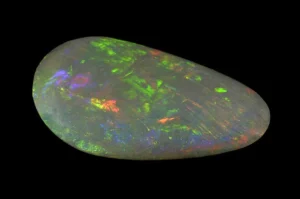
Figure: A real opal. [Source: Stuart Humphreys © Australian Museum]
Sacred Origins and Ancient Tools
Long before European boots left tracks in the dust, Indigenous Australians held a profound, sacred connection to the opal. In the Dreamtime stories of various nations, the stone’s mesmerising play-of-colour was born from the heavens.
One beautiful legend tells of the Creator riding down to Earth on a magnificent rainbow; the moment His feet touched the ground, the stones and pebbles beneath turned alive with the fiery hues of the rainbow itself.
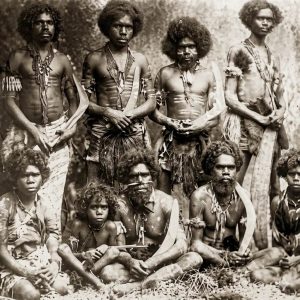
Figure: An image of Aboriginal Australians (enhanced via AI) [Source: Opal Galaxy]
Far from just a spiritual icon, the stone was part of daily ancient life. Archaeological evidence reveals that flaked opaline tools were shaped by Indigenous hands roughly 33,000 years ago. This points to a deeply rooted history of interaction with this unique mineraloid.
Early Frontiers and Colonial Discoveries
The European chapter of the opal story began in the mid-19th century, though it began rather quietly. In 1849, a German mineralogist named Johannes Menge chanced upon common opal near Angaston in South Australia’s Barossa Valley. Although these early common specimens lacked the brilliant iridescence needed to take the jewellery world by storm, they proved that the ancient Australian geology was ripe for opal formation. Northern Australia came into view in 1869 when precious opal was discovered at Listowel Downs in central Queensland, proving that the arid interior held real, commercial potential.
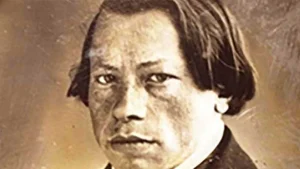
Figure: Johannes Menge. [Source: State Library of South Australia]
Conquering the Global Stage
Transforming these remote outback discoveries into a global commodity empire required a visionary, a role filled by Trewartha Cornwaith “Tully” Wollaston. Facing a global market that was deeply suspicious of these incredibly vibrant new gems, with old-world European dealers even claiming the stones were fake because they possessed “too much fire”, Wollaston refused to back down. In 1890, he successfully introduced and marketed Australian boulder opals and White Cliffs specimens to the notoriously conservative jewellery houses of London. His persistence completely shattered the European monopoly and put the Australian outback firmly on the global map.
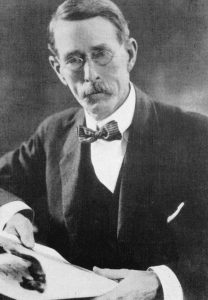
Figure: Trewartha Cornwaith “Tully” Wollaston. [Source: TCW]
The Great Opal Rushes
From there, the great Australian opal rush was well and truly on, giving rise to legendary mining hubs across New South Wales and South Australia. White Cliffs emerged in 1890 as Australia‘s first major commercial opal field. It drew thousands of hopeful prospectors. They endured brutal summer heatwaves to unearth high-quality light opal.
Then came the legendary discovery at Lightning Ridge in 1905. The Ridge is nestled in northern New South Wales, and it introduced the world to the ultra-rare, breathtaking black opal. Yes, black opal does exist. It is characterised by a dark body tone that makes its vivid reds, blues, and greens pop with unmatched brilliance. And, no doubt, the black opal quickly became the ultimate prize for collectors worldwide.
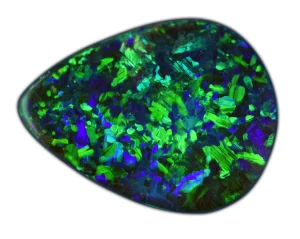
Figure: Black Opal. [Australian Museum Mineralogy Collection]
Going Underground at Coober Pedy
Not to be outdone, South Australia etched its own name into opal folklore between 1912 and 1915 with massive discoveries in the Stuart Range. This gave birth to Coober Pedy. This place quickly earned the title of the “opal capital of the world” for its endless fields of fine white and crystal opal.
To survive the unforgiving, scorching desert climate, the miners dug their homes directly into the earth. This created an iconic, subterranean lifestyle where houses, churches, and pubs remain carved out of the underground rock to this very day.
A quick overview of this place is given in our latest short:
A Vibrant National Legacy
The history of the Australian opal mirrors the spirit of the continent itself: resilient, unique, and bursting with unexpected colour. Today, these vibrant gems remain a source of immense national pride, and they carry the fiery heart of the outback to the rest of the world.
Frequently Asked Questions (FAQs)
What is the story behind opal?
Ans: The stone is fundamentally tied to water and time. Millions of years ago, rainwater picked up silica from sandstone and filled underground cracks. As it dried, it left behind the colourful, iridescent gemstone we see today. Historically, it has been treasured across cultures: from Indigenous Australian Dreamtime legends of a creator stepping on a rainbow, to ancient Romans who saw it as a symbol of hope and love.
Where did opal originate?
Ans: Geologically, opals formed worldwide in regions with historical volcanic activity or drying internal basins. Historically, the earliest known opal artefacts used by humans were discovered in a cave in Kenya and are believed to have originated in Ethiopia around 4000 BC.
Where does 95% of the world’s opal come from?
Ans: It comes from Australia. The vast majority is mined in harsh outback fields across South Australia (like Coober Pedy), New South Wales (Lightning Ridge), and Queensland.
Filed under

About the author
Jonathon Brown
Jonathon Brown began his career as a broadcaster, working across markets in British Columbia before moving into financial journalism. Since 2017, he has specialised in stock market reporting, covering emerging companies across the healthcare, technology, mining and consumer sectors. He brings more than 15 years' experience to his reporting. A graduate of Vancouver Island University and the British Columbia Institute of Technology, Jonathon is focused on delivering clear, balanced reporting for investors.