



Key Takeaways
- 01 Bell Bay Aluminium has now secured power supply until 31 Dec 2031.
- 02 Government support, reported at A$200 million, bridges the commercial gap.
- 03 Final terms are still being settled, so key details remain unconfirmed.
Rio Tinto Limited (ASX: RIO) has secured a power arrangement that keeps Bell Bay Aluminium running until 31 Dec 2031. Hydro Tasmania will keep supplying electricity until that date. The Australian and Tasmanian Governments will provide extra support.
The Bell Bay aluminium power agreement replaces a supply contract that ends on 31 Dec 2026. For the Company, it delivers Rio Tinto energy supply stability at a smelter that faced real doubt this year. Rio Tinto warned in April that continued operation was uncertain.
Governments Step In Where Commercial Terms Fell Short
Hydro Tasmania said it negotiates on commercial terms. According to Chief Executive Rachel Watson, any gap is addressed through government support. Media reports put the package at A$200 million from the federal and Tasmanian governments. The Company’s release does not state a dollar value.
Rio Tinto Aluminium & Lithium Chief Executive Jérôme Pécresse said the agreements bring “increased certainty for our people, suppliers and the northern Tasmanian community.” He thanked both governments, Hydro Tasmania and the workforce.

Figure 1: Bell Bay Aluminium has operated in northern Tasmania since 1955 [Courtesy: ABC News]
Bell Bay Smelter by the Numbers
Rio Tinto Bell Bay Aluminium began operating in 1955. According to Rio Tinto, it was the first aluminium smelter in the Southern Hemisphere. The Company owns 100% of the site.
| Smelter | State | Annual output | Reported support | Term |
|---|---|---|---|---|
| Tomago | NSW | Almost 600,000 metric tonnes | A$2.5 billion | 10 years |
| Boyne | Queensland | Not stated | A$2 billion | Not stated |
| Bell Bay | Tasmania | About 190,000 metric tonnes | A$200 million | Five years |
Confirmed Terms Stay Narrow While Details Are Finalised
- Hydro Tasmania describes the deal as agreed in principle.
- Final details are expected in the coming weeks.
- Rio Tinto says the support will maintain the smelter’s international competitiveness.
- The A$200 million figure comes from media reports, not the Rio Tinto release.
- Further terms of the support were not published on 1 Oct 2026.
Bell Bay Joins Tomago and Boyne on a Growing Support List
Reports put government support across Rio Tinto’s three Australian smelters near A$5 billion. Bell Bay is the smallest of them.
| Smelter | State | Annual output | Reported support | Term |
|---|---|---|---|---|
| Tomago | NSW | Almost 600,000 metric tonnes | A$2.5 billion | 10 years |
| Boyne | Queensland | Not stated | A$2 billion | Not stated |
| Bell Bay | Tasmania | About 190,000 metric tonnes | A$200 million | Five years |
Political Reaction Splits Along Familiar Lines
Industry Minister Tim Ayres called the arrangement a sound deal for taxpayers. Prime Minister Anthony Albanese, who visited the smelter, linked the support to sovereign capability and local manufacturing.
Opposition spokesman Andrew Hastie argued that Australians are paying for Labor’s energy and climate policies. He said bailouts have exceeded A$8 billion since 2022. The Communications Electrical and Plumbing Union said the deal protects jobs and industrial capability.
Nearly Six Years of Talks Set Up a Late Breakthrough
Rio Tinto spent almost six years negotiating a new power agreement with the Tasmanian Government, according to the AFR. Bell Bay was also reportedly ruled ineligible for the planned A$2 billion Green Aluminium Production Credit, according to news.com.au.
Local pressure added urgency. Susie Bower, Chief Executive of the Bell Bay Advanced Manufacturing Zone, said securing the smelter was critical after the Liberty Bell Bay closure. That manganese smelter sits about one kilometre away.
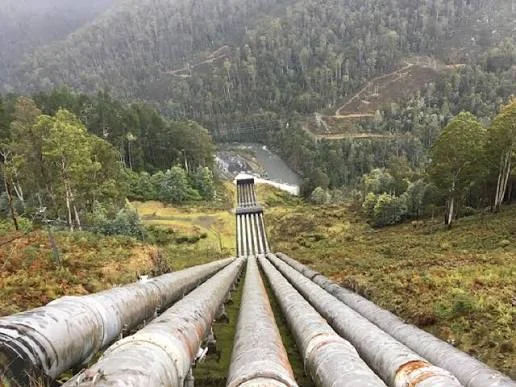
Figure 2: Large steel penstocks carry water to a hydropower station [Courtesy: Hydro Tasmania]
Industry Outlook
Aluminium smelters are Australia’s biggest electricity consumers, so power pricing shapes their survival. Aluminium prices rose 17% over the period covered by Rio Tinto’s latest full-year results, reported in Feb 2026. Governments are framing support as a matter of supply chain resilience and sovereign capability.
Share Price Performance
| Metric | Data |
|---|---|
| Last price | A$162.74 |
| Market capitalisation | A$62.06 billion |
| 52-week range | A195.84 |
| 2026 year to date | +10.84% |
| 1 year | +32.76% |
| vs sector (1 year) | +6.51% |
| vs ASX 200 (1 year) | +35.51% |
Final Contracts Will Set the Limits of Bell Bay’s Stability
- Impact on Bell Bay jobs: Operations are secured to 31 Dec 2031, covering about 550 full-time and 1200 indirect jobs.
- Impact on Tasmania’s energy system: The smelter uses more than 25% of the state’s electricity, so final supply terms matter to Hydro Tasmania.
- Impact on Rio Tinto’s Australian aluminium chain: Bell Bay’s outlook is secured to 2031, though the Company has not disclosed commercial terms. Rio Tinto says the chain directly employs over 5000 people.
Mining Herald will report the final terms when they are confirmed.
FAQs
Q1. How long does the Bell Bay power agreement run?
Ans. Hydro Tasmania will supply electricity until 31 Dec 2031.
Q2. Who is providing the additional support?
Ans. The Australian and Tasmanian Governments.
Q3. How much is the support worth?
Ans. Media reports cite A$200 million. Rio Tinto has not stated a figure.
Q4. When does the current power contract end?
Ans. It ends on 31 Dec 2026.
Disclaimer
This article is intended for informational purposes only. If you pay attention to the aluminium market as an investor, then all the data in the content is from third-party sources. Please check out the complete share price and market data info. Investing carries a high risk, and you should only invest at your own risk. Mining Herald has no involvement in the above-listed Company.
Filed under

About the author
Plamen Vasilev
Plamen Vasilev is a writer and language specialist with over 6 years of experience developing informative and engaging content across multiple industries. He combines strong research skills with a deep understanding of finance, mining, technology, and business topics to create well-crafted articles that connect with readers.