

Key Takeaways
- 01 Capital discipline is reshaping commodity supply curves into 2026.
- 02 AI infrastructure capex is becoming a primary macro variable.
- 03 Central bank policy across AU, CA and US is converging on neutral.
Catalyst Metals Limited (ASX: CYL) has delineated 2 million ounces of Ore Reserves across the Plutonic Gold Belt. The belt sits in Western Australia. The Company announced the milestone on 29 Sep 2026.
According to the Company, the Reserves support about 10 years of production at 200,000 ounces a year. That is roughly double the current output of about 100,000 ounces. For the Catalyst Metals Plutonic expansion strategy, this is the ore inventory the plan needed.
Reserves Climb 35% in 12 Months as Higher-Grade Ore Gains Share
Ore Reserves rose 35%, from 1.5 million ounces to 1.971 million ounces, over the past 12 months. Updated estimates covered Plutonic East, Keillor, Old Highway, Trident and Cinnamon.
Around half the growth came from higher-grade sources at Trident, Old Highway, Cinnamon and Keillor. Since acquiring the belt, the Company has grown its Reserve base fourfold.
James Champion de Crespigny, Managing Director and CEO, called the Reserve “an important milestone in de-risking this plan.”
Table 1: Plutonic Belt Probable Reserves at 30 Jun 2026
| Underground deposit | Metric tonnes (million) | Grade (g/t gold) | Gold (thousand ounces) |
|---|---|---|---|
| Plutonic Main | 10.3 | 2.3 | 758 |
| Trident | 3.9 | 4.2 | 524 |
| Cinnamon | 2.4 | 3.0 | 232 |
| Keillor | 0.8 | 3.8 | 101 |
| Old Highway | 0.7 | 4.8 | 101 |
| Plutonic East | 0.5 | 2.1 | 34 |
| Total underground | 18.5 | 3.0 | 1,751 |
| Plutonic Belt total | 23.4 | 2.6 | 1,971 |
Plutonic Gold Multi-Mine Growth Vision Rests on Six Deposits
- The Plutonic Belt produces about 100,000 ounces a year from Plutonic Main, Plutonic East and Keillor.
- The Company reports an all-in sustaining cost of about A$2,800 per ounce.
- Trident underground, Cinnamon and Old Highway are being brought into production.
- All three will feed the existing 2 million metric tonnes a year processing plant, which is underutilised.
- The Company says a 10-year underground mine life is rare in Western Australia.
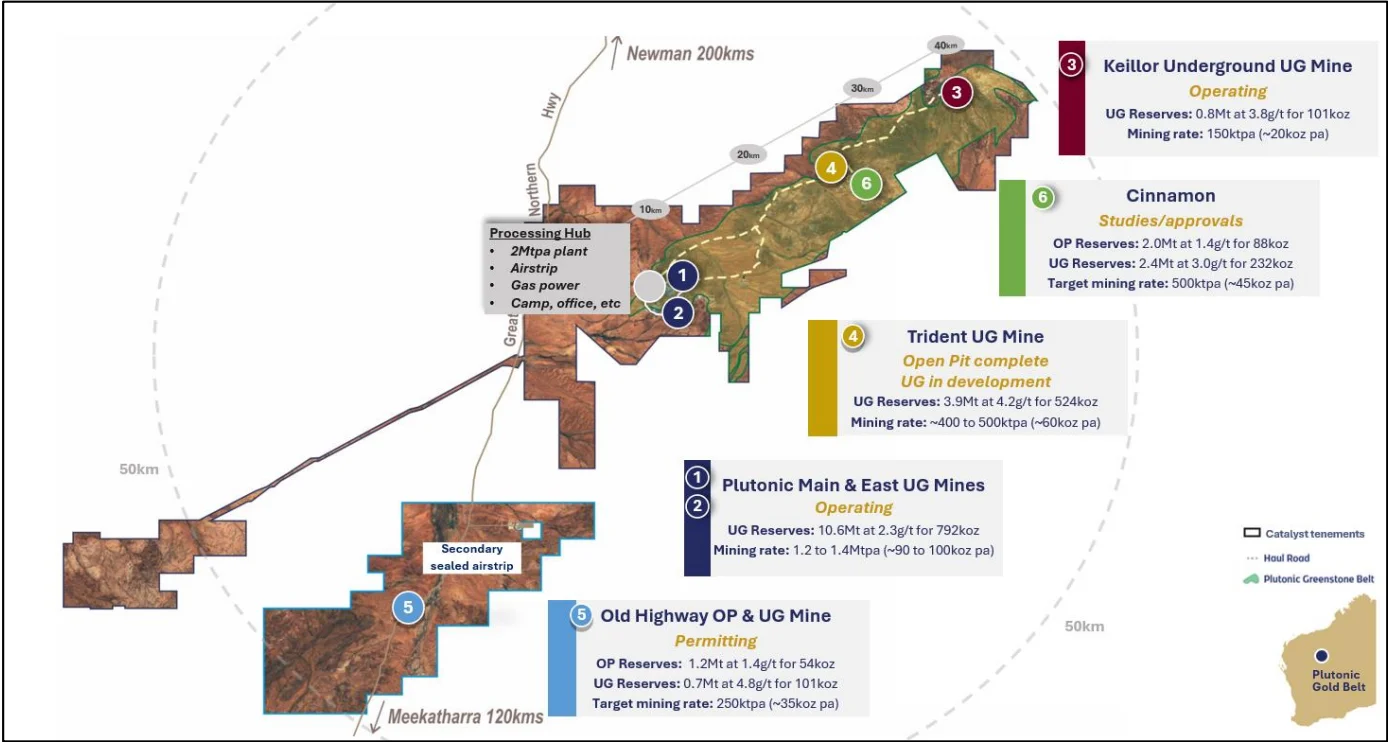
Figure 1: Layout of mines and deposits across the Plutonic Gold Belt [Courtesy: Catalyst Metals]
Trident, Cinnamon and Old Highway Show Where Reserves Could Grow Next
The Company sees potential to convert about 1 million ounces of Inferred Resources into Reserves through infill drilling.
Table 2: Resource Positions at the Three New Mines
| Deposit | Resource | Grade (g/t gold) |
|---|---|---|
| Trident | 448,000 ounces Inferred | 4.6 |
| Cinnamon | 105,000 ounces Inferred | 3.3 |
| Old Highway | 313,000 ounces total | 2.4 |
| Old Highway underground | 186,000 ounces | 4.1 |
Trident Drilling Lifts Grade and Converts Inferred Material
Denser drilling at Trident has lifted grade, the Company says. It reports a 75% conversion of Inferred Resources into Indicated. Future drilling will target the remaining Inferred ounces.
Cinnamon Parallel Zone Returns 19 Metres at 5.7 Grams per Tonne
Cinnamon was discovered in late 2025. It reached a maiden underground Reserve within 12 months of discovery. A parallel conglomerate unit beside the main zone returned 19 metres at 5.7 grams per tonne. The Company says these widths and grades match its underground Resource.
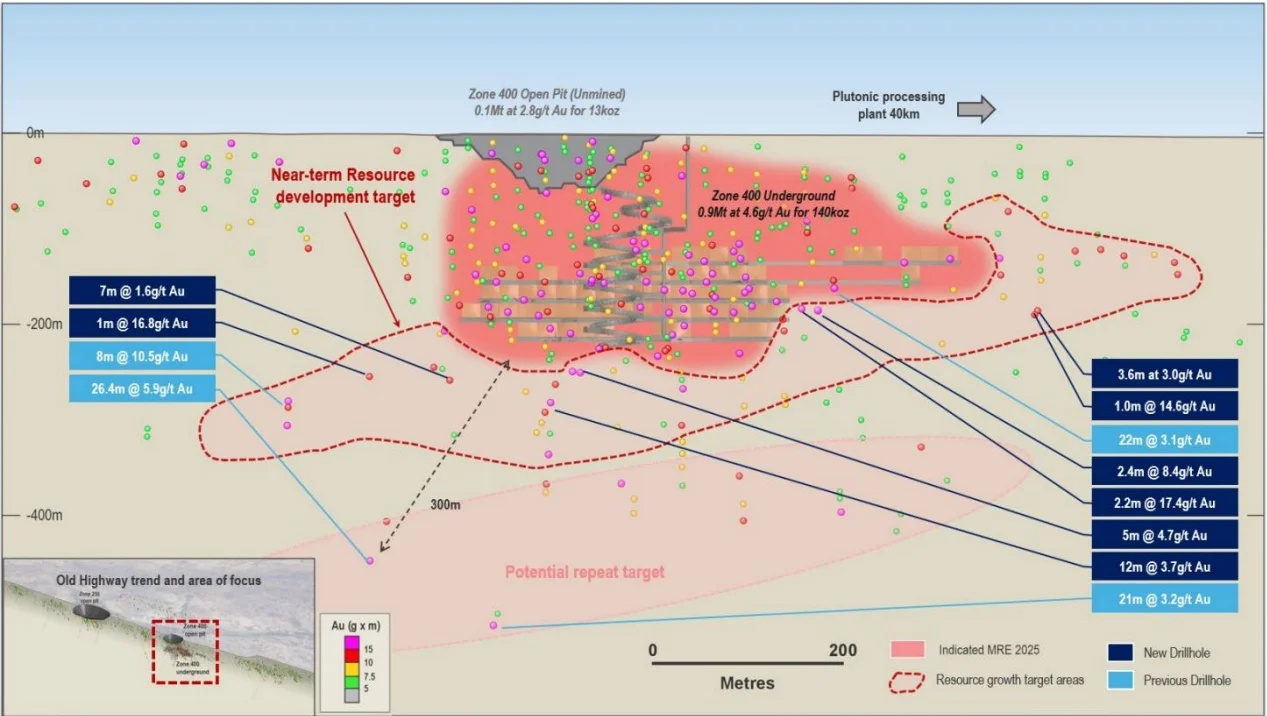
Figure 2: Old Highway long section with deep and along-strike drill hits [Courtesy: Catalyst Metals]
Old Highway Extensional Holes Reach 300 Metres Down Dip
Old Highway underground Resources rose 33%. Drilling returned 26 metres at 5.9 grams per tonne, 300 metres down-dip of the Resource. Another hole hit 8 metres at 10.5 grams per tonne along strike.
Price Assumptions, Permitting and Delays Temper the Reserve Milestone
- Gold price: Reserves are based on an assumed price of A$4,500 per ounce.
- Timing: The Company reports changes to permitting timelines, operational delays and processing capability since Sep 2025.
- Guidance: It says its Sep 2025 10-year outlook is now only a general guide.
- Conversion: Inferred Resources are excluded from Reserves, so conversion depends on future drilling results.
Industry Outlook
The global gold market stood at 4,890.0 tons in 2025, according to Fortune Business Insights. It is forecast to reach 7,424.4 tons by 2034, a 4.70% annual growth rate.
Asia Pacific held a 65.54% share in 2025. Rising jewellery demand drives growth, while higher taxes and import restrictions weigh on it.
Share Price Performance
| Measure | Data |
|---|---|
| Last price | A$5.965 per share |
| Market capitalisation | A$1.54 billion |
| 52-week low | A$4.480 per share |
| 52-week high | A$9.800 per share |
December 2026 Exploration Decision Will Shape Spending at Plutonic
The Company will decide in Dec 2026 whether to change its exploration activity and spending. It spent about A$80 million on exploration in FY2026.
With a 10-year Reserve, yearly needs could shift from 600,000 ounces of Reserve growth to 200,000 ounces of replacement.
Impact on production: The Reserve supports the 200,000-ounce target, but delivery depends on the three new mines reaching production.
Impact on exploration spending: The Company still sees low-cost Reserve potential at Trident, Cinnamon and Old Highway.
Impact on the balance sheet: The announcement lists cash and bullion of A$331 million and no debt.
Mining Herald will track how the Company converts its Inferred ounces and what it decides in December.
ALSO READ: Gold Faces Weekly Decline After Strong US Labor Data Strengthens Dollar Outlook
FAQs
Q1: What is the Catalyst Metals Plutonic expansion strategy?
Ans: It aims to lift output from about 100,000 to 200,000 ounces a year for about 10 years.
Q2: How large are the Plutonic Belt Ore Reserves?
Ans: The Company reports 1.971 million ounces, up 35% in 12 months.
Q3: Which new mines will feed the processing plant?
Ans: Trident Underground, Cinnamon and Old Highway will join the existing operations.
Q4: When will the Company decide on exploration spending?
Ans: Catalyst Metals will make that decision in Dec 2026.
Disclaimer
This article is intended for informational purposes only. If you pay attention to the gold market as an investor, then all the data in the content is from third-party sources. Please check out the complete share price and market data info. Investing carries a high risk, and you should only invest at your own risk. Mining Herald has no involvement in the above-listed Company.
Filed under

About the author
Plamen Vasilev
Plamen Vasilev is a writer and language specialist with over 6 years of experience developing informative and engaging content across multiple industries. He combines strong research skills with a deep understanding of finance, mining, technology, and business topics to create well-crafted articles that connect with readers.