


Key Takeaways
- 01 Eligible investors can claim a 30% non-refundable credit against qualified critical mineral exploration expenditures.
- 02 The Budget 2023 brought lithium-brine exploration into the fold, providing support beyond conventional mineral deposits.
- 03 But while tax relief can help explorers raise capital, the investment case still depends on eligibility, provincial changes and project risk.
The policy is developed over several years. Budget 2022 introduced the CMETC, while Budget 2023 expanded eligibility to lithium from brines. Copper was already among the eligible minerals.
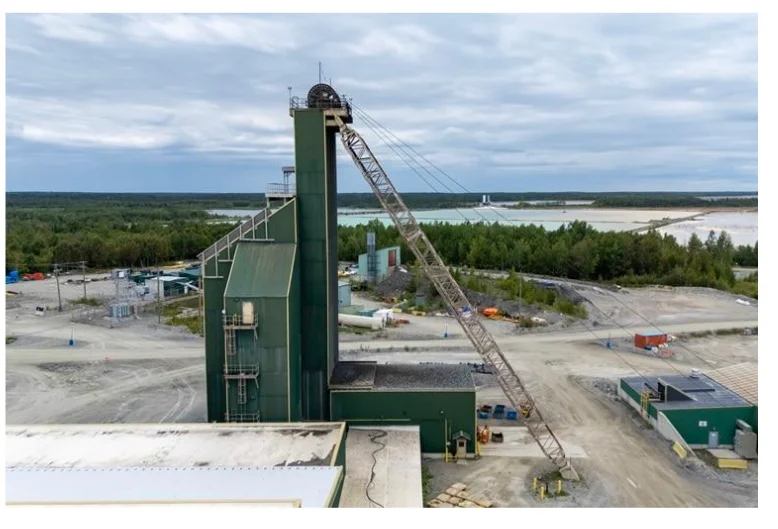
Figure 1: Kidd Mine near Timmins, Ontario. Credit: Quintin Soloviev
How Do Flow-Through Shares Help Finance Exploration?
Flow-through shares allow a qualifying resource company to raise money while transferring certain tax deductions to investors.
The company issues shares and undertakes qualifying work. It then renounces eligible expenses to the purchasers, who treat those expenses as their own for tax purposes.
That structure can make an exploration investment more attractive after tax. The company receives funding, while the investor may receive deductions and an applicable exploration credit.
Natural Resources Canada’s guide to mining and exploration tax incentives explains the relationship between these deductions, flow-through shares and the two exploration credits.
| Feature | General treatment in the supplied guidance |
|---|---|
| Canadian exploration expenses | Generally 100% deductible when incurred |
| Canadian development expenses | Generally deductible at 30% on a declining balance |
| CMETC | 30% non-refundable credit on qualifying expenses |
| METC | 15% non-refundable credit on qualifying expenses |
| Combining both federal credits | Not allowed on the same expenditure |
The benefit also depends on the expense category. Development expenses do not automatically qualify for the same treatment as exploration expenses, and mineral-property acquisition costs cannot simply be passed through under the development-expense rules described.
Why Does This Matter for Lithium and Copper Projects?
For lithium copper investment Canada, the immediate opportunity lies in financing qualifying exploration before a project generates operating revenue.
Companies need money to establish whether mineralisation exists, how far it extends and whether further work is justified. Eligible activities can include prospecting and geological, geophysical or geochemical surveys.
Copper already sits within the critical mineral exploration framework. Lithium-brine eligibility widened the range of lithium projects able to use it.
The potential benefits are practical:
- A stronger fundraising proposition: Tax benefits can reduce an eligible investor’s after-tax exposure.
- More scope for qualifying fieldwork: Capital raised can support exploration programmes that improve geological understanding.
- Broader lithium participation: Brine projects can access qualifying arrangements alongside other eligible mineral exploration.
None of these benefits establishes that a deposit will become a mine. Exploration may fail to identify an economic resource, and successful discoveries still require further funding and development work.
The structure also has cross-border relevance. The supplied guidance says issuing corporations need not be Canadian. However, qualifying activities and expenses must meet Canadian requirements, and investors must be subject to Canadian taxation.
For an Australian-listed explorer with Canadian projects, that distinction could matter more than its exchange listing.
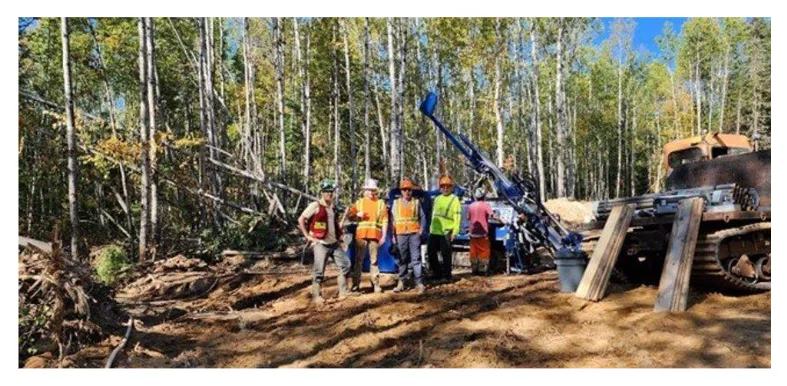
Figure 2: Fieldwork used in Invest in Canada’s critical minerals financing material. Image credit: iStock, via Invest in Canada.
Who Qualifies, and Which Conditions Need Attention?
Eligibility depends on the expenditure, investor and supporting documentation. Owning shares in a critical minerals company is not enough.
For CMETC purposes, a qualified professional must certify that the exploration project primarily targets eligible critical minerals. The supplied guidance explains that the Canada Revenue Agency generally interprets “primarily” as more than 50%.
That requirement links the credit to the actual exploration programme. A company’s broad exposure to lithium or copper does not make every expense eligible.
The CRA’s guidance on resource-industry corporations and flow-through expenditures should be checked alongside the relevant agreement and tax forms. Its published guidance confirms that the same expenditure cannot receive both federal exploration credits. Canada.ca
Provincial incentives introduce another calculation. The supplied overview identifies British Columbia, Saskatchewan, Manitoba, Ontario and Quebec as having incentives aligned with the federal system.
However, provincial credits can reduce expenses eligible for federal relief. Adding headline percentages together therefore produces an unreliable estimate.
The government’s illustrative after-tax examples also use top marginal tax rates for 2024. They should not be presented as personalised or current-year outcomes.
What Should Investors Examine Before Committing Capital?
The value of critical minerals investment incentives Canada depends on both compliance and the underlying project.
Three checks deserve particular attention:
- Expense eligibility: Confirm which activities qualify, the relevant agreement dates and the required professional certification.
- Tax interaction: Assess deductions, federal credits and provincial adjustments together.
- Project quality: Review geological evidence, management capability, funding needs and the proposed work programme.
The non-refundable nature of the credits also matters. They reduce qualifying tax liabilities rather than providing an automatic cash refund equal to the headline percentage.
If expenditure proves ineligible, the supplied guidance warns that a credit may be recovered from the investor.
For Mining Herald readers, Canada critical mineral tax credits are best understood as financing tools. They can improve the conditions for exploration investment, particularly where companies can demonstrate eligible work and credible geological targets.
The commercial result still rests on what that work discovers. Tax relief can help fund the search; it cannot establish the value of the resource.
FAQs
- What is the CMETC rate?
It provides a 30% non-refundable credit on qualifying critical mineral exploration expenses. - Do lithium and copper qualify?
Both are eligible minerals, but specific expenditures and agreements must satisfy the rules. - Can investors claim both federal exploration credits?
No. The CMETC and METC cannot apply to the same expenditure. - Does the credit guarantee investment returns?
No. Exploration, financing and market risks remain.
Disclaimer
Prepared for Mining Herald for general information. The information provided in this article is not investment or tax advice. Eligibility and after-tax outcomes vary by law, spending classification, and individual circumstances. Before seeking any relief, investors are advised to consult with qualified advisors and read current government guidance.
Filed under

About the author
Jonathon Brown
Jonathon Brown began his career as a broadcaster, working across markets in British Columbia before moving into financial journalism. Since 2017, he has specialised in stock market reporting, covering emerging companies across the healthcare, technology, mining and consumer sectors. He brings more than 15 years' experience to his reporting. A graduate of Vancouver Island University and the British Columbia Institute of Technology, Jonathon is focused on delivering clear, balanced reporting for investors.