

Key Takeaways
- 01 The Africa mining regulation tightening debate has a concrete example in Mali.
- 02 The government has sought higher revenues and greater state participation through its 2023 mining code.
- 03 Company disclosures should connect the regulatory development to the affected asset.
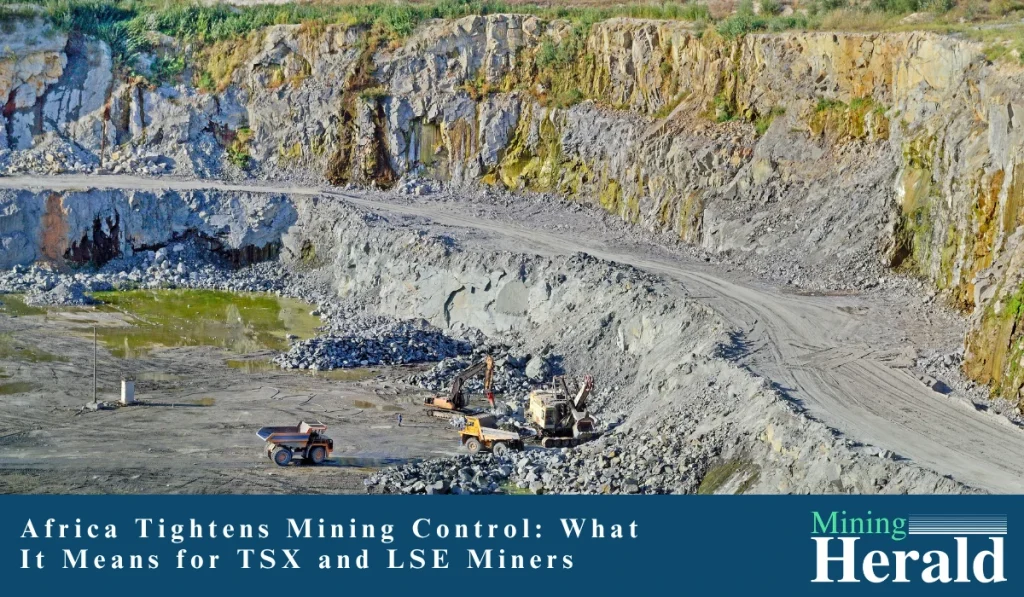
The Africa mining regulation tightening debate has a concrete example in Mali. A January 2026 decree created a ministerial-level position overseeing mining policy implementation, compliance and reports submitted by mining-title holders.
The appointment brought responsibilities previously handled by the mines ministry closer to the presidency. For companies operating in Mali, understanding that division of authority matters alongside understanding the mining code itself.
For investors in Toronto and London, the implications depend on where a company operates and how much cash those operations generate. A stock-exchange listing does not determine its exposure to Malian rules.
Nor does Mali’s decision establish a single regulatory direction across Africa. It is a country-specific development with lessons for assessing mining investments elsewhere.
What Changed in Mali’s Mining Oversight?
Under a decree dated 19 January, Hilaire Bebian Diarra was appointed to the new ministerial-level role. The earth-science specialist had previously worked for Barrick before joining the government in 2025.
His responsibilities include supervising implementation of mining policy, monitoring compliance with the mining code and reviewing reports from title holders.
The January report described a broader division of responsibilities:
- Presidential oversight: The presidency had taken the lead on key exploitation permits and major contract negotiations.
- Fiscal matters: The finance ministry was handling the government’s fiscal engagement with mining companies.
- Sector regulation: The mining ministry retained a regulatory role within the revised structure.
For mine operators, this raises a practical question: which authority is responsible for each decision?
A permit application, compliance report and tax discussion may involve different offices. Companies need to understand those responsibilities and maintain consistent records across their dealings.
The appointment strengthened central oversight. It did not, by itself, announce that every mining licence would be cancelled or that all foreign-owned operations would change ownership.
Reading the change at that level avoids confusing an administrative restructuring with outcomes that were not announced.
Why Is the Government Seeking Greater Control?
Mining is Mali’s biggest revenue-generating sector, and gold is central to that contribution.
The government has sought higher revenues and greater state participation through its 2023 mining code. National mining forums had also called for stronger oversight of security, compliance and community impacts.
In December 2025, the government said its measures had recovered 761 billion CFA francs, approximately US$1.2 billion, in arrears.
That figure needs careful interpretation. Recovering past amounts owed is different from establishing a recurring annual revenue stream.
The production picture was also difficult. Provisional ministry data showed industrial gold output falling 23% in 2025, amid tougher rules and the disruption associated with the Barrick dispute.
| Reported development | What investors should distinguish |
| US$1.2 billion recovered in arrears | Historical collections versus future annual receipts |
| Industrial output down 23% in 2025 | National production versus individual mine performance |
| Greater presidential oversight | Administrative authority versus asset ownership |
| Stronger compliance monitoring | Reporting obligations versus confirmed penalties |
The Africa resource nationalism mining control discussion often brings these separate issues together. They should still be assessed individually.
Higher public revenues and predictable operating conditions are both relevant to the sector’s future. The January figures alone do not establish the longer-term balance between them.
Which TSX and LSE Miners Have Relevant Exposure?
Barrick provides a direct Toronto-listed example because of its Loulo-Gounkoto complex in Mali.
The chronology matters. Barrick announced an agreement resolving its disputes with Mali on 24 November 2025, before the January oversight change. Its official settlement announcement described arrangements for ending provisional administration and returning operational control. The earlier standoff should therefore not be presented as an unresolved dispute solely on the basis of the January article.
Resolute Mining offers a London-listed example through Syama. Its Syama operation overview identifies the mine’s location and operating structure. Its presence in Mali makes country-level oversight relevant, but the January appointment does not establish a new company-specific penalty or loss.
The TSX LSE mining companies impact should be assessed through three questions:
- Asset exposure: Does the company have producing mines, development projects or only exploration interests in Mali?
- Financial dependence: How much does it rely on those assets for production, cash generation and future growth?
- Specific obligations: What do its disclosures say about permits, agreements, tax matters and compliance requirements?
These questions are more useful than grouping every Africa-focused miner together.
Two companies listed on the same exchange may have very different country exposure. Likewise, two mines in Mali may operate under different agreements and face different immediate decisions.

How Could Stronger Oversight Affect Investment Decisions?
The commercial consequences depend on what authorities require and how companies respond.
A change in reporting procedures might increase administrative work without materially changing mine economics. A revised payment obligation or a delay to an important approval could have a larger effect.
Those are possible channels of impact, not confirmed consequences of Diarra’s appointment.
For an operating mine, investors would want to understand whether any development affects production, sales, costs or access to cash. For a project awaiting construction, the important issue might instead be the timing and conditions of approvals.
Company disclosures should connect the regulatory development to the affected asset. A statement that discussions are continuing offers less certainty than a signed agreement explaining obligations and next steps.
Financing also depends on clarity. Before committing capital, investors and lenders need to understand the rules under which a project is expected to operate.
The Africa mining regulation tightening story therefore requires more than a reading of legislation. It also requires attention to implementation, administrative responsibilities and the agreements applying to each business.
What Should Shareholders Watch Beyond the Headline?
The next useful evidence comes from official decisions and company reporting.
A government appointment identifies who holds responsibility. It does not quantify the eventual effect on production or shareholder returns.
Investors can organise their follow-up around three areas:
- Formal decisions: Look for published permit outcomes, agreements or changes to obligations.
- Financial consequences: Check whether companies disclose payments, provisions, spending changes or revised forecasts.
- Operating performance: Compare production and cash generation with management’s explanation of any disruption or recovery.
Dates deserve particular care. The supplied article was published on 22 January 2026 and should be treated as a historical policy development, rather than a fresh September announcement.
For Mining Herald readers, Mali illustrates why jurisdiction deserves a place beside geology and costs when assessing a miner. The relevant question is how a specific operation is affected, supported by current disclosures and a clear timeline.
Also Read: Why Critical Minerals Are Key to the Global Energy Transition
FAQs
1. Does Mali’s decision apply across Africa?
No. It concerns Mali’s oversight arrangements, not a continent-wide mining rule.
2. Who received the new appointment?
Hilaire Bebian Diarra, a former Barrick executive and presidential adviser.
3. Does stronger oversight mean nationalisation?
Not automatically. Administrative control, taxation and ownership are separate issues.
4. What matters most for listed miners?
Their actual assets, applicable agreements, financial dependence and disclosed obligations.
Disclaimer
Prepared for Mining Herald for general information only. This article does not constitute investment or legal advice. Regulatory arrangements and company circumstances may change. Readers should review current official documents and company disclosures before making investment decisions.
Filed under

About the author
Plamen Vasilev
Plamen Vasilev is a writer and language specialist with over 6 years of experience developing informative and engaging content across multiple industries. He combines strong research skills with a deep understanding of finance, mining, technology, and business topics to create well-crafted articles that connect with readers.