

Key Takeaways
- 01 Revenue reached A$310.1 million despite Lynas selling fewer tonnes than a year earlier.
- 02 NdPr output set a quarterly record of 2,082 tonnes after stronger production in August and September.
- 03 Planned maintenance will reduce December-quarter output. Longer-term growth depends on reliable processing, customer contracts and delivery of expansion projects.
Lynas sold 3,039 tonnes of rare earth oxides in September’s quarter. A year earlier, it sold 3,691 tonnes.
Yet revenue was A$109.9 million higher.
That is the starting point for reading the Lynas Rare Earths quarterly results, released on 29 October 2026.
Production improved too. The question is how much of September’s performance can carry through a period of maintenance, new construction and investment in businesses further along the supply chain.
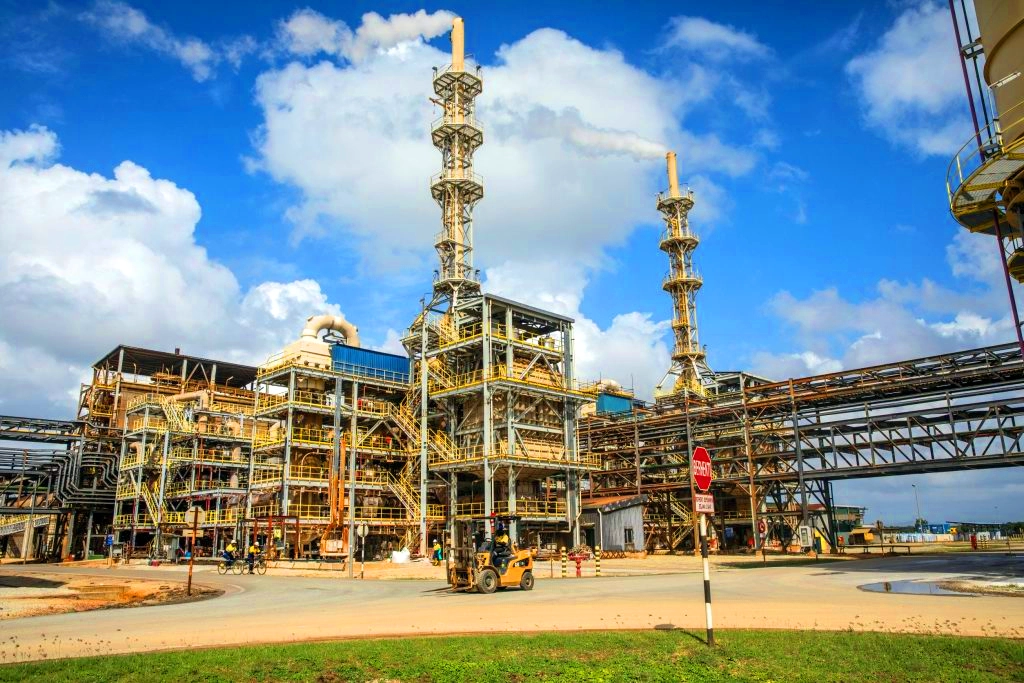
Figure 1: Lynas Malaysia’s processing facility at Gebeng, near Kuantan. Archive photograph. Credit: Lynas Rare Earths.
Customers Paid More for the Tonnes Lynas Sold
Lynas attributes the stronger price to several things: better market conditions, selling light and heavy rare earths together, and higher premiums above market indices. Floor-price agreements also contributed.
The comparison with June is less dramatic, but still positive.
| Measure | June 2026 | September 2026 |
| Rare earth oxide sales | 2,941t | 3,039t |
| Gross sales revenue | A$288.9m | A$310.1m |
| Average selling price | A$98.2/kg | A$102.1/kg |
| Customer cash receipts | A$297.1m | A$266.6m |
Lynas Rare Earths revenue increased roughly 7% from June. Both sales volumes and average prices helped.
The A$102.1 figure covers all products sold. It should not be used as the price of NdPr alone. A change in the mix of products can move that average, even when individual market prices behave differently.
Floor Prices Make Some Revenue Less Exposed
More than half of Lynas’s production is now covered by floor-price agreements.
For shareholders, that is a useful change in the commercial position. Under the relevant contract terms, a market-price fall need not flow directly into the price received for every covered shipment.
The quarterly report does not provide enough detail to calculate a guaranteed revenue level. It does, however, show customers accepting arrangements that give Lynas greater pricing protection.
There is another practical benefit to the broader product range. A magnet customer needing both light and heavy rare earths can source more of its requirements from one supplier. Lynas says this bundling is helping its realised prices.
Mining Herald’s rare earths market coverage looks at the processing and customer requirements behind these markets.
August and September Repaired a Difficult Start
July was still affected by the concentrate-quality problems that disrupted downstream processing in the previous quarter.
Total Lynas Rare Earths production reached 4,254 tonnes of rare earth oxides. Dysprosium and terbium accounted for a combined 23 tonnes, up from 19 tonnes in June.
| Ready-for-sale output | June quarter | September quarter |
| Total rare earth oxides | 3,481t | 4,254t |
| NdPr | 1,857t | 2,082t |
| Dysprosium and terbium | 19t | 23t |
The recovery is encouraging because it followed a specific operating problem. Still, one strong finish to a quarter does not establish that feed quality and processing reliability are settled for good.
At Mt Weld, NdPr contained in concentrate also reached a record. Most of the expansion is now operating, with the fine-grinding IsaMill expected to start in Q2 FY27. Its purpose is to improve rare earth recovery.
December Will Interrupt the Production Trend
Lynas has already told investors to expect lower Malaysian production in the December quarter.
The plant will shut for approximately one month. Mandatory electrical work, required every three years, will take place alongside kiln maintenance and other preventative work.
Kalgoorlie has a separate shutdown of around two weeks while Western Power modifies its network. Lynas plans to complete its own improvement projects during that interruption.
These shutdowns occur at different points in the processing chain. Adding their durations together would give a misleading impression of the group-wide impact.
The more useful test comes after the work: whether the facilities restart as planned and maintain better performance.
Lynas Malaysia continues towards nameplate capacity of 900 tonnes of finished NdPr monthly. That is equipment capacity, not a forecast of what the company will produce each month.
The Cash Balance Barely Moved, Despite Several Investments
Behind that small movement were substantial receipts and payments.
Customers paid A$266.6 million. Production, administration and royalty payments totalled A$185.2 million, while capital expenditure, exploration and development used A$28.7 million.
Lynas also spent A$52.3 million on JS Link shares and A$29.9 million on convertible bonds. It received A$29 million from issuing a convertible note.
The balance therefore reflects more than mine and plant operations.
Cash receipts were lower than June’s even though recognised revenue increased. Collection timing can create that difference; the report does not establish a collection problem.
New Partnerships Bring Customers Closer
JS Link plans to build a Malaysian factory with capacity for 3,000 tonnes of permanent magnets annually. Lynas’s equity investment supports construction, with JS Link responsible for the remaining funding.
Lynas will supply rare earth materials to JS Link’s existing South Korean factory and the proposed Malaysian facility under an exclusive arrangement running until January 2038.
That gives the investment a clear commercial purpose: supporting manufacturing capacity that will use Lynas products.
The relationship with LS Eco Energy is at an earlier contractual stage. The companies have signed cross-subscriptions for convertible instruments, but continue negotiating the definitive long-term metal-processing agreement for a proposed Vietnamese facility.
Within its own Malaysian operation, Lynas is expanding heavy rare earth processing. Construction is progressing, with gadolinium prioritised next, followed by yttrium.
Mining Herald’s critical minerals outlook examines why these processing links matter when assessing growth projects.
Meteoric Adds Potential, Subject to Completion
The proposed Meteoric Resources acquisition was announced on 1 October, after quarter-end.
Lynas has offered 0.0207 new shares for each Meteoric share. The transaction would bring in the Caldeira project in Brazil, potentially diversifying the resource base and supplying more light and heavy rare earth feedstock.
It remains conditional on shareholder, court and regulatory approvals.
Caldeira would also require development. Its future production estimates depend on project decisions and market conditions, so they should not be added to current Lynas output as though those tonnes were already available.
Can the Growth Last?
September gives Lynas a stronger starting position. Customers are paying more, floor-price coverage has expanded and production recovered from the previous quarter’s difficulties.
The December shutdowns mean the next production comparison will need context. A temporary decline is already expected.
What matters after that is whether better operating reliability supports consistent deliveries, and whether pricing protection continues to translate into cash. The expansion projects offer further upside, but each needs to move from construction or agreement into operation.
September’s result supports the growth case. The coming quarters will show how much of it is repeatable.
ALSO READ: Leaching Tank Optimisation Is Helping Miners Chase Higher Metal Recovery Rates
FAQs
Q1. What revenue did Lynas report for September?
Gross sales revenue was A$310.1 million, up 55% year on year.
Q2. Why did revenue increase despite lower annual sales volumes?
The average selling price increased due to market pricing, product mix, client premiums, and floor-price agreements.
Q3. Why will December production be lower?
Lynas Malaysia has a planned maintenance shutdown of approximately one month. Kalgoorlie also has a separate planned interruption.
Q4. Is the Meteoric acquisition complete?
No. It still requires shareholder, court and regulatory approvals.
Disclaimer
This article is for informational purposes and is not meant to be financial advice. The quarterly financial information is not audited. Forecasts, timelines and planned transactions are subject to change.
Filed under

About the author
Jonathon Brown
Jonathon Brown began his career as a broadcaster, working across markets in British Columbia before moving into financial journalism. Since 2017, he has specialised in stock market reporting, covering emerging companies across the healthcare, technology, mining and consumer sectors. He brings more than 15 years' experience to his reporting. A graduate of Vancouver Island University and the British Columbia Institute of Technology, Jonathon is focused on delivering clear, balanced reporting for investors.