


Key Takeaways
- 01 A NASDAQ stock can look diversified on paper, yet still depend on one country for refining.
- 02 The top three refiners hold an average of 86 per cent of key energy mineral supply, against 77 per cent for the top three miners.
- 03 In the IEA stress test, graphite and rare earths fared worst, while copper held up best.
Critical minerals look well supplied right now. Prices have fallen, and new mines are coming. The real exposure sits further along, at the plants that process raw ore into finished material.
Often, investors screening the NASDAQ critical minerals stocks begin by looking at the metal. A better starting point is the critical minerals supply chain behind that metal. At times, more than what a Company digs, where it mines, refines and sells is relevant.
China Produces Far More Than It Holds in the Ground
USGS reviewed 77 mineral commodities for 2023. China produced 74 of them and ranked first in 39. For gallium, its share reached up to 98 per cent.
Reserves paint a different picture. China holds a sizeable portion of some global deposits, around 20 per cent for zinc ore. With tungsten ore, the figure is raised to about 52 per cent. It is not just geology that gives the lead; it’s processing and scale.
Refining Is Tighter Than Mining, and Both Are Concentrating
Between 2020 and 2024, the top three countries gained ground at both stages. Refining moved furthest.
| Average across key energy minerals | 2020 | 2024 |
|---|---|---|
| Top three mining countries | 73 per cent | 77 per cent |
| Top three refining countries | 82 per cent | 86 per cent |
Around nine-tenths of the growth in refined output came from a single top producer. That was Indonesia for nickel and China for cobalt, graphite and rare earths. The agency expects only a small easing, to 82 per cent by 2035.
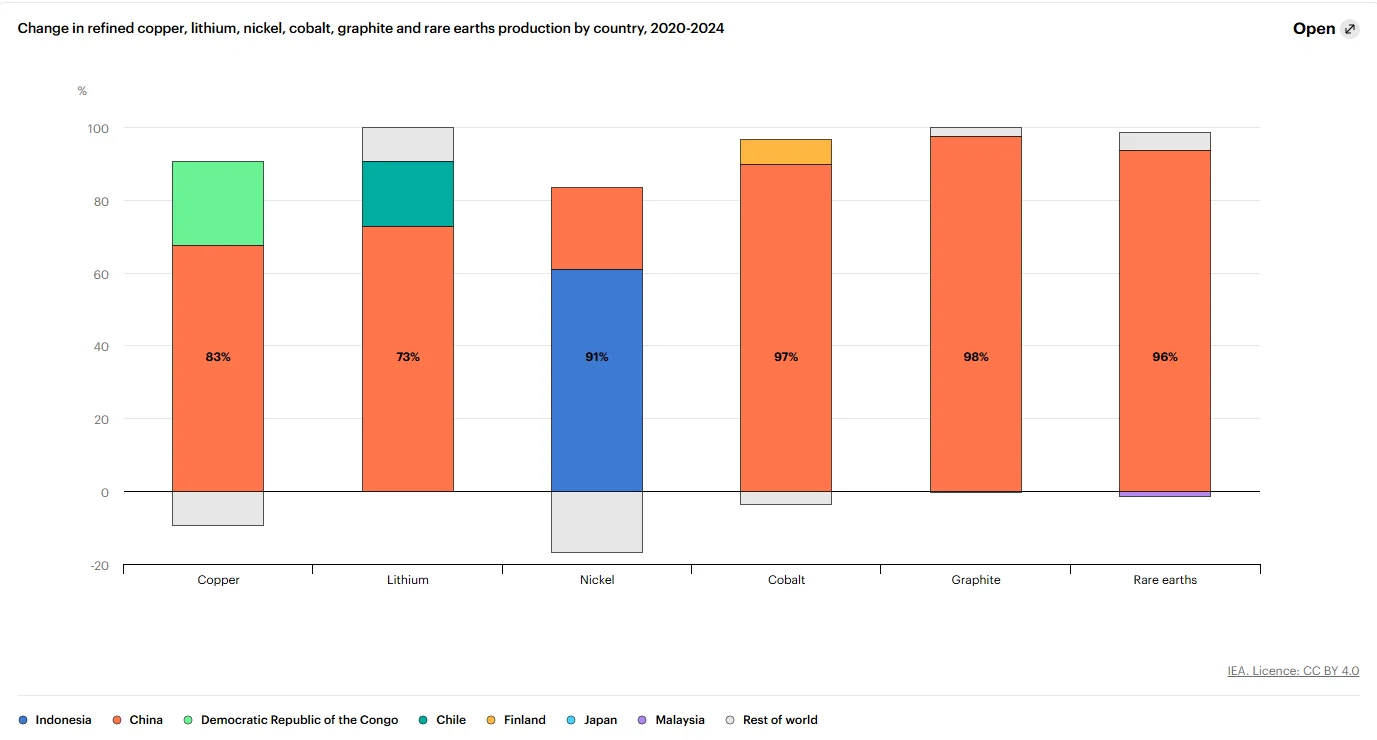
Figure 1: Leading suppliers captured most refined output growth between 2020 and 2024 [Courtesy: IEA]
Cut Out the Top Supplier and Graphite and Rare Earths Struggle
The IEA ran a 2035 test. It removed the largest supplier and that supplier’s own demand, then looked at what remained.
| Mineral | Remaining supply as a share of remaining demand |
|---|---|
| Graphite | 35 per cent |
| Rare earths | 42 per cent |
| Nickel | 53 per cent |
| Cobalt | 65 per cent |
| Lithium | 67 per cent |
| Copper | 96 per cent |
Copper holds up because China is also its biggest buyer. A graphite developer and a copper miner therefore carry very different risks.
Five Checks Before Building a List of Critical Minerals Stocks to Watch
- Mining location: Does output depend on one country or one region?
- Refining route: Who processes the material? Third-party plants in concentrated markets count.
- Customer base: Does the Company ship most of its output to one buyer? Observe whether supply contracts are country-specific or region-specific.
- Export controls: China announced in Dec 2024 restrictions on exports of gallium, germanium and antimony to the United States.
- Build cost: Projects outside the dominant producers typically cost about 50 per cent more to build.
Trade Data Can Hide the Real Dependency
- Antimony: USGS recorded no direct 2022 imports of unwrought antimony metal from Russia into the United States. A separate study traced over 16 per cent back to Russian mining, routed through China, India and Vietnam.
- Aluminium: Net import reliant 52 per cent in the US in 2022 It was found that it had 100 per cent dependence on imported bauxite, of which 7 per cent arrived indirectly.
- Lithium water: A study of one existing and 22 proposed United States lithium mines found most subbasins would likely lack water for new mines by mid-century, depending on the scenario.
- Copper water: 7 per cent of the world’s copper supply was at risk from floods and drought in 2024
Industry Outlook
The IEA’s base case says copper will fall short by about 30 per cent, and lithium by about 40 per cent in 2035. Those numbers count only announced projects. The IEA also expects lithium demand to jump by roughly five times by 2040. This is based on a scenario called the Stated Policies Scenario.
Governments Are Stepping In, but Build Costs Will Pick the Winners
In the IEA’s view, the market by itself will not move new supply to the areas that need it most. It points to public funding support, joint efforts between groups, and quicker permit approvals. The IEA also mentions price floors and volume commitments. It says these can reduce sudden swings in investment.
Impact on NASDAQ-listed Companies will depend on exposure. Those outside the dominant producers face higher build costs, though public financing can bring projects forward. Volatility remains a risk, with lithium prices down over 80 per cent since 2023.
Mining Herald will continue to track how these gaps inform the manner in which investors position themselves within the spaces companies occupy.
ALSO READ: BHP Reshapes WA Nickel Strategy as Gold Fields Takes Kambalda Assets
FAQs
Q1. Which NASDAQ critical minerals stocks should investors watch?
Ans. This article names none. Screen each Company on mining location, refining route, customers, export controls, and build cost.
Q2. Why does the critical minerals supply chain matter more than production?
Ans. Refining is more concentrated than mining. The top three refiners hold an average of 86 per cent, against 77 per cent for the top three miners
Q3. Which minerals carry the most supply risk?
Ans. In the IEA stress test, graphite and rare earths fared worst, covering about 35 per cent and 42 per cent of remaining demand.
Q4. Can trade data hide supply-chain exposure?
Ans. Yes. Researchers showed that indirect flows through middle countries can mask real reliance on a producer.
Disclaimer
This article is intended for informational purposes only. If you pay attention to the NASDAQ critical minerals sector as an investor, then all the data in the content is from third-party sources. Please check out the complete share price and market data info. Investing carries a high risk, and you should only invest at your own risk. Mining Herald has no involvement in the above-listed companies.
Filed under

About the author
Jonathon Brown
Jonathon Brown began his career as a broadcaster, working across markets in British Columbia before moving into financial journalism. Since 2017, he has specialised in stock market reporting, covering emerging companies across the healthcare, technology, mining and consumer sectors. He brings more than 15 years' experience to his reporting. A graduate of Vancouver Island University and the British Columbia Institute of Technology, Jonathon is focused on delivering clear, balanced reporting for investors.