


Key Takeaways
- 01 More copper output can still mean thinner profit once grades, costs and spending are counted
- 02 Antofagasta lowered its 2026 guidance, while Atalaya Mining expects the bottom of its range
- 03 A target means little without the funding and Project delivery to back it
LSE copper mining stocks continue to attract interest as copper plays a role in power grids, renewable energy and electric vehicles. However, the price of a metal is only part of the story for a miner. Add grades and recoveries, along with capital spending, and you arrive at the cost to produce each tonne.
A tale in four London-listed miners of how their copper exposure appears to shareholders. The scale of operations varies greatly among copper mining companies UK investors can buy.
Guidance Outcomes Differ Sharply Across Four LSE Copper Mining Stocks
| Company | 2026 copper guidance (metric tonnes) | Status |
| Glencore | 810,000 to 870,000 | Unchanged after Kidd sale |
| Anglo American | 700,000 to 760,000 | Unchanged |
| Antofagasta | 625,000 to 655,000 | Lowered from 650,000 to 700,000 |
| Atalaya Mining | 50,000 to 54,000 | Low end now expected |
Glencore Rebounds in the First Half but Leans on the Second
Glencore raised first half 2026 copper production by 15% to 397,000 metric tonnes: Half-Year Production Report. The Company divested the Kidd mine on 1 Jun 2026, which removes about 11,000 metric tonnes from output in that year.
Glencore’s guidance leans on the second half. Delivery over the coming months therefore carries the most weight.
Anglo American Needs More Throughput to Hold Output Flat
Anglo American’s Q2 2026 Production Report shows 173,200 metric tonnes of copper, almost level with a year earlier. Lower grades at Collahuasi and Quellaveco meant more ore had to pass through the plants to keep output steady.
Anglo American expects more of its Chilean output to arrive in the second half. They also depend on water availability.
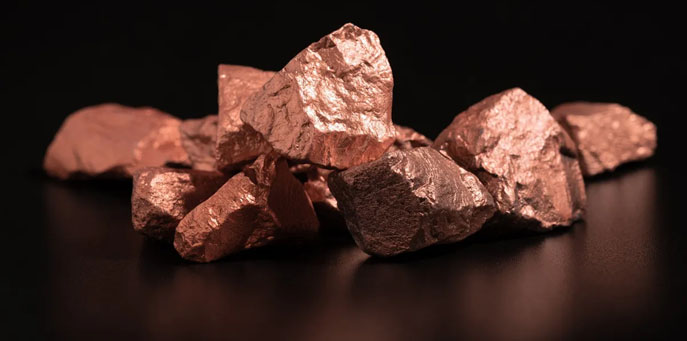
Figure 1: Raw copper pieces, the metal that supports power grids, renewable energy and electric vehicles [Courtesy: INN]
Severe Weather Disrupts Antofagasta and Atalaya Mining
Antofagasta Lowers Its Guidance
In 2025, Antofagasta’s production was 653,700 metric tonnes.. Half-Year Results instead showed first half 2026 output at only 285,000 metric tonnes, down 9%. Los Pelambres was then halted as a protective step after extreme weather hit Chile.
Antofagasta’s inspections found no material impact on key equipment. They did find that repairs were needed to certain pipeline platforms and water management systems. The Company lowered its guidance as a result.
Atalaya Mining Expects the Low End
Atalaya Mining also had a weather-affected first quarter. Its Q2 2026 Operations Update shows output of 13,493 metric tonnes at a 0.39% copper grade and 83.91% recovery. Atalaya Mining now guides towards the lower end of its 2026 range.
Project Economics and Funding Decide Whether Targets Hold
For LSE copper mining stocks, a target is only as reliable as the Project economics behind it. Net present value (NPV) turns expected future cash flows into their worth today. Internal rate of return (IRR) is the discount rate that brings NPV to zero.
Antofagasta Commits Heavy Capital to Chase 30% Growth
Antofagasta’s growth Projects include the US$4.4 billion Centinela Second Concentrator, plus desalination and pipeline works at Los Pelambres. Commissioning is expected to finish in 2027 and lift copper output by about 30%.
| Measure | Amount |
| 2026 group capital expenditure guidance | US$3.4 billion |
| Net debt, end of 2025 | US$2.75 billion |
| Net debt, 30 Jun 2026 | US$3.97 billion |
Net debt has risen while the heavy capital programme continues.
Industry Outlook: Strong Demand Meets Slow Supply
The copper demand is resilient fueled by power grids, renewable energy and digital infrastructure. Supply is slow responding because it takes discoveries, financing and enough capacity to get building. Strong demand alone does not guarantee miners a return.
Among the copper mining companies UK investors follow, established producers already have infrastructure and cash coming in. Development-stage companies still need to raise money and prove they can build. The key question is whether new output can be produced at a competitive cost.
A Practical Checklist for Copper Mining Stocks to Watch
Use this table to compare copper mining companies UK investors follow and to screen copper mining stocks to watch.
| What to check | What to look at |
| Production | Annual output, quarterly trends and guidance |
| Ore quality | Grades, throughput and recovery rates |
| Costs | Cash costs, sustaining capital and total Project investment |
| Funding | Cash, debt, financing commitments and dilution risk |
| Delivery | Permitting, construction progress and commissioning targets |
| Valuation | NPV and IRR under different assumptions, weighed against the share price and balance sheet |
Attributable output should also be separated from total Project output, because partial ownership changes what shareholders receive.
Third Quarter Updates Will Test LSE Copper Mining Stocks
Third quarter production updates are due soon and may replace the guidance quoted here. Atalaya Mining faces the first test of guidance credibility, since it still has to land at the bottom of its range. Antofagasta must show that its lowered range holds.
Glencore’s second-half weighting leaves its full-year result open. The impact on funding depends on how Antofagasta’s 2027 commissioning goal sits beside rising net debt.
Mining Herald will track how each update reshapes the outlook for London copper.
ALSO READ: Iron Ore Mine-to-Port Logistics: Why Rail and Shipping Capacity Can Limit Production
FAQ
Q1. How do investors judge production growth at LSE copper mining stocks?
Ans. They compare past output with guidance, grades and recoveries. Then they ask whether the growth is funded and has a realistic schedule.
Q2. What are the biggest risks for copper mining companies UK investors hold?
Ans. Delays, cost overruns, weaker grades, lower prices, financing gaps and approvals. Which one matters most depends on the Company’s assets.
Q3. Why are feasibility studies important?
Ans. A feasibility study tests the mine’s profitability on a set of assumptions of costs, production, mine life and returns.
Q4. Are development-stage miners riskier than producers?
Ans. Usually yes. They face tougher financing, permitting and construction hurdles. Producers still carry price and operating risk.
Disclaimer
This article is intended for informational purposes only. If you pay attention to the LSE copper mining sector as an investor, then all the data in the content is from third-party sources. Please check out the complete share price and market data info. Investing carries a high risk, and you should only invest at your own risk. Mining Herald has no involvement in the above-listed companies.
Filed under

About the author
Jonathon Brown
Jonathon Brown began his career as a broadcaster, working across markets in British Columbia before moving into financial journalism. Since 2017, he has specialised in stock market reporting, covering emerging companies across the healthcare, technology, mining and consumer sectors. He brings more than 15 years' experience to his reporting. A graduate of Vancouver Island University and the British Columbia Institute of Technology, Jonathon is focused on delivering clear, balanced reporting for investors.