

Key Takeaways
- 01 Capital discipline is reshaping commodity supply curves into 2026.
- 02 AI infrastructure capex is becoming a primary macro variable.
- 03 Central bank policy across AU, CA and US is converging on neutral.
Indonesia resource trade oversight now sits with an Australian engineer. Luke Mahony formerly worked for BHP Group (ASX: BHP) and Glencore in Queensland. He now leads Danantara Sumberdaya Indonesia (DSI), created by President Prabowo Subianto to stop “value leakage” from coal, nickel and palm oil exports.
Indonesia is the world’s biggest supplier of all three commodities. According to the Australian Financial Review, they generate about US99.6 billion) in revenue each year. That gives Jakarta strong influence over the prices Australian miners receive.
A Single Export Window Aimed at Understated Cargoes
Prabowo is convinced tax and royalty revenues have been undermined by exporters. He believes some understate the volumes, qualities or prices of their products. His answer was DSI, which has the power to act as the exclusive selling agency for Indonesian coal, nickel and palm oil.
Mahony was appointed in June and has been told to have the agency operating before the end of 2026. DSI will start as an intermediary that analyses trades between exporters and customers. It will not negotiate its own sales at first.
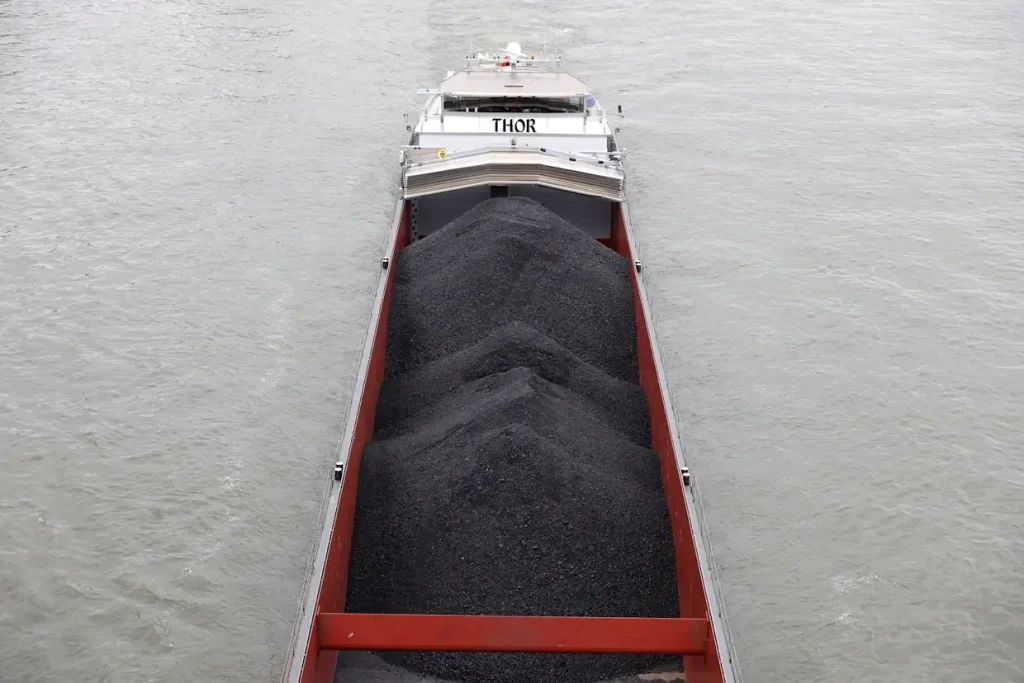
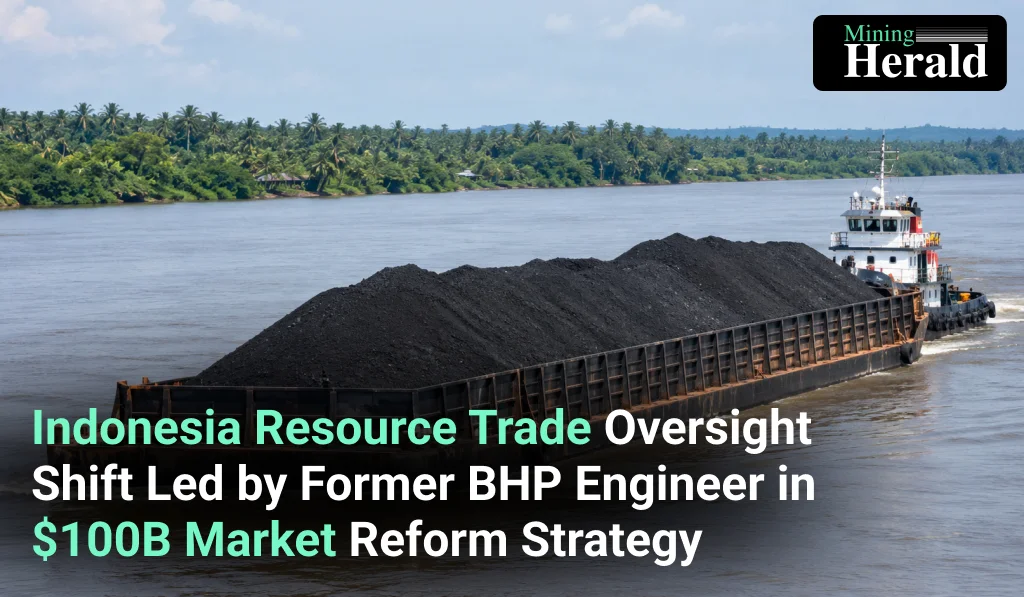
Figure 1: A barge carrying thermal coal along a river, a common route for Indonesian exports. [Courtesy: Australian Financial Review]
“When the president established DSI he gave us the authority to be the single export window, and as part of that he granted us rights to access the information necessary to perform this role,” said Mahony.
How DSI Plans to Test Every Shipment and Contract
Mahony said about 100 vessels depart Indonesia daily. He said DSI intends to verify each of those transactions.
- Vessel checks: DSI will analyse every ship leaving Indonesia with coal, palm oil or nickel.
- Contract review: The team will study confidential sales contracts to find commodities sold too cheaply.
- Government data: DSI will collect data from Indonesian government departments while searching for anomalies.
- Escalation: Anomalies will go to regulatory agencies for further investigation.
- Right of reply: Exporters will get a chance to explain lower prices, such as pre-production financing or fixed price deals.
Mahony said he was confident DSI would find instances of understated value. He noted that the three commodity groups represent about US$70 billion in declared exports. At that scale, he said, even a modest gain in retained value would matter to Indonesia.
From a Sydney Tunnel to Indonesia’s Export Agency
Mahony grew up in Tamworth, NSW, and qualified as a mining engineer. His first job was helping to dig the cross-city traffic tunnel beneath Sydney. He later worked at Glencore and BHP coal mines in Queensland, then took a senior role at Brazilian miner Vale.
While restructuring a Vale nickel subsidiary in Indonesia, he moved into the Indonesian bureaucracy. His governance work in the natural resources industry led to his selection as DSI’s first leader.
Why Australian Miners Are Watching DSI Closely
Indonesia Supplies Half of Seaborne Thermal Coal
Australian miners believe DSI may reduce Indonesian export volumes and lift prices for Australian cargoes. Barrenjoey data shows how large Indonesia’s share of the market is.
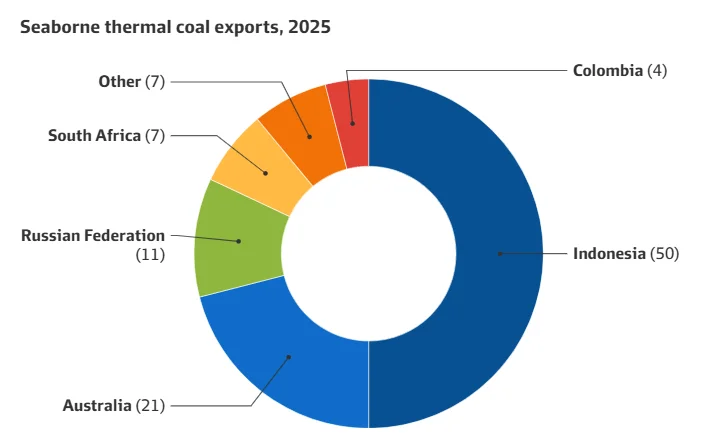
Figure 2: Indonesia was the largest exporter of seaborne thermal coal in 2025. [Courtesy: Barrenjoey]
| Exporter | Share of Seaborne Thermal Coal Exports, 2025 |
|---|---|
| Indonesia | 50% |
| Australia | 21% |
| Russian Federation | 11% |
| South Africa | 7% |
| Other | 7% |
| Colombia | 4% |
According to the report, thermal coal and nickel prices have risen over the past 10 months. Supply cuts demanded by Prabowo’s government under separate policies drove the increase. Indonesian coal export volumes are down about 7% so far this year, despite rising international demand.
Analyst and DSI Chief Disagree on Export Efficiency
Commodity Insights analyst Mark Gresswell said DSI may further restrain Indonesian export volumes. He said it is too early to know how the agency will develop. However, he does not expect it to make exporting faster or cheaper.
Mahony disagreed. He argued that clearer and more dependable information would rebuild confidence in the Indonesian commodity market. In his view, that confidence could lift demand for Indonesian products.
Open Questions That Could Shape DSI’s Impact
- Contract confidentiality: Mahony said contract information must be handled appropriately and confidentially.
- Political sensitivity: DSI’s mission taps a traditional Indonesian fear of foreigners taking natural resources, rooted in Dutch and British colonialism.
- Scope of the role: Mahony described the intermediary function as the initial phase, so the mandate may evolve.
Industry Outlook: Supply Cuts Meet Rising Coal Demand
Barrenjoey data shows China took about 36% of seaborne thermal coal demand in 2025. India took about 17%. Indonesian volumes are falling while international demand for coal rises.
Barrenjoey Data Shows Thermal Coal Leading 2026 Price Gains
The table below shows price performance for the commodities in focus, as reported on 28 Sep 2026. Figures are approximate readings from Barrenjoey charts.
| Commodity | 3Q26 Price Change | 2026 Price Change |
|---|---|---|
| Thermal coal | about 11% | about 35% |
| Zinc | about 14% | about 30% |
| Copper | about 11% | about 18% |
| Gold | about 8% | about 1% |
| Iron ore | about negative 1% | about negative 11% |
What the DSI Rollout Means for Australian Coal Exporters and Indonesian Transparency
Confirmed next steps are limited. DSI must be operating before the end of 2026. Anomalies will then go to regulators, after exporters have a chance to explain.
Impact on Australian coal exporters: any price benefit remains a belief, not a confirmed result.
Impact on Indonesian exports: Gresswell and Mahony disagree on whether efficiency will fall or transparency will rise.
Mining Herald will keep tracking how DSI moves from appointment to live operation.
ALSO READ: Canadian Sharemarket Climbs As Mining Stocks Shine
FAQs
Q1. What is DSI?
Ans. A new Indonesian agency created to stop “value leakage” from coal, nickel and palm oil exports.
Q2. Who leads DSI?
Ans. Luke Mahony, an Australian mining engineer and former BHP and Glencore employee.
Q3. How much trade will DSI oversee?
Ans. About US$70 billion (A$99.6 billion) in annual declared exports.
Q4. When must DSI be operating?
Ans. Before the end of 2026.
Disclaimer
This article is intended for informational purposes only. If you pay attention to the Australian critical minerals space as an investor, then all the data in the content is from third-party sources. Please check out the complete share price and market data info. Investing carries a high risk, and you should only invest at your own risk. Mining Herald has no involvement in the above-listed Company.
Filed under

About the author
Plamen Vasilev
Plamen Vasilev is a writer and language specialist with over 6 years of experience developing informative and engaging content across multiple industries. He combines strong research skills with a deep understanding of finance, mining, technology, and business topics to create well-crafted articles that connect with readers.