

Key Takeaways
- 01 Capstone reported record adjusted EBITDA of US$358.3 million despite producing less copper than a year earlier.
- 02 Operations generated US$226.6 million in cash. After sustaining and expansion investment, free cash flow was negative US$26.3 million.
- 03 Annual capital expenditure guidance has increased to US$830 million, with copper production expected near the bottom of its forecast range.
Capstone Copper reported record adjusted EBITDA in Q3, yet its cash balance fell as mine investment, expansion work and financing payments absorbed funds. Higher metal prices supported earnings, but copper production declined.
This post examines Capstone Copper cash flow, where the money went and what the spending means for the company’s growth plans and financial position in the coming quarters.
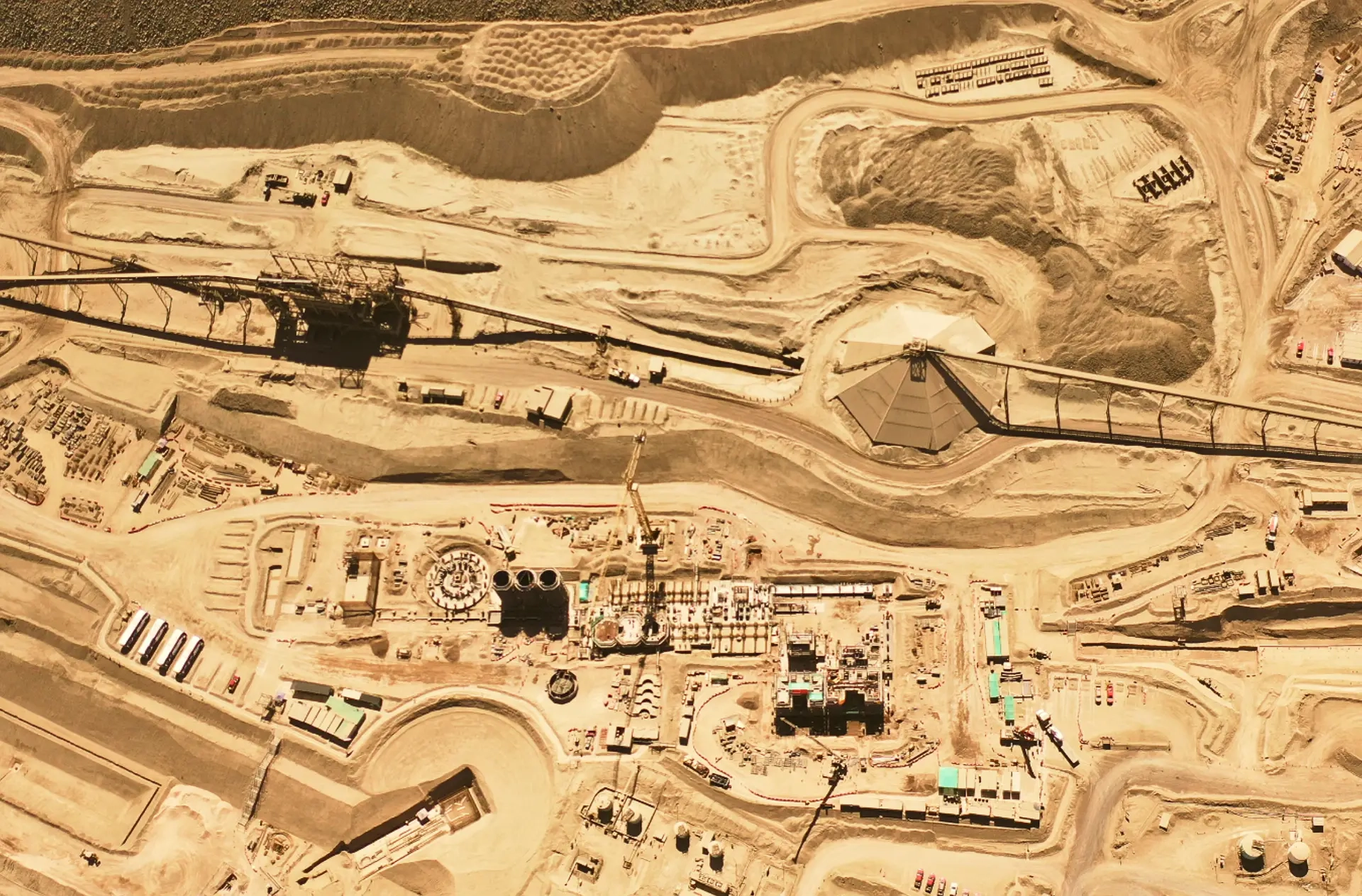
Figure 1: Mantoverde operation in Chile’s Atacama region. Archive photograph. Credit: Capstone Copper.
Copper Prices Did Much of the Heavy Lifting
Capstone sold less copper than in the September 2025 quarter, but received considerably more for each pound.
Its realised copper price rose to US$6.61 a pound from US$4.49. Revenue reached US$712 million, up from US$598.4 million, even as payable copper sales fell by almost 11,000 tonnes.
Higher gold and silver prices helped as well.
| Quarterly measure | September 2026 | September 2025 |
| Copper produced | 45,218 tonnes | 55,280 tonnes |
| Payable copper sold | 45,409 tonnes | 56,368 tonnes |
| Realised copper price | US$6.61/lb | US$4.49/lb |
| Revenue | US$712.0 million | US$598.4 million |
| Adjusted EBITDA | US$358.3 million | US$249.2 million |
Production includes Mantoverde on a 100% basis, although Capstone owns 70% of the mine.
The price improvement gave the company room to absorb weaker output. It also means the EBITDA record cannot be taken as evidence that production improved across the portfolio. Total copper output was down by roughly 18% year on year.
The First Cash Deduction Came From Working Capital
Before working-capital movements, operating cash flow was US$329.1 million.
Working capital then absorbed US$103.9 million. After other non-cash adjustments, cash generated by operating activities came to US$226.6 million.
That was still a substantial improvement on the US$153.4 million reported a year earlier. It was also the starting point for the next set of payments.
Maintaining a mine requires spending beyond its day-to-day operating bills. Equipment needs replacing, tailings facilities need work and waste must be moved to provide access to ore. Capstone’s September accounts show how much those requirements can absorb in a busy quarter.
Keeping the Existing Mines Running Cost More
Mantoverde needed investment in tailings infrastructure, a concentrate warehouse, a new waste-dump area and production-phase stripping.
After sustaining investment, lease payments and the company’s exploration adjustment, US$63.7 million remained. Capstone calls this “free cash flow from operations”.
The Capstone Copper Q3 results also report a broader free-cash-flow figure. That calculation includes expansion, which made the difference between a surplus and a shortfall.
| How Q3 cash was used | US$ million |
| Cash generated by operating activities | 226.6 |
| Sustaining investment | (149.7) |
| Sustaining lease payments | (14.5) |
| Exploration adjustment | 1.2 |
| Free cash flow from operations | 63.7 |
| Expansion investment | (78.1) |
| Expansionary lease payments | (10.7) |
| Exploration expense deducted | (1.2) |
| Total free cash flow | (26.3) |
These are Capstone’s non-GAAP cash-flow measures. Their definitions matter: the US$63.7 million figure leaves out expansion spending, while negative US$26.3 million includes it.
Across the first nine months, total free cash flow remained positive at US$88.6 million. A year earlier, it was US$94.1 million.
Mantoverde Is Spending Ahead of Higher Throughput
Expansion investment rose sharply to US$78.1 million from US$16.2 million in Q3 2025.
Much of the increase related to Mantoverde Optimized, along with detailed engineering and exploration at Santo Domingo ahead of a final investment decision.
September was an important construction month at Mantoverde. Critical connections to the sulphide concentrator were completed during a planned shutdown. The work supports an increase in design throughput from 32,000 to 45,000 tonnes of ore a day.
The plant subsequently recorded a peak day of 53,412 tonnes in October. Capstone is now working towards holding 45,000 tonnes a day consistently, which it expects from early 2027.
There is more expenditure to come. Of the unchanged US$176 million project estimate, US$107.5 million had been spent by September’s end. Remaining work includes mining equipment and the bio-leach conversion.
Mining Herald’s Sandfire quarterly report coverage also examines how copper producers balance current operating results with the cost of future growth.
Some Copper Has Become More Expensive to Produce
The annual outlook offers less encouragement than the EBITDA headline.
Capstone expects production near the bottom of its 200,000–230,000-tonne guidance range. C1 cash costs are expected near the top of the US$2.45–2.75-per-pound range.
Pinto Valley has experienced recurring unplanned maintenance and a prolonged plant shutdown. At Mantoverde, the company has deliberately reduced oxide production to limit its exposure to expensive spot sulphuric acid. That decision is expected to reduce cathode output by approximately 5,000–8,000 tonnes.
Diesel prices are another pressure. Along with changes in Mantoverde’s mining sequence, they have increased capitalised stripping expenditure.
Total capital expenditure guidance has consequently risen by US$40 million to US$830 million. The spending may support future mining, but it still requires payment now.
Debt Repayments Account for Another Part of the Cash Fall
The quarterly free-cash-flow deficit was US$26.3 million. The cash balance fell by considerably more because financing payments came afterwards.
Financing outflows, excluding lease payments already counted elsewhere, totalled US$72.4 million. These included US$42 million in net debt principal repayments and US$27.6 million in interest on long-term debt and surety bonds.
Repaying debt uses cash while reducing a liability. It should therefore be distinguished from cash lost through weak operations.
At September’s end, net debt was US$564 million, down from US$780.1 million at December 2025. Available liquidity stood at about US$1.09 billion, including US$826 million of undrawn credit.
Cozamin Could Bring Cash, but the Full Deal Value Is Not Upfront
The proposed Cozamin sale offers another source of funding.
Luca Mining has agreed to consideration of up to US$385 million. Of that amount, US$275 million is cash payable at closing, subject to adjustments. The rest consists of shares, deferred consideration and payments linked to future copper prices.
Completion was expected in Q4, subject to approvals and customary conditions. None of that expected closing cash formed part of Capstone’s September balance.
Mining Herald’s report on Glencore funding for Prieska looks at a similar distinction between announced financing and funds available for development.
What Would Make the Next Cash Result Stronger?
Higher sustained throughput at Mantoverde would help. So would fewer maintenance interruptions at Pinto Valley and some relief from diesel and sulphuric acid costs.
Those improvements would give Capstone more production to sell and potentially a lower cost per pound. Whether cash rises would still depend on the timing of capital work and financing payments.
The record Capstone Copper EBITDA is evidence of stronger earnings in a favourable pricing quarter. Investors now need to see how much of that strength remains after the expansion bills are paid.
ALSO READ: Sandfire Resources Q1 FY27: Copper Output and Growth Outlook
FAQs
Q1. Did Capstone generate cash from its mines in Q3?
Ans. Yes. Cash flow from operating activities was US$226.6 million, compared with US$153.4 million a year earlier.
Q2. Why was total free cash flow negative?
Ans. Sustaining and expansion investment, lease payments and the company’s stated adjustments left a US$26.3 million deficit.
Q3. Has annual capital expenditure guidance changed?
Ans. Yes. It increased by US$40 million to US$830 million, largely because of higher capitalised stripping costs.
Q4. When should Mantoverde reach its higher sustained throughput?
Ans. Capstone expects consistent throughput of 45,000 tonnes of ore a day from early 2027. That remains a target.
Disclaimer
This article is not financial advice. Unless noted otherwise, figures represent US dollars. C1 expenses, free-cash-flow, and adjusted EBITDA are non-GAAP. Transaction dates, production objectives, and expenses may vary. Lost investments are possible.
Filed under

About the author
Jonathon Brown
Jonathon Brown began his career as a broadcaster, working across markets in British Columbia before moving into financial journalism. Since 2017, he has specialised in stock market reporting, covering emerging companies across the healthcare, technology, mining and consumer sectors. He brings more than 15 years' experience to his reporting. A graduate of Vancouver Island University and the British Columbia Institute of Technology, Jonathon is focused on delivering clear, balanced reporting for investors.