
Key Takeaways
- 01 Rio Tinto will invest US$1.9 billion in Kangwinan, with first output targeted for 2029 and full production expected by 2032.
- 02 The project will replace Andoom production and lift Weipa’s annual capacity to about 44 million tonnes.
- 03 A new conveyor and expanded Amrun wharf will connect the mine to existing export infrastructure.
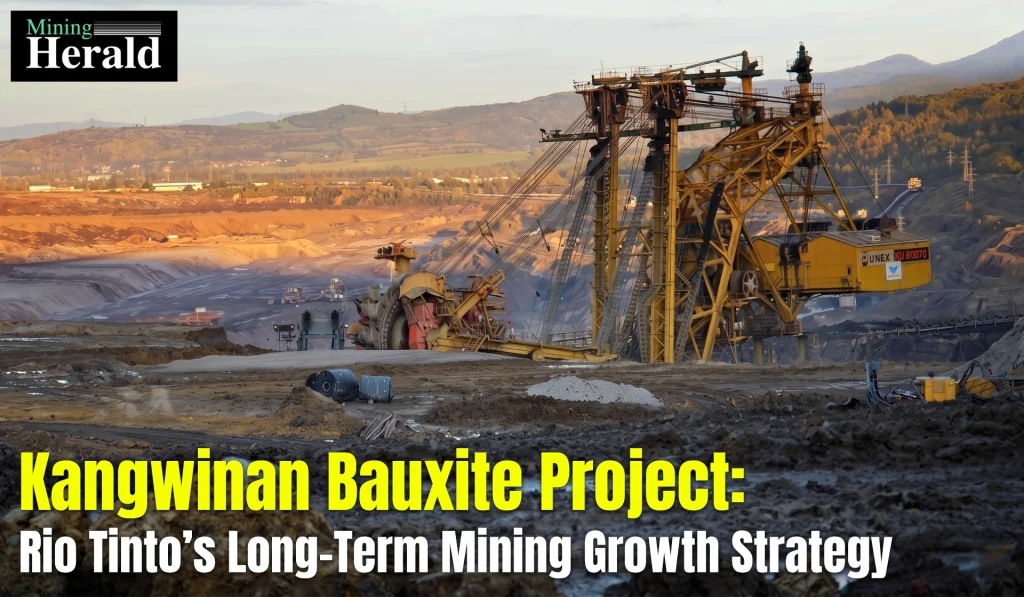
Rio Tinto announced a US$1.9 billion investment in the Kangwinan Bauxite Project on 23 October 2026. The development will establish a new production centre on Queensland’s Western Cape York Peninsula, 15 kilometres south-east of Amrun.
First output is targeted for 2029. Full production is expected three years later.
The project will add 20 million tonnes of annual production capacity. Much of that capacity has a replacement role, however, as older mines reach the end of their operating lives.
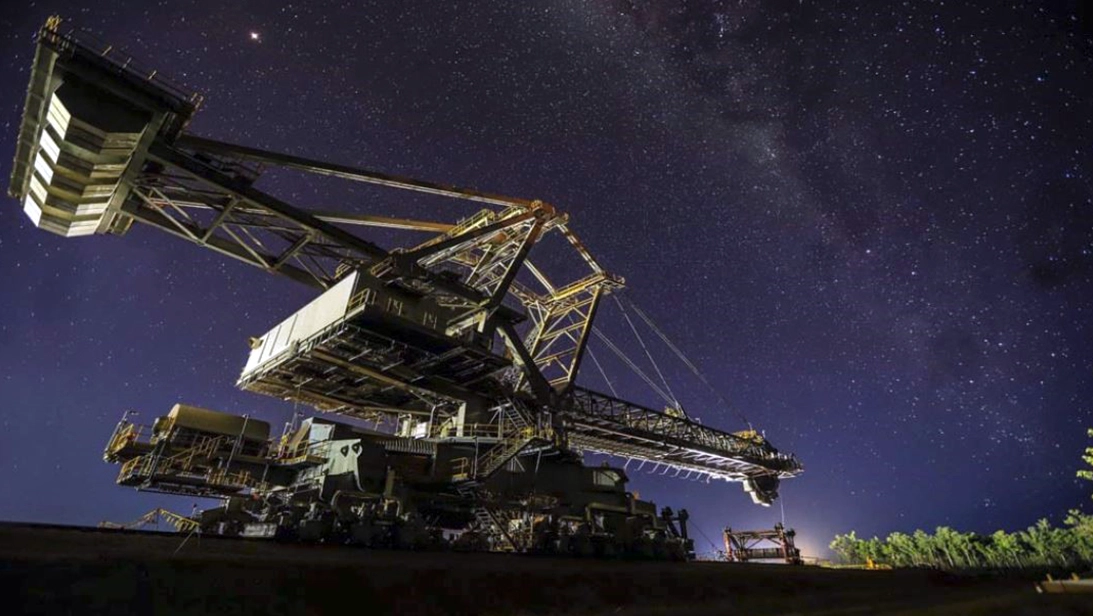
Figure 1: Materials-handling infrastructure at Amrun, where expanded stockyard and wharf facilities will serve Kangwinan. Archive photograph of the existing operation. Image credit: ASPEC Engineering.
Replacing Andoom Comes Before Counting the Growth
Andoom, near Weipa, is expected to finish production this decade. Gove, in the Northern Territory, is scheduled to end production in 2029.
Kangwinan will replace Andoom’s output and help compensate for the loss of Gove.
This explains why the 20-million-tonne project figure should not be added directly to Weipa’s current production of around 38 million tonnes a year.
| Project measure | Announced position |
| Total capital estimate | US$1.9 billion |
| Kangwinan annual production capacity | 20 million tonnes |
| Current Weipa annual production | Around 38 million tonnes |
| Future Weipa annual capacity | About 44 million tonnes |
| First output target | 2029 |
| Full production expectation | 2032 |
The Rio Tinto bauxite expansion therefore serves two purposes: replacing supply that will disappear and creating room for higher output at Weipa.
The Conveyor and Wharf Are Part of the Production Plan
Kangwinan will use some existing infrastructure, although substantial new work is required.
A 15-kilometre conveyor will carry ore to expanded stockyards and the existing Amrun wharf.
For a bulk commodity such as bauxite, the route out of the mine matters alongside the deposit. Mining capacity needs matching storage, handling and loading capacity if the planned tonnes are to reach customers.
The investment consequently covers more than opening a new mining area. Its conveyor, stockyard and wharf work must be ready to support the production ramp-up.
Mining Herald’s Fortescue September-quarter analysis offers a separate example of why mined volumes, shipments and sales need to be assessed individually.
The US$1.9 Billion Includes Work Already Approved
Early works began in 2025. The total capital estimate includes US$150 million approved for that stage.
That amount should not be added again to the US$1.9 billion headline figure.
Rio Tinto also says the replacement capital expenditure is already incorporated in its medium-term capital guidance. The announcement identifies the project commitment within that spending framework.
The company expects an internal rate of return of approximately 22%, based on third-party market forecasts as at the fourth quarter of 2026.
That is a forecast project return, rather than a return promised to shareholders. Delivery costs, timing and future market conditions will influence the eventual result.
Construction Ramps Up in 2027, With Full Output Later
Construction activity is expected to increase during 2027 and support more than 1,300 construction jobs.
Over the longer term, Kangwinan will help sustain Rio Tinto’s existing residential workforce of around 1,500 people in Western Cape York. These are different employment measures: temporary construction demand and support for the established operating workforce.
| Timing | Planned milestone |
| 2025 | Early works began |
| October 2026 | US$1.9 billion investment announced |
| 2027 | Construction ramps up |
| 2029 | First output targeted; Gove production scheduled to end |
| 2032 | Full Kangwinan production expected |
The three-year interval between first output and full production deserves attention. Initial production in 2029 would mark the start of the operating ramp-up, with more work required before the project reaches its intended annual rate.
Bauxite Supply Supports the Wider Aluminium Business
The Rio Tinto mining growth strategy extends beyond selling ore from a single mine.
Kangwinan is intended to maintain supply to international customers and Rio Tinto’s Australian alumina refineries. Those refineries sit within the company’s broader aluminium business, alongside its smelters.
Replacing ageing mines helps protect the raw-material supply on which that network depends.
Rio Tinto linked the investment with recent agreements supporting Bell Bay, Tomago and Boyne. Together, these decisions address different requirements across the business, from access to ore to the conditions needed for continued smelting.
Mining Herald’s report on the Bell Bay aluminium power agreement covers another part of that investment programme.
Aurukun Could Extend the Plan, but Remains Conditional
Rio Tinto agreed in September to acquire the neighbouring Aurukun Bauxite Project from Glencore and Mitsubishi, which hold 70% and 30% respectively.
The transaction remains subject to government approvals.
Rio Tinto expects the combined Amrun, Kangwinan and Aurukun operations to support Weipa well beyond the middle of this century. That expectation depends partly on the proposed acquisition and subsequent development work.
Aurukun should therefore be kept separate from Kangwinan’s approved investment and production timetable.
Traditional Owner Engagement Continues Through Delivery
Kangwinan received its name at the request of the Wik Waya Traditional Owners.
Rio Tinto says it will continue working with Traditional Owners to minimise impacts on cultural heritage, waterways and important access routes.
Environmental permits for Kangwinan were previously secured through the State and Commonwealth-approved South of Embley Environmental Impact Statement.
Those permits establish an important part of the project’s regulatory position. The announcement also makes clear that engagement with Traditional Owners will continue as the development proceeds.
The Next Test Is Delivering the Replacement on Time
The next visible step is the construction ramp-up in 2027. After that, progress on the conveyor, stockyards and wharf will help show whether the supporting infrastructure is keeping pace with mine development.
First output in 2029 matters because it coincides with Gove’s planned closure. Reaching full production by 2032 is a separate milestone.
For investors, the useful checks are spending against the US$1.9 billion estimate, progress towards those dates and any change to the expected Weipa capacity. Aurukun could add a longer-term opportunity, but it still has its own approvals and development decisions ahead.
ALSO READ: Rio Tinto Share Price and Mining News
FAQs
Q1. What is Rio Tinto’s investment in Kangwinan?
Ans. The capital estimate is $1.9 billion, including $150 million granted for early works in 2025.
Q2. When will the manufacturing start?
Ans. Due to be produced first in 2029, with full production by 2032.
Q3. Will Kangwinan increase Weipa production by 20 million tons?
Ans. A lot of that capacity will be replacing Andoom production. Rio Tinto intends to have a capacity of 44 million tons a year at Weipa in the future, up from roughly 38 million tons now.
Q4. Have you finished acquiring Aurukun?
Ans. No. The stated purchase is subject to government clearances and future development would need to undergo its own planning and approvals evaluation.
Disclaimer
This article is for general information only. Not personal advise. Capital estimates, output timelines and estimated returns are forward looking and subject to change. Investing involves risk of loss.
Filed under

About the author
Jonathon Brown
Jonathon Brown began his career as a broadcaster, working across markets in British Columbia before moving into financial journalism. Since 2017, he has specialised in stock market reporting, covering emerging companies across the healthcare, technology, mining and consumer sectors. He brings more than 15 years' experience to his reporting. A graduate of Vancouver Island University and the British Columbia Institute of Technology, Jonathon is focused on delivering clear, balanced reporting for investors.