

Key Takeaways
- 01 Sandfire produced 26,987 tons of copper in September, up 10% year-over-year but down 21% from June.
- 02 FY27 copper and copper equivalent projections are 99,000–111,000 tons and 150,000–166,000 tons.
- 03 Exploration near existing mines and drilling at Kalkaroo support the growth programme, while energy prices remain a cost risk.
The Sandfire Resources quarterly report, released on 27 October 2026, recorded copper production of 26,987 tonnes for the first quarter of FY27.
The financial result gave the company room to continue development spending and pay a dividend. At the mines, however, the quarter brought different operating conditions.
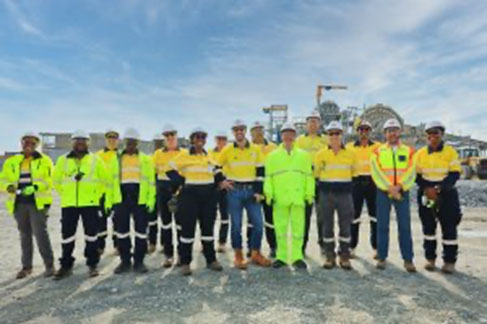
Figure 1: Photograph from Sandfire’s financial community visit to Motheo, Botswana, featured in its October 2026 site update. Credit: Sandfire Resources.
Copper Output Needs Both Comparisons
A reader looking only at the June comparison would see a substantial fall. Someone checking the same period last year would see growth.
Both describe the quarter accurately.
| Production measure | September 2025 | June 2026 | September 2026 |
| Copper | 24,570t | 34,224t | 26,987t |
| Zinc | 22,228t | 23,048t | 19,679t |
| Lead | 2,015t | 1,167t | 1,303t |
| Silver | 1.1Moz | 1.8Moz | 1.5Moz |
| Copper equivalent | 35.6kt | 48.3kt | 38.9kt |
Copper equivalent combines copper with the value of other metals using the company’s stated price assumptions. It should not be read as physical copper output.
For anyone tracking Sandfire Resources production 2026, the annual guidance provides another reference point. September copper output represented approximately 26% of the midpoint of the FY27 copper range.
That leaves the company broadly on schedule after three months. It does not remove the need for the expected improvements over the remaining nine.
MATSA Expects Better Grades After a Softer Start
Processing remained steady at an annualised rate of 4.7 million tonnes. Lower planned copper and zinc grades, accompanied by weaker recoveries, reduced metal output compared with June.
Sandfire expects grades and recoveries to improve through the rest of FY27.
Costs also moved higher. MATSA’s underlying operating cost reached US$95 per tonne processed, compared with US$86 in June. An intensive maintenance cycle, energy costs and the euro’s exchange rate contributed to the increase.
Approximately 90% of MATSA’s cost base is denominated in euros. Sandfire expects the recent weakening of the euro against the US dollar to provide some relief, alongside completion of the maintenance work.
The next quarterly report should show whether those benefits are reaching the operating figures.
Motheo’s Lower Unit Cost Comes With Qualifications
Motheo produced 13,341 tonnes of copper, taking Sandfire Resources copper production across the two operations to 26,987 tonnes.
Its plant ran at an annualised rate of 5.6 million tonnes, with the higher-grade A4 open pit supplying approximately half the feed. The quarter also included a planned processing shutdown.
Underlying operating cost fell to US$48 per tonne processed from US$54 in June. Implied C1 cost was US$0.65 per pound.
Two factors helped. Treatment and refining charges were negative, benefiting the concentrate producer. Work on the T3 Stage 4 cutback also involved expenditure capitalised as deferred waste stripping.
That accounting treatment matters when assessing the result. Capitalised stripping remains a cash requirement, even though it is recorded separately from current operating expenditure.
Motheo invested approximately US$14 million in deferred stripping during the quarter.
Fuel Prices Are an Assumption Worth Watching
Sandfire says Motheo has adequate diesel and other critical supplies, with good visibility over near-term availability.
Price is the concern. Its cost guidance assumes diesel returns to levels seen before the recent price escalation during the second half of FY27.
If that does not happen, the open-pit operation could face more pressure than the annual estimate allows.
Solar projects should help with electricity exposure. Motheo’s 21MW facility is scheduled to begin commissioning in Q3 FY27 and is expected to supply approximately 30% of annual stationary power requirements. MATSA’s 33MW facility is scheduled for commissioning and ramp-up during the second half.
Those facilities address part of the energy bill. Motheo’s mining fleet will still require fuel.
Mining Herald’s coverage of the global copper outlook and supply pressures examines the wider market surrounding producers’ operating decisions.
Exploration Is Concentrating on Ground Near Existing Mines
Sandfire spent US$12 million on regional exploration and another US$4 million on near-mine and extension work.
At La Juliana, near MATSA’s existing underground operations, follow-up drilling extended the target horizon approximately 160 metres along strike. Sandfire plans to accelerate drilling there and at A4 Underground in Botswana, alongside concept-level studies.
The location of these targets is relevant. Discoveries near operating mines can be assessed against infrastructure already in place. Their eventual value still depends on the deposit, mining access, processing requirements and development costs.
Sandfire’s aspiration is to define 15 years of mine life at both MATSA and Motheo. That is a goal, rather than a statement that both operations already have 15 years established.
The distinction also features in Mining Herald’s discussion of mining-sector growth beyond commodity prices.
Kalkaroo Remains a Longer-Term Development Programme
At Kalkaroo in South Australia, Sandfire completed 8.7 kilometres of a planned drilling programme of approximately 130 kilometres.
Rain restricted access for around three weeks. The company expects drilling activity to increase in Q2 FY27 and still targets completion of the pre-feasibility study in the second half of FY28.
Kalkaroo therefore has a different role from MATSA and Motheo. It is receiving drilling and study expenditure now, while its development case is assessed.
| Item | Retained FY27 guidance or stated milestone |
| Group copper production | 99,000–111,000 tonnes |
| Group copper-equivalent production | 150,000–166,000 tonnes |
| Group capital expenditure | US$299 million |
| Motheo solar commissioning begins | Q3 FY27 |
| MATSA solar commissioning and ramp-up | H2 FY27 |
| Kalkaroo pre-feasibility study completion | H2 FY28 |
Cash Supports the Programme, but EBITDA Is Only Part of the Picture
Sandfire ended September with unaudited net cash of US$342 million, compared with US$353 million in June, after paying US$117 million to shareholders.
Its US$650 million corporate revolving facility remained undrawn.
Underlying EBITDA of US$272 million represented a margin of approximately 57%. That measure excludes items needed to arrive at net profit and does not equal cash available after all spending.
The Next Quarter Needs to Show the Expected Improvements
Sandfire has started FY27 close to the production rate required by its annual plan. The next checks are more specific: better grades and recoveries at MATSA, Motheo’s fuel bill, and progress on the solar installations.
Exploration results will help clarify the longer-term opportunities. For the current year, delivery at the two producing operations remains central.
ALSO READ: Glencore Funding Advances Prieska Copper Revival
FAQs
Q1. How much copper did Sandfire produce in Q1 FY27?
Sandfire produced 26,987 tonnes, up 10% year on year and down 21% from the June quarter.
Q2. Has Sandfire changed its FY27 guidance?
No. Copper guidance remains 99,000–111,000 tonnes, with copper-equivalent guidance of 150,000–166,000 tonnes.
Q3. Why did MATSA’s production fall from June?
Planned lower copper and zinc grades contributed to weaker recoveries and reduced output. Sandfire expects improvement during the remainder of FY27.
Q4. When is the Kalkaroo study expected?
The pre-feasibility study remains scheduled for completion in the second half of FY28.
Disclaimer
This post provides information, not financial advice. Unaudited quarterly financials and production statistics need reconciliation. Project and forecast timelines may vary.
Filed under

About the author
Jonathon Brown
Jonathon Brown began his career as a broadcaster, working across markets in British Columbia before moving into financial journalism. Since 2017, he has specialised in stock market reporting, covering emerging companies across the healthcare, technology, mining and consumer sectors. He brings more than 15 years' experience to his reporting. A graduate of Vancouver Island University and the British Columbia Institute of Technology, Jonathon is focused on delivering clear, balanced reporting for investors.