


Key Takeaways
- 01 Capital discipline is reshaping commodity supply curves into 2026.
- 02 AI infrastructure capex is becoming a primary macro variable.
- 03 Central bank policy across AU, CA and US is converging on neutral.
High-Grade Momentum Builds at Kuro as Trek Metals Limited (ASX: TKM) reports another batch of shallow manganese intersections from its Christmas Creek Project in Western Australia’s Kimberley region.
The company’s 8 September 2026 announcement includes 7 metres grading 40.2% manganese from just 7 metres down-hole. With a second drilling phase underway, Trek is now testing whether additional mineralised pods occur beyond the initial drilling area.
The results strengthen the evidence for repeated high-grade mineralisation at the wholly owned project. They also give Trek more information about how manganese is distributed beneath the surface, although the company has not yet established a Mineral Resource at Kuro.
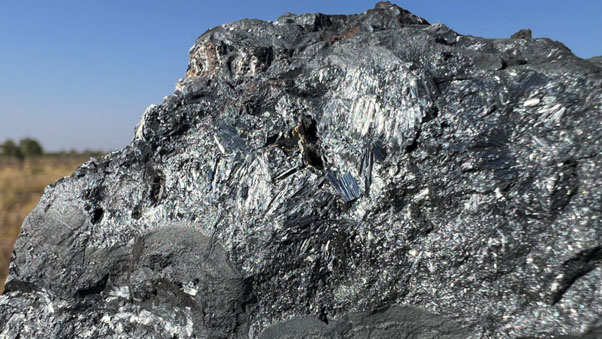
Figure 1: Kuro exploration imagery accompanying Trek Metals’ August drilling update [Courtesy: Trek Metals].
Latest Assays Extend the Evidence for Shallow Mineralisation
The second lab batch is for holes 26XCRC022 to 26XCRC050 from Trek’s maiden reverse circulation drill program. Of the 50 Phase 1 holes reported to date, 28 have reported significant manganese intervals greater than 5% Mn. Sixteen of these contain intercepts averaging greater than 20% Mn.
The best intersection was in hole 26XCRC026 which returned 14 meters at 23.6% Mn from 6 meters down including a 7 meter intercept at 40.2% Mn. 49.9% Mn over one meter in that hole.
For readers following the High-Grade Momentum Builds at Kuro drilling results, the repeated intersections are a central development. For investors following ASX mining stocks, the next question is whether further drilling establishes continuity between the mineralised zones.
Key Drilling Results Show Grade and Depth Together
The latest batch includes several higher-grade intervals within broader manganese intersections. Reporting both helps readers assess the surrounding mineralisation rather than focusing only on the richest sections.
| Drill hole | Broader manganese intercept | Included higher-grade interval |
| 26XCRC026 | 14m at 23.6% Mn from 6m | 7m at 40.2% Mn from 7m |
| 26XCRC033 | 10m at 27.8% Mn from 2m | 8m at 32.7% Mn from 3m |
| 26XCRC028 | 8m at 31.3% Mn from 28m | 6m at 39.0% Mn from 28m |
| 26XCRC041 | 8m at 24.1% Mn from 2m | 4m at 38.6% Mn from 2m |
| 26XCRC023 | 6m at 30.5% Mn from 13m | 4m at 36.8% Mn from 14m |
| 26XCRC037 | 8m at 20.6% Mn from 23m | 3m at 42.7% Mn from 26m |
Source: Trek Metals’ 8 September 2026 announcement
Trek used a 5% Mn lower cut-off for broad intercepts and a 20% Mn lower cut-off for included high-grade intervals. Its reporting criteria require a minimum width of 2 metres and allow up to 2 metres of internal dilution.
Not every hole returned a significant intersection. Twelve holes in the latest batch fell below the stated reporting threshold, an important consideration when assessing the distribution of mineralisation.
Why Shallow Intersections Matter
- Shallow intersections: Trek reports significant intersections between surface and 37 metres down-hole.
- Geological pattern: Mineralisation is interpreted to begin near surface in the north-west and deepen towards the south-east, helping guide further drilling.
- Further testing needed: Additional holes will test how consistently this interpretation explains the mineralised zones across a wider area.
- Visual observations: Company sections show visually interpreted manganese zones along northern and southern geophysical anomalies. These help identify targets but do not confirm grades or continuous economic mineralisation.
- Laboratory confirmation: Trek cautions that visual estimates cannot replace laboratory analysis, particularly where assay results remain pending.
- Commercial significance: Further drilling, resource definition and technical evaluation are needed to assess the discovery’s commercial potential.
Low Iron Adds Another Dimension to the Results
Averages of 27.0% manganese, 3.28% iron and 0.026% phosphorus are reported across 117 meters of intercepts averaging 20% Mn or greater. The Mn/Fe ratio is about 8.3:1 and reaches 14.4:1 in composites with >30% Mn.
An earlier reported intersection in hole 26XCRC020 returned 10 metres at 42.3% Mn with 0.90% iron, producing a ratio of approximately 47:1.
These figures provide early indications of the mineralisation’s chemical characteristics. However, lead concentrations vary, and Trek states that no metallurgical or product characterisation testwork has been undertaken. The assays therefore do not establish processing recoveries, saleable product specifications or achievable pricing.
Earlier Work Provides the Exploration Background
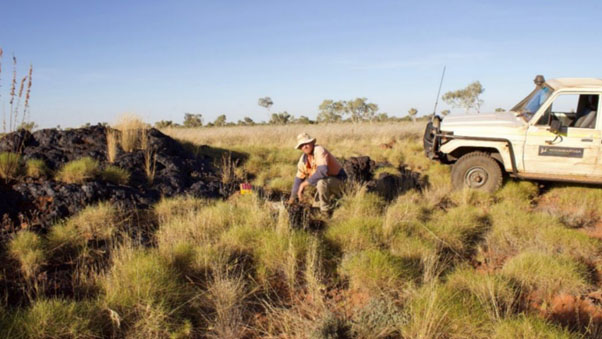
Figure 2: Kuro manganese discovery imagery published alongside Trek Metals’ first drill assay results in August 2026 [Courtesy: Trek Metals, via Mining.com.au].
The current announcement follows Trek’s first Kuro drill assay release on 6 August 2026 and its additional drilling announcement on 19 August. The latest results add laboratory evidence while the company expands its search beyond the original area.
Trek interprets the prospective host geology as extending through a basin with approximately 30 kilometres of strike within its tenure. That is an exploration interpretation, rather than a demonstrated 30-kilometre manganese deposit.
The distinction is essential to this Kuro exploration drilling momentum update mining story: evidence for high grades is growing, while the wider basin remains an area to investigate.
Trek has completed a high-resolution airborne magnetic survey across the area. The survey also collected radiometric data, which the company says played an important role in Kuro’s initial discovery.
Phase Two Tests a Larger Area
Trek’s approximately 2,500-metre Phase 2 reverse circulation drilling program has commenced. It targets priority chargeability and conductivity anomalies identified through induced polarisation surveying across the greater Kuro region.
The drilling covers an area substantially larger than Phase 1, with the objective of finding additional mineralised pods beneath sand cover. Drill pads and access were prepared under the supervision of the Yi-Martuwarra Traditional Owners within the heritage-cleared area.
Alongside drilling, Trek has completed gradient array induced polarisation surveying at Leviathan. A field crew is also conducting reconnaissance soil sampling to assess whether that method can identify further manganese targets.
These datasets will be combined with existing information and the airborne survey results to select follow-up areas.
The High-Grade Momentum Builds at Kuro drilling results will become more informative as those targets receive laboratory confirmation. A geophysical anomaly alone does not demonstrate manganese grade or the presence of an economic deposit.
What Happens Next at Kuro
- Remaining Phase 1 assays: Trek expects the outstanding results within two to three weeks of its 8 September announcement, providing a fuller picture of the initial drilling program.
- Phase 2 exploration: High-Grade Momentum Builds at Kuro through repeated shallow intersections and follow-up drilling that tests additional targets across a broader area.
- Upcoming milestones: Watch for the remaining assays, results from the expanded drilling area and interpretation of newly collected survey data.
- Production-stage perspective: Pilbara Minerals’ recovery on stronger lithium prices illustrates how realised prices, operating costs and sales volumes shape financial performance once a project reaches production.
- Resource status: Kuro remains an exploration discovery. Trek has not completed sufficient exploration to estimate a Mineral Resource, and further work may not necessarily establish one.
FAQ
Q1. Where is the Kuro manganese discovery?
Kuro is within Trek Metals’ wholly owned Christmas Creek Project in Western Australia’s Kimberley region.
Q2. How shallow is the manganese mineralisation?
Trek reports significant intersections between surface and 37 metres down-hole. These are down-hole measurements; the true widths of the mineralised zones remain unknown.
Q3. What is involved in Phase 2 drilling?
The program comprises approximately 2,500 meters of reverse circulation drilling to test priority geophysical anomalies over an area considerably larger than Phase 1. It plans to locate more manganese pods under the sand cover.
Q4. What should investors watch next?
Key updates include the remaining Phase 1 assays, Phase 2 drilling results and interpretation of newly collected survey data. Kuro does not yet have an estimated Mineral Resource, and metallurgical testwork has not been undertaken.
Q5. How many drill holes have returned significant manganese results at Kuro?
Of the 50 phase 1 holes assayed to date, 28 returned significant manganese intervals above 5% Mn including 16 with intercepts averaging above 20% Mn.
Disclaimer
This article is solely for educational purposes and is not intended as investment advice. Information on Trek Metals and Kuro has been extracted from the company’s announcement to the ASX on 8 September 2026. Readers should independently verify company disclosures and any share price or market data before making any investment decisions. Mining Herald has no involvement in the above-listed company.
Filed under

About the author
Jonathon Brown
Jonathon Brown began his career as a broadcaster, working across markets in British Columbia before moving into financial journalism. Since 2017, he has specialised in stock market reporting, covering emerging companies across the healthcare, technology, mining and consumer sectors. He brings more than 15 years' experience to his reporting. A graduate of Vancouver Island University and the British Columbia Institute of Technology, Jonathon is focused on delivering clear, balanced reporting for investors.