


Key Takeaways
- 01 Capital discipline is reshaping commodity supply curves into 2026.
- 02 AI infrastructure capex is becoming a primary macro variable.
- 03 Central bank policy across AU, CA and US is converging on neutral.
The Hidden Copper District Value Re-Evaluated investment case centres on how much of American West Metals’ exploration potential can become economically recoverable copper. Its September 2026 presentation outlines a development strategy at Storm in Canada alongside broader critical-minerals opportunities at West Desert in Utah.
Storm provides the main copper focus. The project contains a reported resource of 28.2 million tonnes grading 1.0% copper and 3.3 grams per tonne silver, within a prospective belt extending more than 110 kilometres.
For investors, the opportunity involves both developing known deposits and testing surrounding ground. Neither a large exploration footprint nor strong individual assays establishes the value of a future mine.
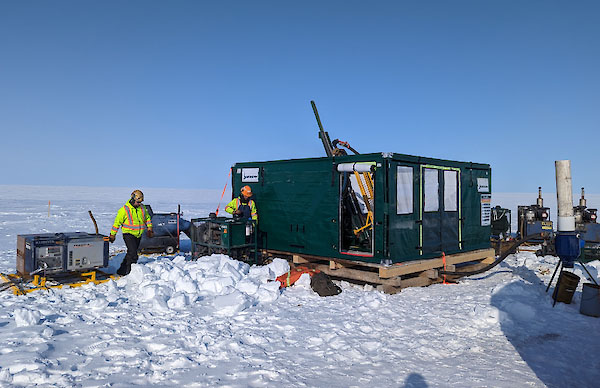
Figure 1: Historical reverse-circulation drilling at Storm illustrates the fieldwork behind resource definition. Image source: Aston Bay Holdings.
What the Existing Resource Establishes
Storm’s resource provides a starting point for mine planning. The presentation reports approximately 276,000 tonnes of contained copper and three million ounces of silver.
Those contained-metal figures describe mineral resources, rather than saleable production or project revenue. Recoveries, mining losses, processing costs and development expenditure influence what could ultimately be extracted economically.
| Storm measure | September presentation |
| Mineral Resource | 28.2 million tonnes |
| Average copper grade | 1.0% |
| Average silver grade | 3.3 g/t |
| Reported contained copper | Approximately 276,000 tonnes |
| Prospective copper horizon | More than 110 kilometres |
| Development study | Prefeasibility study nearing completion |
The company is working towards a maiden reserve estimate. That is an important distinction: a resource identifies mineralisation with reasonable prospects for eventual economic extraction, while reserve estimation requires additional technical and economic assessment.
Where Drilling Could Add Further Value
American West presents several avenues for extending Storm beyond the deposits already incorporated into development planning.
- Near-deposit extensions: Drilling around known mineralisation could add material close to proposed mining areas.
- Deeper targets: Cyclone Deeps offers a separate opportunity beneath the shallow deposits.
- Regional prospects: Tornado/Blizzard, Chevron and Tempest extend exploration interest along the broader copper belt.
- Untested ground: The presentation states that only approximately 5% of the prospective horizon has been explored through drilling.
These targets differ in maturity. A geochemical anomaly identifies an area for investigation; a mineralised drill intersection provides direct evidence; a resource requires sufficient geological information to estimate scale and confidence.
Treating all three as equivalent would overstate the development opportunity.
What Do the High-Grade Drill Results Really Show?
The presentation highlights several previously reported intersections outside the initial mine schedule, including 22.9 metres grading 8.5% copper at Cyclone and eight metres grading 5.5% copper in another Cyclone hole.
At Cyclone Deeps, it lists ten metres grading 1.2% copper.
These results support further investigation, but individual intersections cannot be assumed to represent average mining grades. Their value depends on continuity, geometry and whether surrounding material supports workable mining shapes.
Historical Storm drilling disclosures provide additional context for the exploration programme.
For Copper District Drill-Driven Growth Analysis, the useful question is what each hole changes: the deposit boundary, geological confidence, potential mining sequence or the choice of the next target.
Processing Is Central to the Development Case
American West’s proposed approach relies on upgrading mined material through ore sorting and beneficiation.
The prefeasibility study is evaluating ore sorting, jigs and a potential small flotation circuit to recover fine material. The presentation describes a proposed product averaging approximately 15% copper and 44 grams per tonne silver.
That is an upgraded product specification under evaluation, not the average grade of the entire deposit.
The company says additional study time has been devoted to incorporating fines processing. Recovering copper otherwise lost in fine material could improve output, although the benefits must be assessed against additional equipment, operating complexity and expenditure.
The processing study therefore matters as much as further exploration.
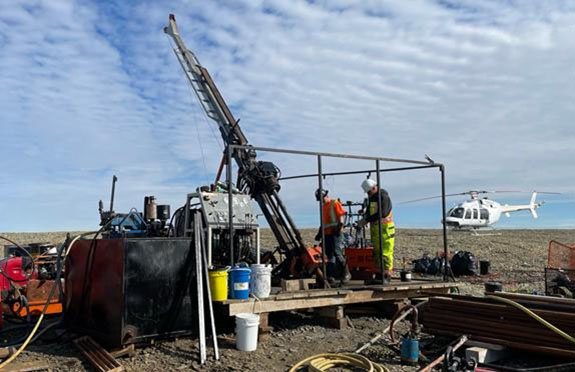
Figure 2: An archival Storm drilling model shows how completed and planned holes support geological interpretation. Image source: Aston Bay Holdings/American West Metals.
What the Prefeasibility Study Needs to Resolve
A credible development case must connect the resource with a practical mining and processing operation.
- Reserve conversion: Further technical work must establish what material can support a maiden reserve.
- Recovery performance: The proposed processing configuration needs to demonstrate how much copper can enter a saleable product.
- Capital requirements: Updated estimates should clarify the cost and sequencing of construction.
- Operating assumptions: Mining schedules, logistics and processing costs must support the projected cash flows.
The earlier preliminary economic assessment remains a scoping-level study. Its production target includes approximately 22% Inferred Resources and 78% Indicated Resources.
The presentation explicitly states that further work is required to establish reserves and provide greater assurance of economic development. The proposed operation should therefore not be described as an approved producing mine.
Financing Support Helps, but Execution Remains
American West outlines an alliance with Ocean Partners involving financing of up to US$40 million and an offtake arrangement.
The presentation relates that funding to approximately US$50 million of initial capital expenditure in the preliminary study. It also records a US$2 million equity investment and offtake covering copper and silver products forecast under that study.
Ocean Partners’ corporate website provides background on the trading and financing counterparty.
The arrangement is commercially relevant because a development project needs both capital and a route to market. However, the presentation’s funding headline should not be interpreted as confirmation that all construction expenditure has been received or that final project costs are settled.
Updated study results will sharpen that assessment.
What Does West Desert Add to the Growth Story?
West Desert broadens the portfolio beyond Storm’s copper-led development concept.
The presentation reports a substantial zinc, copper, silver, gold and indium inventory, with less than 10% of the wider mineral system explored. It also highlights mineralised intersections outside the existing resource footprint.
One listed 2026 intersection returned 108.4 metres grading 25 grams per tonne indium, 1.2% zinc, 0.34 grams per tonne gold and 53 grams per tonne silver.
These results offer another exploration pathway, but West Desert and Storm have different geology, infrastructure requirements and development considerations. Their metal inventories should not be combined into a single implied copper-mine valuation.
Milestones That Would Make Reassessment More Meaningful
The strongest evidence for a valuation reassessment would come from measurable progress.
- Study completion: Publication of the prefeasibility study would allow scrutiny of updated economics and assumptions.
- Resource and reserve updates: These would clarify whether drilling has increased scale or improved confidence.
- Financing detail: Confirmed terms, drawdown requirements and remaining funding needs would improve visibility.
- Permitting progress: Specific approvals would demonstrate movement towards a potential development decision.
The AW1 Drill-Driven Growth Global Summit investment theme is best assessed through these milestones. A presentation can explain the opportunity, but subsequent disclosures must demonstrate delivery.
What Could Turn Geological Potential Into Project Value?
American West has assembled a case built around known resources, encouraging drilling and a proposed processing route.
The remaining task is to show how those elements work together economically. Exploration success can expand possibilities, while stronger studies and financing clarity can make them more investable.
The Hidden Copper District Value Re-Evaluated thesis therefore remains a proposition to test against evidence, rather than a confirmed market revaluation.
Also Read: Why Critical Minerals Are Key to the Global Energy Transition
Disclaimer
Prepared for Mining Herald for general information only, this article does not constitute investment advice. Exploration results, resources, study outcomes and financing proposals remain subject to uncertainty. Readers should review original disclosures before making investment decisions.
Filed under

About the author
Jonathon Brown
Jonathon Brown began his career as a broadcaster, working across markets in British Columbia before moving into financial journalism. Since 2017, he has specialised in stock market reporting, covering emerging companies across the healthcare, technology, mining and consumer sectors. He brings more than 15 years' experience to his reporting. A graduate of Vancouver Island University and the British Columbia Institute of Technology, Jonathon is focused on delivering clear, balanced reporting for investors.