

Key Takeaways
- 01 Capital discipline is reshaping commodity supply curves into 2026.
- 02 AI infrastructure capex is becoming a primary macro variable.
- 03 Central bank policy across AU, CA and US is converging on neutral.
The energy transition needs more copper, more nickel and more critical minerals than at any point before. It also needs proof of where all that material actually comes from.
The Copper Mark, an assurance body for the copper industry, says global metals supply chain transparency is now a commercial necessity rather than a courtesy. Value chain director Mike Smith says rising global metals compliance pressure supply chain demands are changing how mining companies do business day to day.
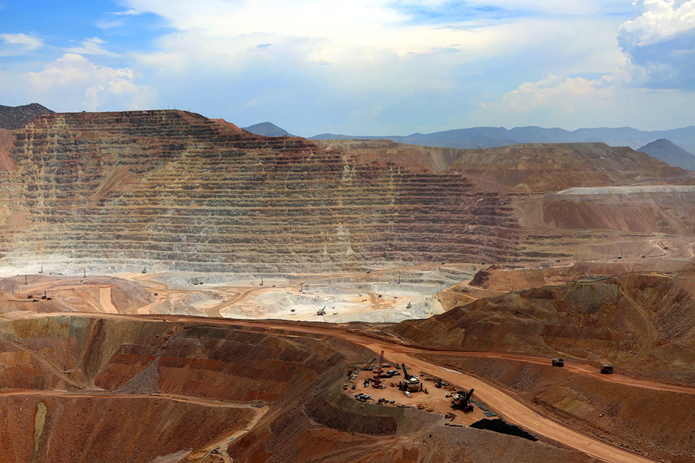
Figure 1: An open-pit copper mine, the starting point of the metals value chain [Courtesy: Stock Image]
Beyond Responsible Mining
The Copper Mark was established as a responsible production assurance framework on 31 Mar 2020. It currently covers about 40% of global mined copper output worldwide.
Smith argues that responsible production can no longer sit within mine gates alone. The Company is now extending its scope to processors, manufacturers and downstream consumers across every tier.
Figure 2: The Copper Mark logo [Courtesy: The Copper Mark]
To support that shift, The Copper Mark is introducing a Midstream Standard for processors and fabricators. A Chain of Custody Standard will trace responsibly produced metals through the value chain, so buyers get proof of global metals supply chain transparency at every step, not just at the mine gate.
The Company is also building a Responsible Metals Value Chain Platform. It will connect mining companies, manufacturers and end users to close information gaps that once went unnoticed.
Transparency Focus
The Copper Mark points to concentrated supply networks as a standing risk, with the Covid-19 pandemic as the clearest example. Geopolitical tensions and shipping delays since then have forced procurement teams to abandon assumptions that held for decades.
Most companies still cannot say which smelter, refiner or mine actually supplied their material.
Closing the Information Gap
That blind spot is a big part of why global metals supply chain transparency now shapes procurement strategy. Businesses want resilience, not just the lowest price, and resilience needs visibility into where materials actually travel.
Smith says companies are moving away from just-in-time sourcing. They are choosing supplier diversity and independently verified information instead, turning transparency into a competitive edge.
Regulation Raises the Stakes
Mandatory due diligence legislation, especially across Europe, is accelerating this shift further. Companies must now demonstrate a clear understanding of ESG risk buried inside their supply chains.
Smith adds that these rules originate in consumer markets but ripple through global mineral supply chains regardless of origin. Producers in Africa, Asia and Latin America face the same global metals compliance pressure supply chain expectations as their European counterparts.
Complexity Reduction
Smith calls the proliferation of sourcing frameworks one of the industry’s biggest headaches. Companies juggle multiple customer requirements, exchange rules and overlapping standards at once.

Figure 3: The Copper Mark value chain director Mike Smith [Courtesy: The Copper Mark]
The Copper Mark is working to reduce that duplication through improved interoperability between assurance systems, including:
- Copper Mark assurance already meets the LME’s responsible sourcing requirements
- Additional equivalencies are planned across other major frameworks
- A single recognised assurance process could satisfy multiple compliance regimes
The Consolidated Mining Standard Initiative sits at the heart of this effort. The Copper Mark, ICMM, the Mining Association of Canada and the World Gold Council have spent three years building one unified global standard together.
Once finalised, The Copper Mark will take ownership of the new standard and manage its rollout. This work forms a core part of the Company’s evolution later this year, including a new name and independent governance structure.
Environmental Sustainability
Buyers demand less carbon material and more recycled content in every shipment. That demand is pushing mining companies toward comparable, independently verified environmental data.
Smith notes that organisations often calculate greenhouse gas emissions and recycled content using different methodologies entirely. This inconsistency limits meaningful comparison across suppliers and regions.
Rather than adding another reporting layer, The Copper Mark wants alignment around existing methodologies. Consistent verification and disclosure will matter more as manufacturers work to cut embedded carbon in electric vehicles and renewable infrastructure.
Industry Outlook
Demand for critical minerals continues rising sharply across every major energy scenario worldwide. Lithium demand grows fivefold by 2040 under current policy settings globally.
Demand Growth and Investment Needs
Graphite and nickel demand double over the same period, according to IEA projections. Cobalt and rare earth demand also grows strongly, rising 50 to 60% by 2040. The biggest existing market, copper demand is expected to increase 30% by 2040.
Just to meet that demand alone, it requires around US$500 billion of new mining investment by 2040. Under faster transition scenarios, that figure rises to US$600 billion, reflecting genuine global metals compliance pressure supply chain realities.
Supply Gaps, Concentration and Price Risk
Copper and lithium face the sharpest supply gaps of any mineral tracked. Announced projects are 30% below copper demand and 40% below lithium by 2035. As ore grades decline and new discoveries slow, supply from the copper industry is not ramping up quickly.
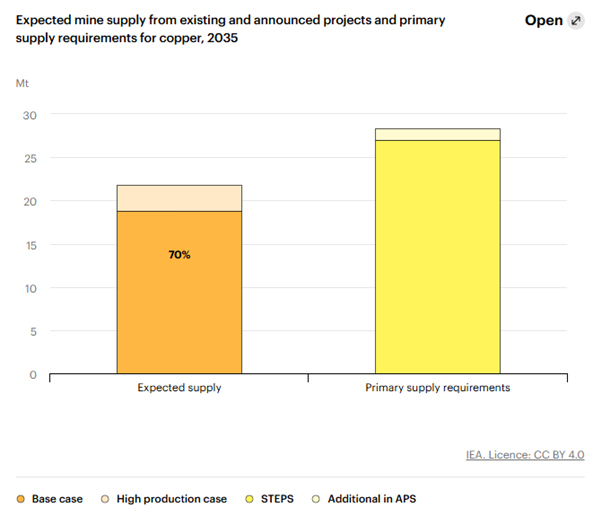
Figure 4: Copper supply falls short of projected 2035 demand [Courtesy: IEA]
Production remains heavily concentrated across most minerals despite growing diversification efforts. The top three nickel producers will control 85% of global output by 2035. China alone will refine over 60% of the world’s lithium and cobalt, and around 80% of battery grade graphite and rare earth elements.
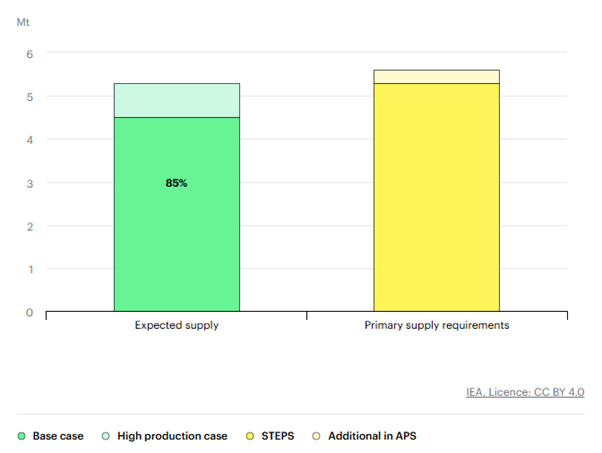
Figure 5: Nickel supply gap narrows but a shortfall remains by 2035 [Courtesy: IEA]
This concentration creates real vulnerability, even in markets that appear well supplied overall. Excluding China from rare earth and graphite supply leaves only 35 to 40% of demand covered. This exposes the fragile core of global metals supply chain transparency conversations happening industry wide.
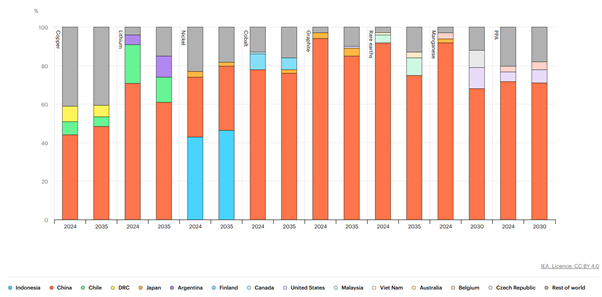
Figure 6: Refined mineral output stays concentrated in China through 2035 [Courtesy: IEA]
Price shocks carry heavy downstream consequences for manufacturers and consumers alike. A fivefold mineral price surge could lift average battery pack prices by 20%. A tenfold increase could hike battery prices by 40 to 50%, impacting EV affordability.
Over the next ten years recycling can take some of the pressure off. Expanding that could mean less need for new mines, between 5 and 30 per cent by 2040. Recycled nickel, cobalt and lithium emit about 80% less than the same materials created from newly mined material.
Future Direction and Impact
How much this will affect the global metals markets will depend on how quickly the transparency systems develop at each level of the chain. With regulators turning the screws, trusted verifiable information is likely to separate the wheat from the chaff, with the wheat being companies that adapt and the chaff companies that fall behind, Smith said.
Governments are chasing energy security. Manufacturers are also diversifying their supplier base with a broader range of countries. More competitive companies are ones that can demonstrate responsible sourcing through verified transparency of the global metals supply chain.
Mining Herald will continue tracking these developments, as governments and industry bodies drive for increased accountability across metals markets.
The Copper Mark envisions a future defined well beyond the mine gate. Producers, processors, manufacturers and consumers will connect through greater traceability, transparency and trust, easing global metals compliance pressure supply chain concerns across the value chain.
ALSO READ: Canada’s $2 Billion Sovereign Fund for Minerals Reshapes Mining
FAQ
Q1. What is The Copper Mark?
Ans. It is an assurance body covering about 40% of global mined copper output.
Q2. What is the Consolidated Mining Standard Initiative?
Ans. It is a joint effort by four major bodies to unify responsible mining standards globally.
Q3. Why does supply chain transparency matter now?
Ans. Regulators, manufacturers and investors demand proof of responsible metal sourcing today.
Q4. Which minerals face the biggest supply gaps?
Ans. Copper and lithium show the sharpest projected shortfalls against demand by 2035.
Disclaimer
This article is intended for informational purposes only. If you pay attention to the global metals and critical minerals sector as an investor, all data in this content is from third-party sources. Please check out the complete share price and market data info. Investing carries a high risk, and you should only invest at your own risk. Mining Herald has no involvement in the above-listed company.
Filed under

About the author
Jonathon Brown
Jonathon Brown began his career as a broadcaster, working across markets in British Columbia before moving into financial journalism. Since 2017, he has specialised in stock market reporting, covering emerging companies across the healthcare, technology, mining and consumer sectors. He brings more than 15 years' experience to his reporting. A graduate of Vancouver Island University and the British Columbia Institute of Technology, Jonathon is focused on delivering clear, balanced reporting for investors.