

Key Takeaways
- 01 Victory’s initial surface assays reached 4.63% lithium oxide. Seven of 12 samples exceeded 2%, but selected samples do not establish an average deposit grade.
- 02 The field programme is complete, with further assays pending. The next task is to turn surface observations into targets that can be tested below ground.
- 03 Victory could eventually supplement Ontario feedstock for the proposed Red Rock Converter. That remains a development possibility, not contracted production.
The Canada lithium supply chain needs more than promising rocks. It needs deposits that can be mined, material that can be processed and businesses able to finance both. Victory now has fresh laboratory results to guide its next exploration decisions. In this article, Mining Herald looks at what those results establish, why the location matters and what still separates discovery from dependable supply.
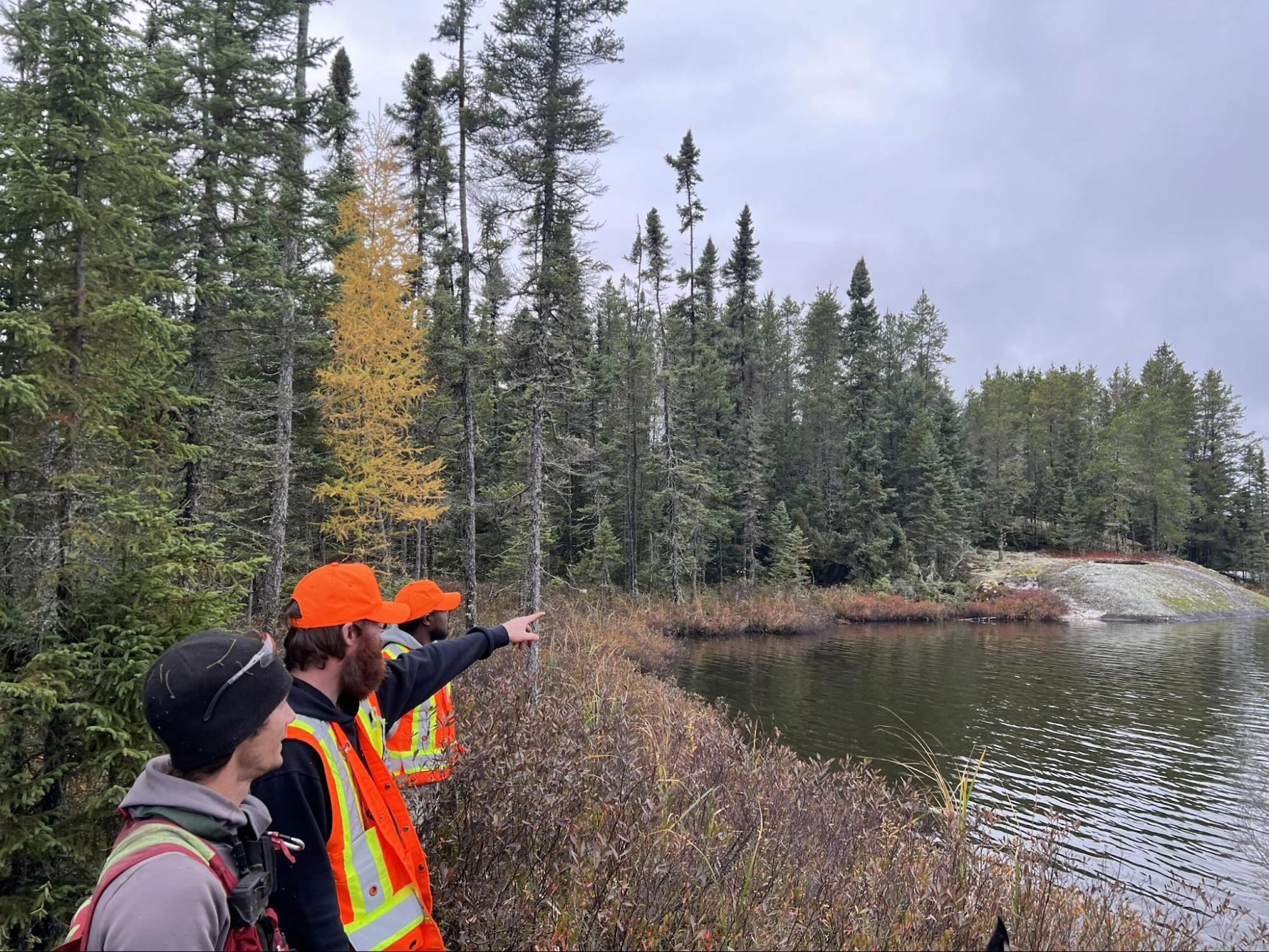
Figure 1: Field crew at Victory, pictured with Rock Tech’s October 2026 exploration announcement. Credit: Rock Tech Lithium Inc.
Surface Results Give the Next Drill Programme a Starting Point
Rock Tech Lithium reported the assays on 23 November 2026. The work concerns a newly identified spodumene-bearing pegmatite, a rock formation containing a lithium-bearing mineral.
Finding a strong sample is useful because it tells geologists where to investigate. It does not tell a mine planner how much material could be extracted year after year. Between those two questions lies a great deal of measurement.
A drill hole can help establish what continues beneath an outcrop. Further holes test whether the interpretation holds elsewhere. Only then can a company begin replacing a promising surface picture with a more dependable view of the rock underground.
A Longer Exploration Trend Widens the Search Area
The new occurrence extends the span of known targets from about six kilometres to 16 kilometres. Its mapped exposure measures roughly 150 metres by 60 metres.
Those dimensions describe different things. The smaller measurements refer to exposed ground at one discovery. The longer distance describes the spread of occurrences across the property. Neither is a measurement of continuous mineable ore.
For investors, the practical gain is a broader choice of targets. The company can compare geological settings, decide where additional sampling is worthwhile and choose which ideas deserve drilling money first.
| Reported Measure | What It Describes | What It Does Not Establish |
| Surface assay | Lithium in a selected rock sample | Average mine grade |
| Mapped exposure | Rock visible at surface | Depth or true thickness |
| Exploration trend | Span of known occurrences | Continuous mineralisation |
A larger search area also requires discipline. More ground does not automatically make the best target better. It can spread a limited exploration budget across more possibilities, making the order of work particularly important.
Nearby Transport Links Could Help if a Deposit Is Established
The Victory Lithium Project covers 9,875 hectares about 45 kilometres east of Kenora. It sits along the Trans-Canada Highway , with railway, transmission and natural gas infrastructure nearby.
That location gives an explorer a different starting point from a remote property where access itself needs substantial investment. Even during fieldwork, getting people, supplies and equipment to site matters.
For a future operation, however, being near infrastructure is only the beginning of the calculation. A road must suit the loads and traffic involved. An electricity connection needs available capacity and acceptable terms. Rail access requires a workable loading and transport arrangement.
These are questions for later studies, rather than benefits that can already be entered as confirmed savings. A map can establish proximity; engineering and commercial agreements establish what the business can actually use.
The Converter Plan Gives Exploration a Possible Customer
Rock Tech’s October update placed Victory about five hours by road from its planned Red Rock conversion facility. The proposed plant is intended to offer a processing route for regional spodumene projects, alongside the company’s Georgia Lake development.
The commercial logic is understandable. A potential mine benefits from knowing where its material might go. A converter benefits from having several possible sources rather than relying on a single development schedule.
But the two sides still have to fit. Material must meet processing requirements, arrive in sufficient quantities and carry a delivered cost that leaves room for a return. A successful exploration programme answers only part of that problem.
Mining Herald’s guide to hard-rock lithium project development explains the wider steps between identifying mineralisation and selling a finished product.
An Option Lets Rock Tech Test the Ground Before Buying It Outright
Rock Tech secured an option to acquire the property in June 2026. Its October announcement described an arrangement tying most acquisition consideration to project results.
That structure can make early exploration more manageable. Rather than treating the whole acquisition as a settled commitment, an explorer can gather evidence through staged work.
It still spends money, and favourable findings can bring further obligations. Shareholders should distinguish the right to earn ownership from ownership already secured, then check what expenditure or payments the next stage requires.
The Next Update Needs to Show Which Targets Deserve More Spending
The most useful follow-up will connect the remaining laboratory work with a clear exploration plan. Readers can look for:
- Sampling coverage: whether new results fill gaps rather than repeatedly testing the most attractive exposed rock.
- Drill priorities: why one target is being tested ahead of another.
- Funding and timing: whether the proposed programme has a defined budget and achievable schedule.
Mining Herald’s assessment is that Victory has advanced as an exploration opportunity. A stronger Canadian supply chain would eventually need operating assets and reliable deliveries. For now, the next decision is narrower: where to drill, what each hole should test and how much to spend answering it.
ALSO READ: Canada Critical Mineral Tax Credits: Expanded Support for Lithium and Copper Investment
FAQs
Does the Highest Assay Represent the Whole Project?
No. A selective grab sample describes the material collected, not the average grade of an entire deposit.
Is Victory Already Supplying Lithium?
No. It remains an exploration project. The reported work does not establish commercial production.
Why Does Access to a Converter Matter?
A processing route could connect mined material with battery-material customers. Technical compatibility, delivery costs and financing still need to work.
Does a Longer Trend Mean a Larger Resource?
Not by itself. The distance between occurrences cannot establish their continuity, depth or recoverable tonnage.
Disclaimer: This article provides general information, not personal financial advice. Exploration results and plans reflect disclosures available on 23 November 2026. Selective surface samples are not representative resource estimates. Further exploration, approvals, funding and technical studies would be required before commercial development.
Filed under

About the author
Jonathon Brown
Jonathon Brown began his career as a broadcaster, working across markets in British Columbia before moving into financial journalism. Since 2017, he has specialised in stock market reporting, covering emerging companies across the healthcare, technology, mining and consumer sectors. He brings more than 15 years' experience to his reporting. A graduate of Vancouver Island University and the British Columbia Institute of Technology, Jonathon is focused on delivering clear, balanced reporting for investors.