

Key Takeaways
- 01 Capital discipline is reshaping commodity supply curves into 2026.
- 02 AI infrastructure capex is becoming a primary macro variable.
- 03 Central bank policy across AU, CA and US is converging on neutral.
The first few pages of a mining presentation usually make the business look straightforward. There is ore in the ground, equipment to extract it and a market for the finished product.
The tougher questions tend to be later.
How far to the next mining area? Will the railroad take the extra tons? Will the cash balance be enough for construction or will shareholders have to put in more money?
These are good places to start when comparing ASX iron ore shares. Open the latest annual report, reserve statement and quarterly update at once. One figure in one needs explanation from another.
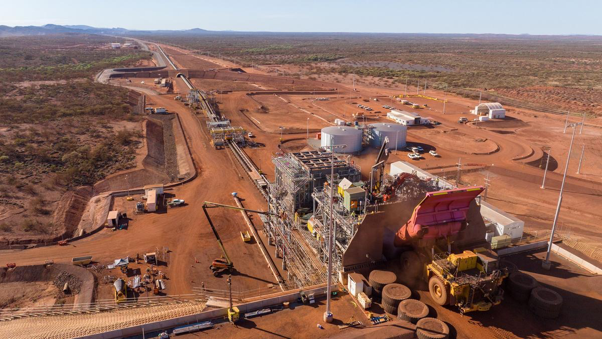
Figure 1: Iron ore handling infrastructure at Gudai-Darri in Western Australia’s Pilbara region. Credit: Rio Tinto.
1. Assess How Much of the Deposit Supports the Mine-Life Estimate
The reserve statement is not the largest tonnage on the presentation.
A Mineral Resource and an Ore Reserve are different levels of assessment. Reserves are the part supported by technical and economic work showing that extraction can be justified under the stated assumptions. And some approvals may even still be pending at that time.
As a rough comparison, take a hypothetical mine with 150 Mt of ore reserves and an annual throughput of 15 Mt of ore. One by the other we divide we get ten years.
That calculation is a starting point, not a mining plan.
Production may change over time. Grades can fall, processing losses affect saleable output, and another pit may need developing before the current one runs out. Also, raw ore tonnes and finished-product tonnes are different measures.
Read the company’s stated mine life alongside the work needed to achieve it. Ten years using an operating plant is a different funding proposition from ten years that requires another plant halfway through.
2. Put Both Companies’ Costs on the Same Basis
Before deciding which producer is cheaper, read the small print below its cost table.
Does the figure include rail and port charges? What about royalties? Is it measured in Australian dollars or US dollars?
Fortescue’s C1 definition covers mining, processing, rail and port operations, with specified overheads. BHP’s FY2025 WAIO reporting identifies several items outside its C1 measure, including third-party royalties. The label alone does not provide the full comparison.
A short working table helps:
| Item to match | Question to ask |
| Currency | Are both figures in AUD or USD? |
| Period | Do they cover the same quarter or year? |
| Tonnes | Are they measured on a wet or dry basis? |
| Transport | How far along the delivery route do costs extend? |
| Other spending | Where are royalties and sustaining capital recorded? |
Then look beyond a single quarter. A shutdown can lift unit costs because fewer tonnes carry the operation’s fixed expenses. A busy quarter can have the opposite effect.
Mining Herald’s beginner’s guide to ASX mining stocks explains how operating results fit into the wider company picture.
3. Compare What Buyers Paid for Each Producer’s Ore
The iron ore price in a market update is not necessarily the price on a miner’s sales invoices.
Product grade, impurities, the balance of lump and fines, and delivery terms can all affect receipts. Use the company’s average realised price for the period being examined.
Freight deserves particular attention. CFR prices include freight to the destination, while FOB prices relate to the loading port. Mixing the two can make one operation appear more profitable than it is.
Consider two fictional producers, with all figures measured on the same basis:
| Per-tonne measure | Producer A | Producer B |
| Realised revenue | USD85 | USD100 |
| Comparable operating cost | USD30 | USD38 |
| Amount remaining before other expenses | USD55 | USD62 |
Producer A has the lower cost. Producer B has more left after that cost because its product earns a higher price.
Neither final figure is net profit. Capital expenditure, financing, tax and other expenses still have to be considered.
4. Subtract Lost Production Before Counting Growth
A mine opening makes a good headline. It does not always mean the company will sell more ore.
An older pit may be running down at much the same time. The new operation could be needed simply to keep the existing plant supplied.
Western Range illustrates the point. When it opened in 2025, Rio Tinto described capacity of up to 25 million tonnes a year and the potential to sustain its existing Paraburdoo hub for up to 20 years. Those tonnes need to be understood as part of the replacement programme.
Compare expected group production before and after the project starts. Use the company’s ownership share consistently, too. A 60% interest in a mine does not give the shareholder exposure to 100% of its output.
Capacity also needs checking against transport. More ore through the plant is useful only if it can reach customers.
There is further background in Mining Herald’s report on why companies expand existing deposits.
5. Work Out Who Pays for the Expansion
Among the iron ore mining companies Australia hosts, two similar production targets can have very different funding behind them.
One company may have cash available and contractors already working. Another may still be arranging finance.
Set the remaining project cost beside cash, committed facilities and debt repayments. Include the infrastructure bill. Roads, power, water and export access can be substantial parts of the work.
Then allow for the period after first production. A new operation may take time to reach planned output while wages and contractor bills continue arriving.
If the company expects to issue shares, consider how ownership changes. The business can become larger without delivering the same increase in value per existing share.
6. Check Past Delivery Before Relying on the Next Forecast
Go back several quarters and compare the original guidance with the results.
Look for recurring explanations. A port closure during a cyclone differs from repeated plant breakdowns. Both affect shipments, but they suggest different questions for the following year.
Keep three notes for each company: what management expected, what happened and why the difference arose.
This exercise also helps put a strong quarter in context. Higher shipments may include ore drawn from stockpiles rather than a lasting increase in mine production.
What to Expect Next?
Search results for best iron ore stocks Australia often begin with a list of names. A useful comparison needs the price paid for those businesses as well.
Low costs and a long mine life are attractive operating features. They do not establish whether the shares are reasonably valued.
Check how earnings and available cash might change at a lower iron ore price. Keep debt repayments and committed project spending in the calculation. Make the assumptions visible.
For diversified miners, include the other divisions. Buying the shares is buying a piece of the whole business.
Such a shortlist leaves some questions to be answered in the next report: costs, remaining mine life, funding and the tons actually delivered.
ALSO READ: ASX Mining Stocks Face a Commodities Crunch
FAQs
Q1. Is a bigger iron ore resource a better investment?
Ans: No. Its value depends on how much can be mined economically, the expenditure required and what buyers will pay for the product.
Q2. Why might two miners report different costs per ton?
Ans. Their definitions of operations and of reporting may vary. First, match currencies, periods, tonnage measures and expenses included.
Q3. Does new mine opening guaranty production growth?
Ans. No. The new mine would take over production from an older, waning deposit.
Q4. What is the production comparison for the readers?
Ans. Prices realised, operating costs, capital expenditure, debt and changes in the number of shares.
Disclaimers
This piece is for general knowledge only and is not personal financial advice. These are examples from fiction. Company estimates and operating guidelines are subject to change and viewers should consult current public announcements and financial reports before any investment decisions are made.
Filed under

About the author
Jonathon Brown
Jonathon Brown began his career as a broadcaster, working across markets in British Columbia before moving into financial journalism. Since 2017, he has specialised in stock market reporting, covering emerging companies across the healthcare, technology, mining and consumer sectors. He brings more than 15 years' experience to his reporting. A graduate of Vancouver Island University and the British Columbia Institute of Technology, Jonathon is focused on delivering clear, balanced reporting for investors.