



Key Takeaways
- 01 Capital discipline is reshaping commodity supply curves into 2026.
- 02 AI infrastructure capex is becoming a primary macro variable.
- 03 Central bank policy across AU, CA and US is converging on neutral.
Michael Burry, the investor who foresaw the 2008 subprime mortgage crisis, revealed a new position in copper. That’s a big deal because for months Burry has been betting against, not with, artificial intelligence stocks.
Burry took a stake in Ero Copper (TSX: ERO), a Canadian miner with copper and gold operations in Brazil. He described the trade as an indirect way to gain exposure to AI infrastructure growth, without holding the chipmakers themselves.
Why Burry Is Calling This an AI Trade, Not a Metals Trade
Burry closed his hedge fund, Scion Asset Management, last year. He had previously held large short positions against NVIDIA (NASDAQ: NVDA) and Palantir (NASDAQ: PLTR), both seen as central names in the AI trade.
His shift towards copper is not a reversal of that scepticism. Instead, Burry argues that AI infrastructure, particularly data centres, will require enormous volumes of copper regardless of which chip companies win the race. In his Substack post, he wrote that “all those back at the house are going to be needing a lot of copper.”
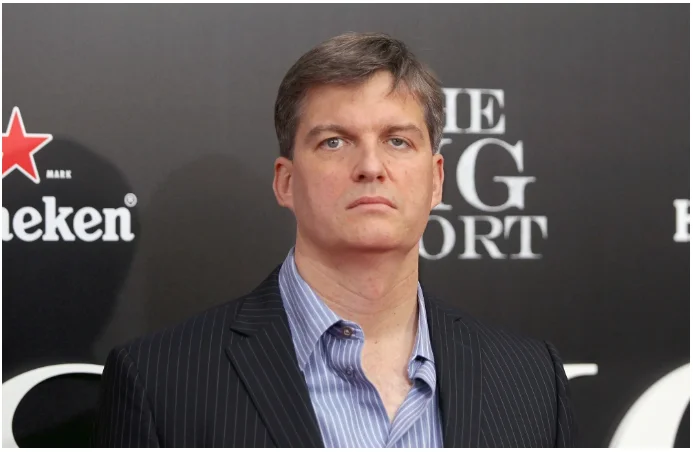 Figure 1: Michael Burry, the investor known for predicting the 2008 subprime mortgage crisis [Courtesy: Getty Images]
That single line captures the Michael Burry copper supercycle thesis. AI demand does not need to be predicted stock by stock. It can be captured through the physical inputs, such as copper, that every data centre buildout requires.
The Supply Gap Behind the Bet
Burry’s copper thesis rests on more than AI demand. It also depends on a shrinking pipeline of new copper discoveries.
He cited analysis from Apollo Global Management (NYSE: APO) Chief Economist Torsten Slok, who has warned about the global mine supply outlook. According to Slok, large copper discoveries have become far less frequent over the past three decades.
- Copper discoveries of at least 500,000 tonnes ran in the double digits annually during the 1990s and 2000s
- That figure fell to just one or two discoveries a year in recent years
- Slok’s research notes no comparable large discoveries in 2025
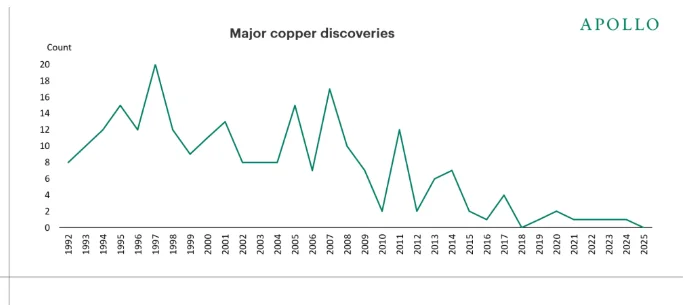 Figure 2: Major copper discoveries have declined sharply since the late 1990s peak [Courtesy: Apollo Global Management]
Burry sees Ero Copper as a way to benefit if that supply mismatch pushes prices higher. He called it a higher-cost producer that stands to gain the most from margin expansion, describing the position as a mid-sized allocation and saying “Ero common does it for me.”
Ero Copper expects its operations in Brazil to produce between 67,500 and 77,500 tonnes of copper this year.
Ero Copper Share Price and Market Performance
| Metric | Figure |
| Ticker | TSX: ERO |
| Share price reaction to Burry disclosure | Up nearly 8% |
| Year-to-date share price change | Up almost 30% |
| Market capitalisation | C$5.37 billion (US$5.37 billion) |
| 2026 copper production guidance | 67,500 to 77,500 tonnes |
The share price move followed directly after Burry’s disclosure became public, reflecting how closely retail and institutional investors track his positioning.
The Data Centre Copper Demand Story
Copper sits inside nearly every part of a data centre, from power distribution to cooling systems and backup infrastructure. As AI workloads scale, so does the physical copper footprint required to support them.
This is where the AI-driven copper market trend intersects with a separate, more cautious Burry position. He has also taken bearish bets on the semiconductor side of the AI trade, arguing that memory chip supply could outpace demand.
Burry’s Other AI Bet Runs the Opposite Direction
While Burry is bullish on copper, he remains sceptical of parts of the semiconductor supply chain feeding AI infrastructure. According to a post from Michael Burry Stock Tracker on X, his disclosed bearish positions include the following.
| Company or ETF | Position Type |
| Micron Technology (NASDAQ: MU) | Short |
| iShares Semiconductor ETF (NASDAQ: SOXX) | Short |
| NVIDIA (NASDAQ: NVDA) | Bearish |
| Applied Materials (NASDAQ: AMAT) | Bearish |
| Nebius Group (NASDAQ: NBIS) | Bearish |
| Palantir (NASDAQ: PLTR) | Bearish |
Burry’s reasoning centres on comments from Acer chief executive Jason Chen, who has said memory inventories are building as Chinese suppliers release more volume. Chen expects that added Chinese capacity to weigh on prices from late 2027.
Micron accounts for around 8% of the SOXX ETF, while NVIDIA represents about 7.5% and Applied Materials holds a 3.7% weighting. That gives Burry’s bearish semiconductor view direct exposure through a widely held index fund.
Chinese memory producer ChangXin Memory Technologies has said its fifth-generation platform has entered mass production, adding another source of supply pressure. Samsung, SK Hynix (NASDAQ: SKHY) and Micron have meanwhile redirected capacity towards high-bandwidth memory to meet AI infrastructure orders.
Industry Outlook
Copper’s role in electrification, from grid infrastructure to data centres, continues to support long-term demand forecasts across major banks and research houses. But supply is still constrained by permitting delays, ageing mines and a dwindling pipeline of big discoveries.
And that imbalance is exactly what’s fueling the AI-driven copper market trend now attracting the likes of Burry and other investors seeking AI-linked exposure beyond chipmakers.
Risks to Consider
Burry’s copper position is not without risk. Copper prices remain sensitive to global industrial demand, particularly from China. A slowdown in construction or manufacturing activity could offset gains from data centre-related demand.
Ero Copper also carries company-specific risks, including production execution in Brazil, cost inflation and regulatory conditions in its operating jurisdictions.
Mining Herald advises investors to treat any single disclosed position, including Burry’s, as one data point rather than a guaranteed outcome.
ALSO READ: ASX Lithium Momentum Builds as Global Lithium Signs Titan Takeover and Funding Deal
FAQ
Q1: Why is Michael Burry buying copper?
Ans. He sees copper as an indirect bet on AI infrastructure, since data centres require large volumes of the metal.
Q2: What company did Burry invest in?
Ans. Ero Copper (TSX: ERO), a Canadian miner with operations in Brazil.
Q3: Is Burry bullish on all AI-related assets?
Ans. No. He holds bearish positions on chipmakers like NVIDIA and Micron, alongside his bullish copper trade.
Q4: Why is copper supply considered tight?
Ans. Major discoveries of copper have collapsed since the 1990s, with none reported in 2025, Apollo Global Management said.
Disclaimer
This article is intended for informational purposes only. If you pay attention to the copper and critical minerals sector as an investor, then all the data in the content is from third-party sources. Please check out the complete share price and market data info. Investing carries a high risk, and you should only invest at your own risk. Mining Herald has no involvement in the above-listed companies.
Filed under

About the author
Jonathon Brown
Jonathon Brown began his career as a broadcaster, working across markets in British Columbia before moving into financial journalism. Since 2017, he has specialised in stock market reporting, covering emerging companies across the healthcare, technology, mining and consumer sectors. He brings more than 15 years' experience to his reporting. A graduate of Vancouver Island University and the British Columbia Institute of Technology, Jonathon is focused on delivering clear, balanced reporting for investors.