


Key Takeaways
- 01 Capital discipline is reshaping commodity supply curves into 2026.
- 02 AI infrastructure capex is becoming a primary macro variable.
- 03 Central bank policy across AU, CA and US is converging on neutral.
The distinction matters. The larger figure covers January through September; it is not three months of output.
Both production centres are in Burkina Faso, with Kiaka contributing the larger share of the quarter’s gold.
There were also unfinished tasks. An explosives-facility permit remains outstanding, and the start of stoping at M5 South underground has moved to early in the second half of 2027.
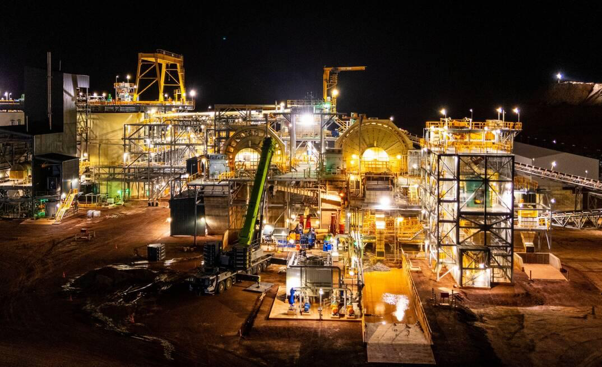
Figure 1: Kiaka’s processing infrastructure in Burkina Faso. Archive photograph published in August 2025. Credit: West African Resources, via MiningNews.net.
Kiaka Put More Ore Through the Plant
Kiaka produced 76,030 ounces during the quarter, up 13% from Q2.
The main change was the amount of ore processed. Mill throughput increased 15%, reaching 2.871 million tonnes. Average feed grade was 0.9 grams of gold per tonne, with recovery of 93.1%.
Those mined ounces are different from finished production. They measure gold contained in the ore extracted before processing and recovery.
For the latest WAF gold production result, Kiaka’s increased plant output was enough to offset the decline at Sanbrado.
Sanbrado Had a Different Quarter
M5 North open-pit mined ounces rose 8%, helped by better grades. At M1 South underground, mined ounces fell 18%. The underground operation moved slightly more ore, but its grade was 20% lower than in Q2.
M1 South delivered 171,000 tonnes at 6.5 grams per tonne, containing 35,898 mined ounces.
That leaves a more mixed operating picture than the group record alone suggests. Kiaka improved, while Sanbrado had less throughput and lower-grade underground ore.
What Did the Two Mines Sell?
Group sales exceeded production during the quarter. WAF sold 135,245 ounces at an average realised price of USD4,240 per ounce.
| September quarter measure | Sanbrado | Kiaka | Group |
| Gold produced | 51,920oz | 76,030oz | 127,950oz |
| Gold sold | 61,753oz | 73,492oz | 135,245oz |
| Average realised price | USD4,214/oz | USD4,262/oz | USD4,240/oz |
For the first nine months, sales totalled 350,127 ounces at an average USD4,550 per ounce.
The quarterly selling price was therefore below the year-to-date average. The update does not provide a detailed reconciliation of the difference between production and sales.
WAF describes itself as unhedged. Its exposure to gold prices remains relevant, although the selling price alone cannot establish profitability.
Mining Herald’s coverage of gold prices and interest-rate pressure provides broader market context.
How Much Production Remains Within Guidance?
With one quarter left in the calendar year, WAF needs another 69,143 ounces to reach the bottom of its guidance range.
Reaching the upper end would require 129,143 ounces.
| Annual production checkpoint | Ounces |
| Produced to 30 September | 360,857 |
| Full-year guidance | 430,000–490,000 |
| Q4 production needed to reach the lower end | 69,143 |
| Q4 production needed to reach the upper end | 129,143 |
Remaining production requirements are calculated from the reported year-to-date total.
Executive Chairman and CEO Richard Hyde said the quarter maintained a production run rate above 500,000 ounces annually.
Multiplying Q3 output by four gives 511,800 ounces. That describes the quarter’s annualised pace; the Company has kept its 2026 guidance at 430,000–490,000 ounces.
M5 South Development Has Started
Approval was received during the quarter to include M5 South underground in Sanbrado’s life-of-mine plan.
WAF expects the delayed start to have minimal impact on 2027 gold production because it has flexibility elsewhere in the Sanbrado mine plan.
That remains management’s expectation. The next updates should show how development progresses against the revised schedule.
Mining Herald’s explanation of why companies expand existing mining operations looks at how additional mining areas can support an established production centre.
Explosives Supply Improved, but Remains a Constraint
Kiaka’s application to operate an explosives manufacturing and storage facility has not yet been approved.
Supply improved during Q3 through better delivery from the existing supplier and the addition of a second supplier. This allowed more attention to waste stripping at Kiaka and Toega.
Even so, WAF says explosives supply remains an operational bottleneck.
At Toega, pre-strip activity continued, with 1.689 million bank cubic metres of material moved. That was 4% below Q2.
The outstanding permit and available supplies therefore remain practical matters for the next quarter’s mining schedule.
The Full Quarterly Report Comes Next
The West African Resources gold update establishes a production record and confirms that annual guidance remains in place.
Those details are needed before drawing conclusions about how much of the production improvement reached the Company’s finances.
Hyde said the full quarterly activities report would follow in the coming weeks.
For now, Kiaka’s throughput, Sanbrado’s operating performance and explosives availability are the clearest areas to watch. Together, they will help determine how WAF finishes the year.
ALSO READ: How ASX Mining Stocks Work: A Beginner’s Guide to Australia’s Resources Market
FAQs
Q1. Is the quarterly production 360,857 ounces?
Ans. No. 3. It covers first three quarters of 2026. Production in the September quarter was 127,950 ounces.
Q2. Which operation had more gold in Q3?
Ans. Sanbrado produced 51,920 oz. and Kiaka produced 76,030 oz.
Q3. Has WAF raised its annual guidance?
Ans: 430,000-490,000 ounces for calendar 2026, with no guidance remaining.
Q4. What remains to be done?
Ans. The permit for the Kiaka explosives facility is still awaited, and explosives supply remains a constraint. M5 South stoping targeted for early H2 2027.
Disclaimer
This is for general information purposes only and is not financial advice. Forward-looking information, including production guidance and timing of development, is subject to change. Investors are advised to read the company announcements before investing. There is a risk of loss of capital when investing.
Filed under

About the author
Jonathon Brown
Jonathon Brown began his career as a broadcaster, working across markets in British Columbia before moving into financial journalism. Since 2017, he has specialised in stock market reporting, covering emerging companies across the healthcare, technology, mining and consumer sectors. He brings more than 15 years' experience to his reporting. A graduate of Vancouver Island University and the British Columbia Institute of Technology, Jonathon is focused on delivering clear, balanced reporting for investors.