


Key Takeaways
- 01 Capital discipline is reshaping commodity supply curves into 2026.
- 02 AI infrastructure capex is becoming a primary macro variable.
- 03 Central bank policy across AU, CA and US is converging on neutral.
Ore grades are falling across the world’s major mining regions. Deposits are getting harder to process, and the rock that has to be moved, crushed and ground just to reach the valuable mineral keeps growing. That trend sits behind one of the more practical technology shifts in mining today: sensor-based ore sorting.
Ore sorting does not create new mineral. It removes waste rock before it ever reaches the mill. At Pilgangoora in Western Australia, one of the world’s largest hard rock lithium operations, that idea has moved beyond pilot testing into large-scale commercial processing.
Declining Ore Grades Are Driving Up Mining’s Energy Bill
The economics of mining have shifted, and the evidence points in one direction:
- A pound of copper produced today generates well over 60% more tailings waste than the same amount did two decades ago, according to CSIRO-backed research behind the NextOre technology.
- That extra waste comes with a similar rise in electricity, fuel and water use per unit of metal recovered.
- Comminution, meaning crushing and grinding, accounts for at least 40% of total energy use in mining and mineral processing, according to Australian Government energy efficiency guidance.
- Any technology that reduces the volume of rock entering that crushing and grinding circuit has a direct line to lower costs, which is the case for ore sorting technology.
How Sensor-Based Ore Sorting Removes Waste Before It Reaches the Mill
Ore sorting works by scanning mined material and rejecting the barren rock, known as gangue, before it enters the processing plant. Government guidance on mining energy efficiency lists optical, radiometric, X-ray and laser sensors as the main methods used for this kind of gangue rejection.

Figure 1: Schematic of sensor-based ore sorting, showing ore rejecting waste rock via a sensor and ejector on a conveyor [Courtesy: MDPI]
Each method reads a different physical or chemical signature in the rock. Their effectiveness depends on the ore’s grain size, its shape, and how tightly the valuable mineral is bound to the waste. None of them works equally well on every ore body, which is why sorting strategy needs to be built into mine planning rather than bolted on afterwards.
CSIRO’s Magnetic Resonance Sensors Target Real-Time Grade Data
One variant, developed through CSIRO and commercialised by NextOre, uses magnetic resonance rather than optical or X-ray sensing. Short pulses of radio waves are fired at ore moving along a conveyor, reading a signal from the minerals inside rather than just the rock surface.
In an early trial at a mine site in Latin America, the analyser measured ore grade accurately in around two seconds, fast enough to sort roughly tonne-sized sections of a production line in real time.
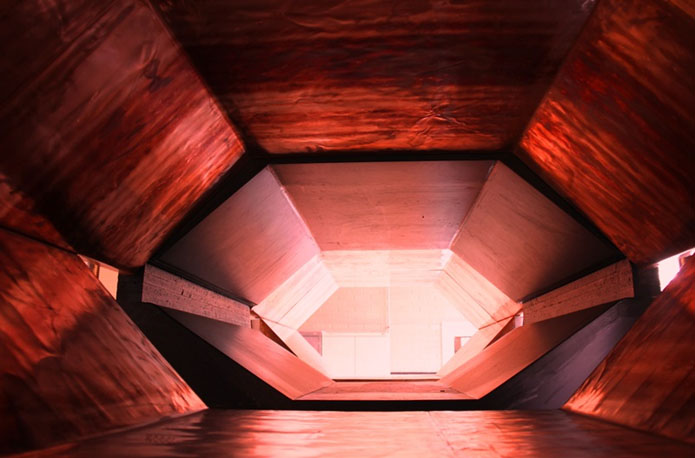
Figure 2: Interior view of a magnetic resonance ore sorting analyser used in CSIRO-backed trials [Courtesy: CSIRO]
NextOre estimates the technology suits close to 35% of the world’s copper mines, and says it has the potential, on a mine-by-mine basis, to cut processing costs by as much as 20% and more than double average ore quality. Those figures are the company’s own estimates rather than independently audited outcomes, and results will vary by ore body.
Pilgangoora’s P1000 Turns Ore Sorting Into a Core Processing Step
The clearest large-scale example sits at PLS Group Limited’s (ASX: PLS) Pilgangoora Operation. Following the earlier P680 installation, the P1000 expansion embedded sensor-based ore sorting, supplied by TOMRA Mining, directly into the core flowsheet rather than treating it as an optional add-on.
According to TOMRA, the installation now represents the world’s largest lithium ore sorting operation, with sorting capacity exceeding 1,000 tonnes per hour. Chris Luke, Head of Operations at PLS, said the project has lifted the site’s production rate.
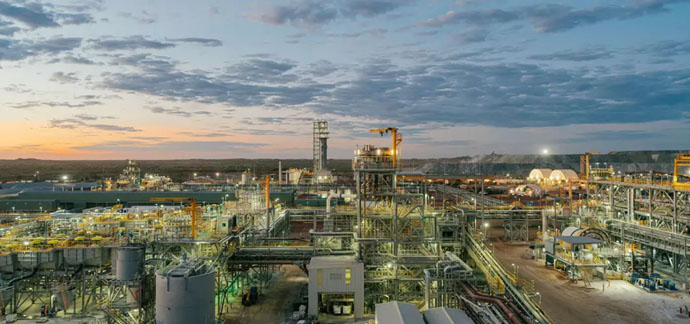
Figure 3: An aerial dusk view of the Pilgangoora lithium processing plant in Western Australia [Courtesy: PLS]
“It has allowed us to increase our production rate to one million tonnes per annum,” Luke said.
Beyond raw throughput, PLS staff describe a change in how the ore body itself is used. Pierre Bille, Processing Technical Service Superintendent at PLS, said removing waste and contamination early gives the crushing plant a far more consistent feed into the wet plant downstream.
Plant Metallurgist Tim Johns added that reducing ore variability helps the site consistently hit recovery and product specification targets.

Figure 4: A TOMRA ore sorting unit installed at the Pilgangoora Operation, branded with Pilbara Minerals signage [Courtesy: TOMRA]
One of the more significant long-term effects, according to TOMRA and PLS staff, is greater confidence in processing contact ore, material that sits at the boundary between valuable mineral and waste rock and was previously considered too marginal to run through the plant with confidence.
PLS’s FY26 Results Show Strong Numbers, But Not a Direct Sorting Dividend
PLS’s FY26 results, released 24 Aug 2026, show a company in a very different position to a year earlier. Revenue rose 152% to A$1,934M on a 17% increase in sales volume and a 121% jump in average realised price. Underlying EBITDA reached A$1,137M, a 59% margin, up from A$97M in FY25.
| Metric | FY26 | FY25 | Change |
| Production | 879.5kt | 754.6kt | +17% |
| Sales | 891.6kt | 760.1kt | +17% |
| Revenue | A$1,934M | A$769M | +152% |
| Underlying EBITDA | A$1,137M | A$97M | +1,067% |
| Unit operating cost (FOB) | A$569/t | A$627/t | -9% |
| Net profit after tax | A$526M profit | A$196M loss | Turned to profit |
Unit operating costs (FOB) improved 9% to A$569/t, equivalent to US$386/t. PLS attributed that improvement to higher sales volumes, general operational gains, and its Cost Smart Future Ready program, according to the announcement itself. The document does not mention ore sorting as a contributor to that figure.
That distinction matters. Ore sorting is genuinely embedded in Pilgangoora’s flowsheet, and PLS staff describe real operational benefits from it. But the FY26 results and the ore sorting story are two separate, parallel developments at the same site. The announcement gives no basis for crediting the cost improvement, specifically, to sorting.
Wider Mineral Processing Research Is Chasing the Same Cost Problem
Ore sorting is not the only response to falling ore grades. The ARC Centre of Excellence for Enabling Eco-Efficient Beneficiation of Minerals, known as COEMinerals, is working on a different set of tools aimed at the same underlying problem: getting more value out of harder, lower-grade ore with less energy and water.
Its REFLUX suite improves mineral separation efficiency and is being applied to recovering value from tailings dams. Separately, researchers there are testing peptide-based binding as an alternative to conventional chemical collectors, aimed initially at simplifying rare earth separation.
These are distinct technologies from sensor-based ore sorting, operating later in the processing chain rather than rejecting waste rock upfront, but they point to the same industry pressure driving sorting adoption.
Adoption Still Depends on Ore Type and Site Economics
Ore sorting is not a universal fix. Several limits are worth weighing before assuming it applies everywhere:
- Sorting performance depends on grain size, shape and how tightly the valuable mineral is bound to the waste rock, according to government guidance.
- NextOre’s own estimate that its magnetic resonance technology suits around 35% of global copper mines is itself an admission that most copper mines do not currently fit that specific approach.
- Retrofitting existing plants carries capital costs that vary by site and equipment type.
- Reported benefits at any single site, including Pilgangoora, come from vendor case studies and company statements rather than independent third-party audits.
- Investors weighing the technology’s economics should treat vendor productivity claims as indicative rather than guaranteed.
Industry Outlook
Sensor-based ore sorting is moving from isolated projects into large-scale commercial deployment, as Pilgangoora’s P1000 shows. Government energy efficiency guidance continues to identify comminution as the biggest single cost lever in mining, keeping pressure on operators to adopt waste rejection technologies earlier in the flowsheet. Adoption will likely stay uneven, concentrated where ore body characteristics and scale make the economics clearest.
What Comes Next: The Impact of Ore Sorting on Processing Costs
Confirmed developments point to continued expansion of both ore sorting approaches covered in this article, with a direct impact on processing costs and resource utilisation across Australian and international mining operations.
NextOre has already delivered three magnetic resonance analysers to mine sites for trials, including two top-tier producers, and expects to deliver another two to three analysers before the end of the year. Each additional deployment expands the real-world data set on how the technology performs across different copper ore bodies.
Separately, COEMinerals has confirmed it has several years remaining in its ARC-backed research program, continuing work on mineral processing techniques that address the same falling grade problem from a different angle.
Mining Herald will continue tracking these rollouts as new trial results and site-level data become available.
Impact on Australian mining: as more sites report verified, rather than vendor-estimated, performance data, the case for wider ore sorting adoption across the sector will become clearer.
FAQs
Q1. What is ore sorting in mining?
Ans. Sensors that detect and remove waste rock before it reaches the plant.
Q2. Does ore sorting reduce mining costs?
Ans. It can, by cutting the rock volume sent to crushing and grinding. Savings vary by site.
Q3. Is Pilgangoora’s ore sorting linked to PLS’s FY26 financial results?
Ans. Not directly. PLS credits its FY26 cost improvement to volume and operational gains, not sorting.
Disclaimer
This article is intended for informational purposes only. All data referenced has been drawn from the third-party sources listed below and has not been independently verified beyond what those sources state. Investing in mining and resources companies carries risk, and readers should conduct their own research before making investment decisions. Mining Herald has no commercial involvement with PLS Group Limited, TOMRA Mining, NextOre, CSIRO or COEMinerals.
Filed under

About the author
Jonathon Brown
Jonathon Brown began his career as a broadcaster, working across markets in British Columbia before moving into financial journalism. Since 2017, he has specialised in stock market reporting, covering emerging companies across the healthcare, technology, mining and consumer sectors. He brings more than 15 years' experience to his reporting. A graduate of Vancouver Island University and the British Columbia Institute of Technology, Jonathon is focused on delivering clear, balanced reporting for investors.