


Key Takeaways
- 01 Capital discipline is reshaping commodity supply curves into 2026.
- 02 AI infrastructure capex is becoming a primary macro variable.
- 03 Central bank policy across AU, CA and US is converging on neutral.
A Mine-to-Market Disruption is unfolding quietly across the critical minerals sector. It has nothing to do with ore grades or commodity prices.
The trigger is sulphuric acid, the chemical that underpins acid leaching across copper, lithium, nickel, cobalt and uranium processing. A tightening global supply picture is now feeding directly into project economics, according to global law firm Squire Patton Boggs.
Chile’s Acid Prices Double in Seven Weeks
China permitted its first outbound sulphuric acid shipment since May 2026, sending 32,000 tonnes from Nanjing to Chile. The move offers some relief, but represents only a fraction of Chile’s annual requirement.
The pressure had already built through a chain of export restrictions. Turkey restricted sulphur exports in April. China limited most sulphuric acid exports in May. Russia then extended its own sulphur export ban.
| Date | Chile CFR Mejillones Spot Price |
| 25 Feb 2026 | US268.18) per metric tonne |
| 15 Apr 2026 | US$380 per metric tonne |
That price move, confirmed by Squire Patton Boggs, has flowed directly into processing budgets across Chile, one of the world’s largest copper producers and acid importers.
Reagent Costs Are Rewriting Project Economics
The Chemical Input Crisis is changing how developers model their flowsheets. Squire Patton Boggs reports the following shifts in reagent cost exposure:
- Sulphuric acid’s share of hard rock lithium processing costs rose from around 3% to 11%.
- Sulphur’s share of costs in certain nickel operations rose from 26% to 42%.
- A project that looks strong on grades and recoveries can face a very different equation once a key consumable changes sharply in cost.
For developers, securing a resource no longer guarantees a viable supply chain. The reagent itself has become part of the investment case.
Pitfield and Samphire Chart: Different Responses
Empire Metals (LSE: EEE) is developing its Pitfield Titanium Project in Western Australia using a sulphuric acid leaching route. Managing Director Shaun Bunn said the Company rejects 90% of mined material at the flotation stage before the remaining ore moves to acid digestion.
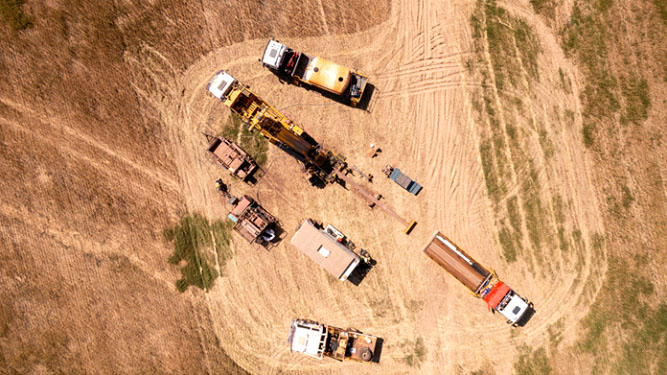
Figure 1: Site works at Empire Metals [Courtesy: Empire Metals]
“That material has not been chemically altered, so can go back into the mining void,” Bunn said.
Detailed engineering studies are underway ahead of Feasibility Studies, alongside work on an Australian Government-backed research initiative examining titanium metal production without the energy-intensive Kroll process.
Alligator Energy (ASX: AGE) is testing an acid-based in situ recovery process at its Samphire Uranium Project in South Australia. Recent field trials recorded sulphuric acid consumption of about 20 kilograms per tonne of ore, with uranium recoveries exceeding 55% after 39 pore volumes.
CEO Andrea Marsland-Smith said reagent consumption tracked in line with expectations during the trial.
A Global Market Under Pressure
The broader sulphuric acid market remains large and growing, even as regional supply tightens.
| Year | Global Sulphuric Acid Market Size |
| 2025 | US$35.13 billion |
| 2026 | US$36.61 billion |
| 2034 (forecast) | US$52.86 billion |
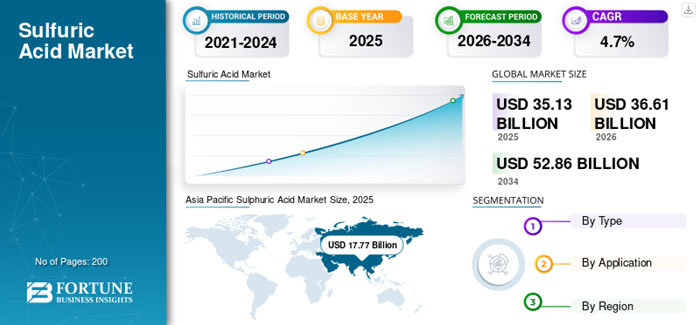
Figure 2: Global sulphuric acid market size and forecast, 2025 to 2034 [Courtesy: Fortune Business Insights]
Contracts Face a New Kind of Force Majeure Test
Squire Patton Boggs notes that under English law, force majeure can only apply where a contract expressly provides for it. Export bans may or may not trigger relief, depending on wording.
Companies affected by the squeeze may need to review contractual risk allocation, mitigation obligations and alternative supply routes, while remaining exposed to offtakers, lenders and joint venture partners regardless of relief obtained from a supplier.
Industry Outlook
The IEA’s Global Critical Minerals Outlook 2026 says that when sulphur shipments were disrupted via the Strait of Hormuz, China started to slow sulphuric acid exports in May 2026. Since then, acid prices have surpassed energy costs for some mineral processors. Investment in critical minerals fell 9% in 2025. In the same year, companies involved in copper increased their spending by 8%.
Sulphuric Acid Now Sits Inside the Critical Minerals Growth Equation
- Developers are re-engineering flowsheets to reduce acid dependence, as seen at Pitfield.
- Uranium recovery operations are folding reagent management into feasibility work, as seen at Samphire.
- Export restrictions from China, Turkey and Russia have made chemical input security a project-level consideration, not a background cost.
The Company-level decisions being made now, from acid substitution to contract renegotiation, will shape which Projects clear the next stage of development.
Mining Herald will continue tracking how the Chemical Input Crisis feeds into Critical Minerals Growth across the sector.
ALSO READ: Deep Yellow Sustainability Report 2026 Shows Execution-Ready Uranium Projects
FAQs
Q1: What is driving the Chemical Input Crisis?
Ans: Export limits on sulphur and sulphuric acid from China, Turkey, and Russia have made global supply tighter.
Q2: Which commodities face the biggest exposure?
Ans: Copper, lithium, nickel, cobalt, and uranium processing all rely on sulphuric acid for leaching.
Q3: How far have Chile’s acid prices moved?
Ans: Chile’s CFR Mejillones spot price doubled, from US380 per metric tonne, within seven weeks.
Q4: How are miners responding?
Ans: Empire Metals and Alligator Energy are optimising flowsheets and reagent usage to minimise acid exposure.
Disclaimer
This article is intended for informational purposes only. If you pay attention to the Australian critical minerals space as an investor, then all the data in the content is from third-party sources. Please check out the complete share price and market data info. Investing carries a high risk, and you should only invest at your own risk. Mining Herald has no involvement in the above-listed Company.
Filed under

About the author
Jonathon Brown
Jonathon Brown began his career as a broadcaster, working across markets in British Columbia before moving into financial journalism. Since 2017, he has specialised in stock market reporting, covering emerging companies across the healthcare, technology, mining and consumer sectors. He brings more than 15 years' experience to his reporting. A graduate of Vancouver Island University and the British Columbia Institute of Technology, Jonathon is focused on delivering clear, balanced reporting for investors.