


Key Takeaways
- 01 Capital discipline is reshaping commodity supply curves into 2026.
- 02 AI infrastructure capex is becoming a primary macro variable.
- 03 Central bank policy across AU, CA and US is converging on neutral.
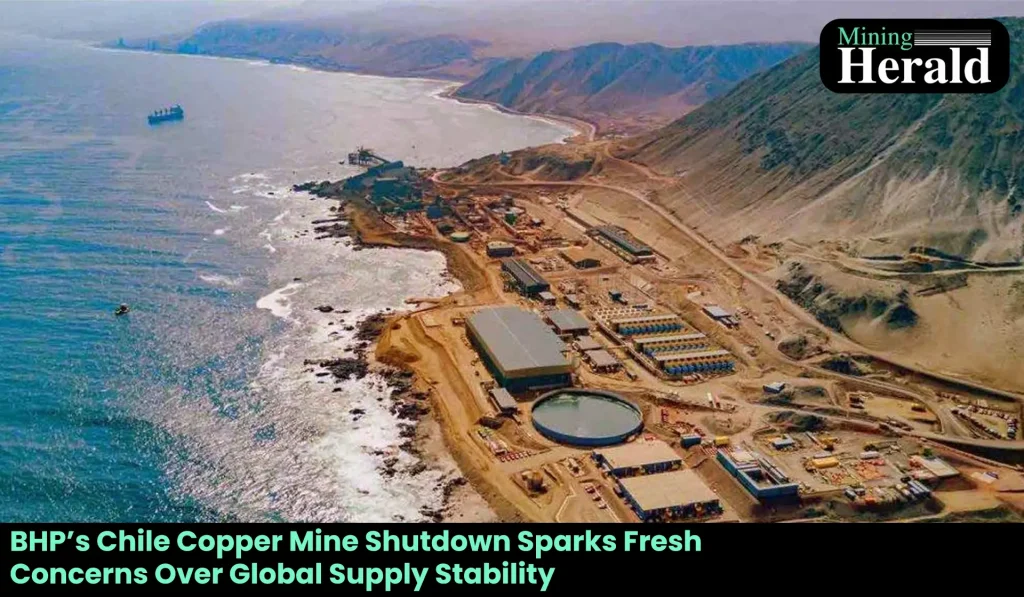
The BHP Chile copper shutdown has brought operational safety and supply reliability into focus at a critical asset in the company’s portfolio.
The immediate priority is understanding what happened and establishing safe conditions for employees. For the copper market, the unanswered question is how long the interruption will last and whether it will affect production guidance.
Escondida’s scale makes any suspension significant. However, the initial announcement did not quantify lost output or identify a restart date. Those missing details limit what can reasonably be concluded about the broader supply impact.
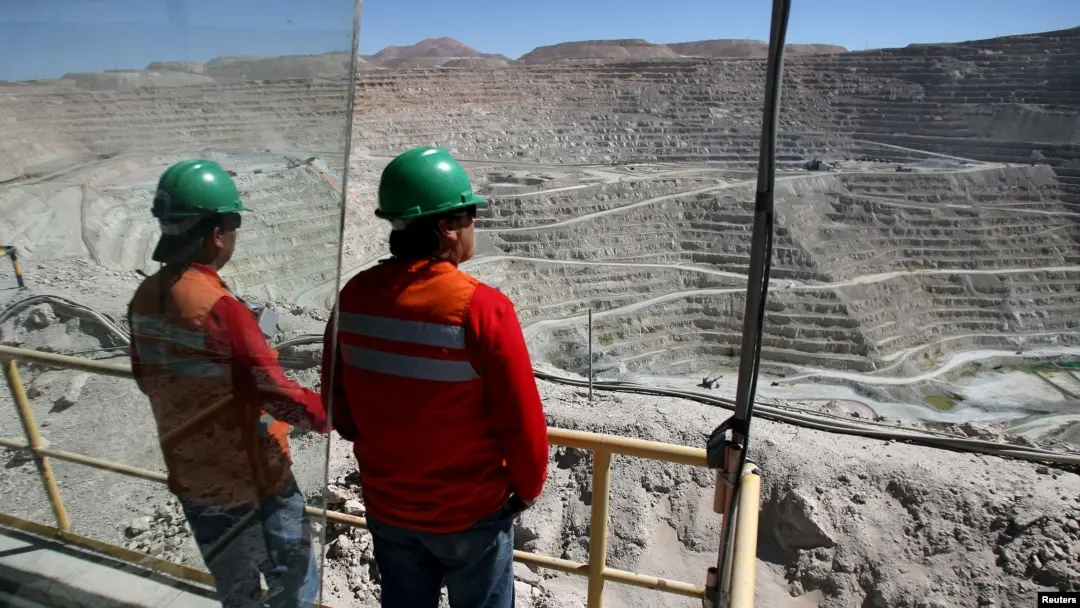
Figure 1: Workers overlooking Escondida’s open pit in March 2008. Credit: Reuters, via Voice of America.
What Happened at Escondida and What Has BHP Confirmed?
BHP said an employee died while carrying out maintenance duties in the mine area. The company subsequently suspended operations and expressed condolences to the worker’s family and colleagues.
The initial statement established the seriousness of the incident without identifying its underlying cause. An investigation is needed before conclusions can be drawn about equipment, procedures or responsibility.
Three points define the position described in the announcement:
- Operations were suspended: BHP said the stoppage covered all operational activities at the mine.
- An investigation began: The company confirmed it was examining the fatal maintenance incident.
- Restart timing was unspecified: No date or estimated duration accompanied the initial suspension statement.
These details should guide coverage of the Chile copper mine halt BHP announced. The event is a confirmed operational interruption, but its eventual production consequences remain unquantified.
A restart announcement would provide important new information. Even then, investors would need to establish whether activities resumed fully or progressively, and whether any work areas remained restricted.
Why Does Escondida Carry So Much Weight in Copper Supply?
Escondida sits in Chile’s Atacama Desert and operates on a scale that makes it important to both its owners and the wider copper industry.
BHP operates the mine and holds a 57.5% interest. Rio Tinto owns 30%, while Japan-based JECO holds the remaining 12.5%.
The official Escondida operation profile describes two pits supplying three concentrator plants alongside oxide and sulphide leaching operations. That configuration shows why the asset is more than a single excavation: it is a substantial mining and processing complex.
| Joint-venture partner | Ownership interest |
| BHP | 57.5% |
| Rio Tinto | 30% |
| JECO | 12.5% |
The supplied September report placed Escondida’s expected financial-year production at up to 1.1 million tonnes, compared with 1.26 million tonnes in the previous year.
These figures describe the mine’s output, rather than production attributable solely to BHP’s ownership stake. That distinction matters when comparing asset-level volumes with company-wide reporting.
The suspension also arrives against an already softer production outlook. BHP’s group copper guidance was reported at between 1.65 million and 1.8 million tonnes, compared with 1.95 million tonnes in FY2026.
Lower ore quality in South America and operational difficulties in South Australia were identified as contributors to the earlier outlook. The shutdown is a separate event and should not be presented as the cause of reductions announced before it occurred.
How Could the Shutdown Affect Global Copper Supply Risk?
The duration of the interruption is the most important missing variable.
A short suspension and a prolonged closure would have very different implications. Production schedules, available material and the sequence of restarting equipment could also influence how much annual output is ultimately affected.
The global copper supply risk can be assessed through three practical questions:
- How long is production interrupted? More time offline could increase the volume at risk, although a confirmed loss requires operating data.
- How does the restart proceed? Permission to resume and a return to normal output may represent different milestones.
- Does annual guidance change? A revised forecast would provide clearer evidence of the expected effect on BHP’s production plans.
It would be misleading to divide annual guidance by 365 and describe the result as confirmed daily losses. Such arithmetic assumes an even production rate and ignores the mine’s operating schedule.
Likewise, the suspension does not by itself establish that customers will receive fewer shipments immediately. The initial report did not disclose inventories, delivery adjustments or contractual consequences.
The defensible conclusion is narrower: uncertainty has increased around a major source of copper. Whether that becomes a measurable market shortage depends on the interruption’s length and conditions elsewhere in the supply chain.
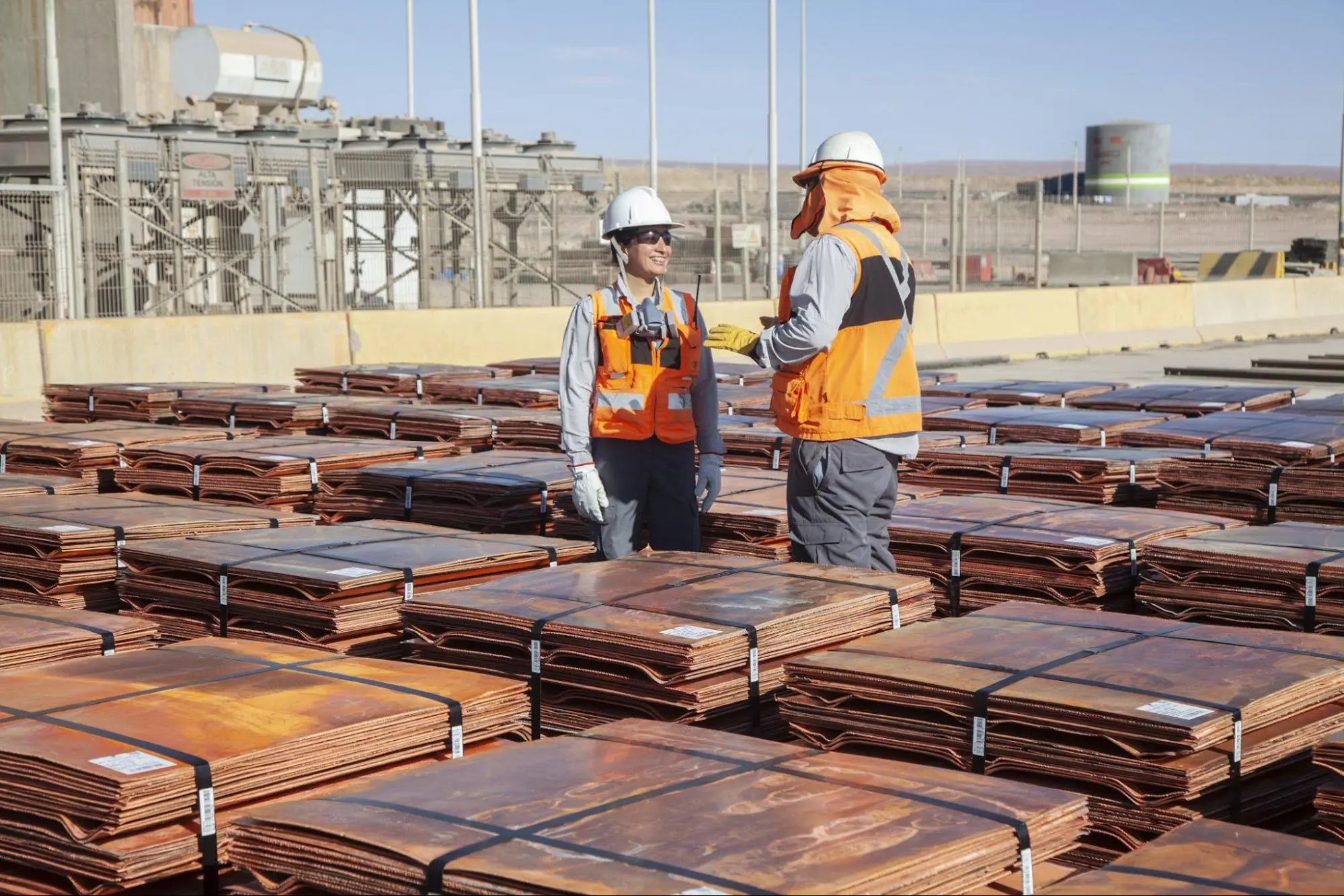
Figure 2: Copper cathode production at BHP’s Escondida operation in Chile. Image credit: BHP.
What Should Investors and Industry Buyers Watch Next?
The next disclosures should help separate immediate disruption from lasting consequences. Safety findings and operating updates will matter more than speculation about how quickly the mine could return.
Three developments deserve attention:
- Investigation and corrective action: Further information may explain the incident and identify measures required before affected activities resume.
- Confirmed operating status: A dated update should establish whether the suspension has ended and what production activities have restarted.
- Production and delivery implications: Revised guidance, quantified lost tonnes or shipment changes would clarify the commercial effect.
For industrial buyers, a shutdown headline is a reason to monitor supplier communication. It is not evidence that every copper delivery connected to the operation has been disrupted.
For shareholders, the same discipline applies. A stronger copper price cannot automatically compensate for unavailable production, while a temporary halt does not automatically invalidate a long-term growth strategy.
Mining Herald readers should therefore follow the operational evidence as it develops. The BHP Chile copper shutdown highlights the importance of dependable existing mines to global supply, but the immediate story remains a workplace fatality, an investigation and an unresolved restart timetable.
FAQs
Q: Why Were Operations Suspended At Escondida?
A: BHP suspended operations after an employee died while performing maintenance duties in the mine area.
Q: Who Owns The Escondida Copper Mine?
A: BHP owns 57.5%, Rio Tinto holds 30%, and JECO owns the remaining 12.5%.
Q: Was A Restart Date Announced?
A: The initial announcement did not specify a restart date or suspension duration.
Q: Has Lost Copper Production Been Confirmed?
A: No. The initial report did not quantify production losses from the suspension.
Also Read: Why Critical Minerals Are Key to the Global Energy Transition
Disclaimer
This article is prepared for Mining Herald for informational purposes only and does not constitute investment advice. It reflects the initial suspension reports. Operating conditions, production guidance and market prices may change. Readers should review subsequent company disclosures before making investment decisions.
Filed under

About the author
Jonathon Brown
Jonathon Brown began his career as a broadcaster, working across markets in British Columbia before moving into financial journalism. Since 2017, he has specialised in stock market reporting, covering emerging companies across the healthcare, technology, mining and consumer sectors. He brings more than 15 years' experience to his reporting. A graduate of Vancouver Island University and the British Columbia Institute of Technology, Jonathon is focused on delivering clear, balanced reporting for investors.