


Key Takeaways
- 01 Capital discipline is reshaping commodity supply curves into 2026.
- 02 AI infrastructure capex is becoming a primary macro variable.
- 03 Central bank policy across AU, CA and US is converging on neutral.
The ASX Gold Stocks Surge gave investors a clear example of how strongly one industry can perform while the benchmark barely moves. Northern Star Resources, Evolution Mining and Newmont all advanced as spot gold climbed 1.5% to approximately US$4,070 an ounce.
Yet the S&P/ASX 200 finished just two points higher at 8,793.30, a gain of 0.02%. The All Ordinaries also added 0.02%, closing at 8,976.90.
This was a selective rally. Gold miners benefited from stronger bullion, technology shares attracted buying, and financial stocks pulled in the opposite direction. The session rewarded particular exposures rather than signalling broad confidence across Australian equities.
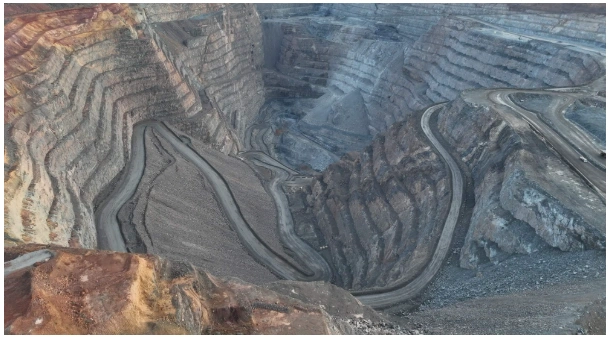 Figure 1: Northern Star’s KCGM operations near Kalgoorlie-Boulder provide operational context for one of the session’s advancing gold producers. Image credit: Northern Star Resources.
Evolution Leads the Three Highlighted Gold Producers
Evolution Mining recorded the largest percentage increase among the three gold companies highlighted in the market report. Its shares gained 5.63% to A$10.89, comfortably exceeding bullion’s percentage rise.
Northern Star advanced 3.26% to A$19.66, while Newmont added 2.04% to A$131.12. These closing prices describe the July session and should not be read as current quotations.
| Company or benchmark | Closing level | Session change |
| Evolution Mining | A$10.89 | +5.63% |
| Northern Star Resources | A$19.66 | +3.26% |
| Newmont | A$131.12 | +2.04% |
| S&P/ASX 200 | 8,793.30 points | +0.02% |
| All Ordinaries | 8,976.90 points | +0.02% |
The difference between these moves matters. Exposure to the same commodity does not produce identical share-price reactions. Investors also assess operating performance, costs, valuation and expectations already reflected in each stock.
The supplied report identifies stronger gold as the common backdrop. It does not establish a separate company announcement as the cause of each miner’s gain.
The Catalysts Behind the Session’s Gold Interest
Several developments shaped the trading environment, although their individual contributions cannot be measured from the report alone.
- Higher bullion prices: Spot gold’s 1.5% increase provided a direct positive signal for companies selling the metal.
- Geopolitical uncertainty: Renewed Middle East concerns formed part of the market backdrop, potentially supporting interest in defensive assets.
- Selective buying: Materials and technology led gains while other sectors weakened, showing that investors remained willing to buy particular industries.
- Upcoming economic releases: Employment and inflation data kept monetary policy in focus, encouraging caution outside the strongest areas.
Together, these factors explain the setting for the ASX Gold Stocks Surge on Fresh Market Catalysts. They do not prove that investors had adopted a lasting preference for gold shares.
Higher Gold Prices Must Still Reach Company Cash Flow
Northern Star’s KCGM operations overview illustrates the physical business behind a listed gold stock: open-pit and underground mining supported by processing facilities. These activities require ongoing coordination and expenditure regardless of daily bullion movements.
This distinction is central to interpreting the rally. Investors were responding to an improved pricing environment, but the session itself did not demonstrate higher production, lower costs or increased free cash flow.
Those outcomes require company reporting.
How Does the Australian Dollar Affect Gold Producers?
The Australian dollar strengthened to 70.12 US cents during the session. That matters because international gold prices are generally quoted in US dollars, while many Australian operating expenses are incurred locally.
All else equal, a stronger Australian dollar reduces the local-currency value of a given US-dollar gold price. It can therefore offset part of bullion’s benefit for Australian operations.
The market report quoted gold at approximately A$5,798 an ounce alongside the US-dollar figure.
For investors, the useful comparison is between a producer’s realised selling price and its costs. Watching only US-dollar bullion can miss changes in local margins, particularly when currencies move sharply or a company operates across several countries.
Bank Weakness Kept the Benchmark Grounded
The gold rally arrived alongside losses across all four major banks.
Commonwealth Bank fell 0.41% to A$170.49. Westpac declined 1.2% to A$36.22, National Australia Bank lost 0.98% to A$39.30, and ANZ dropped 1.19% to A$35.70.
Healthcare also weighed on trading. Across the market, five sectors finished higher and six declined.
Technology provided another source of support, with NextDC rising 7.74%, Megaport gaining 5.10% and Xero advancing 2.05%.
The almost unchanged benchmark therefore concealed substantial differences beneath the surface. A flat index did not mean an uneventful day for shareholders holding gold producers, technology businesses or banks.
How to Assess the Miners Behind the Price Moves
When Top Miners Gain Attention, the next step is to examine whether operating evidence supports the enthusiasm.
- Production delivery: Compare output with guidance and identify whether changes reflect temporary interruptions or persistent issues.
- Cost performance: Assess whether higher labour, energy or processing expenses are absorbing stronger selling prices.
- Capital spending: Separate expenditure needed to sustain operations from investment intended to expand them.
- Financial flexibility: Review cash, debt and commitments to understand how comfortably development programmes can be funded.
These measures help distinguish a favourable commodity backdrop from improving company performance. A rising share price alone cannot answer those questions.
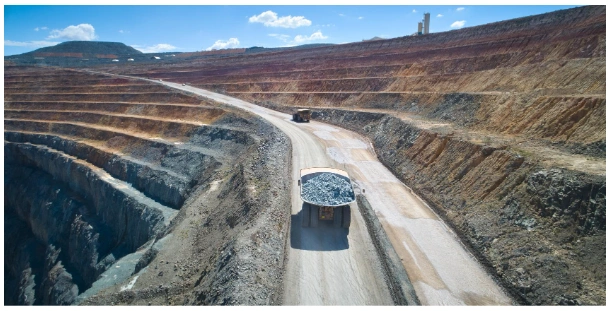 Figure 2: Evolution Mining’s Cowal operation in New South Wales. The company recorded the largest percentage gain among the three gold producers highlighted in the July report. Image credit: Evolution Mining.
Operating Assets Give the Rally Its Longer-Term Context
Evolution’s Cowal gold operations combine open-pit and underground mining in New South Wales. The asset provides a practical reminder that exposure to gold comes through operating businesses with specific geological and engineering requirements.
For shareholders, the longer-term case depends on extracting and processing ore economically across changing market conditions.
Higher bullion can strengthen that case, but development spending and production execution remain important. The July rally was evidence of a positive market response to gold prices, rather than proof that all underlying business risks had diminished.
What Could Sustain or Reverse the Momentum
The session left several useful questions for subsequent market and company updates.
- Bullion follow-through: Sustained pricing strength would provide a firmer backdrop than a single daily increase.
- Currency movements: Changes in the Australian dollar could alter the local benefit from higher gold.
- Earnings evidence: Results would show how selling prices translated into margins and cash generation.
- Broader market participation: Gains across more sectors would suggest a different environment from July’s selective buying.
At the time, approaching employment, inflation and earnings updates gave investors reasons to retain some caution.
Can Strong Gold Shares Continue Without Broader Market Support?
The ASX Gold Stocks Surge on 21 July showed how commodity strength can lift individual producers even when the wider market struggles for direction.
Evolution, Northern Star and Newmont outperformed the benchmark, while bank losses restrained the index. Whether that momentum could endure depended on bullion, exchange rates and operating delivery working together.
Also Read: ASX Mining Stocks Slide as Rate Hike Fears and Oil Surge Pressure Resource Sector
Disclaimer
Prepared for Mining Herald for general information only, this article does not constitute investment advice. Prices refer to the historical session discussed. Readers should review current company disclosures and consider their circumstances before making investment decisions.
Filed under

About the author
Jonathon Brown
Jonathon Brown began his career as a broadcaster, working across markets in British Columbia before moving into financial journalism. Since 2017, he has specialised in stock market reporting, covering emerging companies across the healthcare, technology, mining and consumer sectors. He brings more than 15 years' experience to his reporting. A graduate of Vancouver Island University and the British Columbia Institute of Technology, Jonathon is focused on delivering clear, balanced reporting for investors.