

Key Takeaways
- 01 Capital discipline is reshaping commodity supply curves into 2026.
- 02 AI infrastructure capex is becoming a primary macro variable.
- 03 Central bank policy across AU, CA and US is converging on neutral.
A quick reading of the Rio Tinto Q3 2026 results might leave the impression that copper production jumped across the business. It did not.
Oyu Tolgoi had an excellent quarter. Escondida had a difficult one. Kennecott was still dealing with the effect of a furnace failure from late June.
Iron ore brought another set of moving parts. The Pilbara shipped more ore than it mined during the quarter, drawing on material already held around the port system. Simandou, meanwhile, began to establish an operating record of its own.
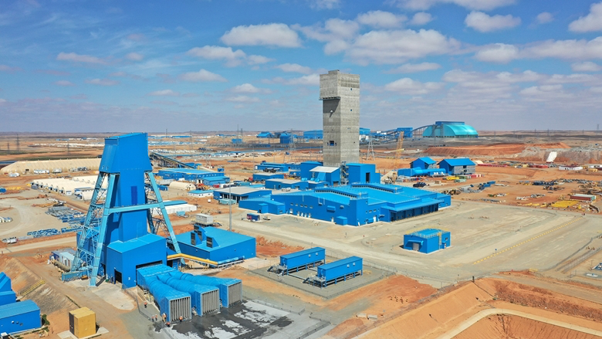
Figure 1: Rio Tinto’s Oyu Tolgoi copper operation in Mongolia. Credit: Rio Tinto.
One Copper Mine Did Most of the Heavy Lifting
The underground mine is supplying an increasing share of the mill feed. Higher grades and better recoveries helped too.
There is a quirk in the annual comparison. A planned concentrator shutdown took place during Q3 last year. Rio Tinto completed the equivalent work in Q2 this year. Oyu Tolgoi therefore had more processing time available in the latest quarter.
Copper volumes may continue rising while gold credits move the other way, which could influence reported net copper costs.
Escondida Pulled the Group Number Back
Group copper production came to 205,000 tonnes. It was level with Q3 2025 and 4% lower than the preceding quarter.
Here is how the main operations compared:
| Operation | Q3 2026 output | Change from Q3 2025 |
| Oyu Tolgoi | 114,000 tonnes | +27% |
| Kennecott refined copper | 12,000 tonnes | -10% |
| Escondida concentrate copper | 63,000 tonnes | -29% |
| Escondida refined copper | 16,000 tonnes | +18% |
| Consolidated copper | 205,000 tonnes | No change |
Escondida’s concentrate output fell by 29%. Maintenance work, planned lower grades, severe weather and an operational stand-down affected the quarter. Refined output was higher than a year ago, although it fell against Q2.
Kennecott’s refinery was recovering from a breach in the flash converting furnace. The rebuild took about 70 days and finished near the end of August. Normal capacity had returned, but too late to prevent a weak quarterly cathode number.
This left Rio Tinto copper production with a split result: strong growth at the mine expected to drive its next phase, and lower output from two established assets.
Mining Herald previously examined how disruption at a large Chilean copper operation can affect supply.
Pilbara Sold Ore That Was Already Near the Port
Rio Tinto’s Pilbara mines produced 83.4 million tonnes in Q3. Shipments were 85.7 million tonnes.
Production was 1% lower than a year ago. Shipments rose 2%.
There is no contradiction in those figures. Ore mined in one quarter does not have to leave Australia in the same quarter. Rio Tinto entered the period with stocks available near its ports, giving it room to load more tonnes than the mines produced.
Mine productivity also supported the result.
| Iron ore measure | Q3 2026 | Change from Q3 2025 |
| Global production | 89.7 million tonnes | +2% |
| Global sales | 90.8 million tonnes | +3% |
| Pilbara production | 83.4 million tonnes | -1% |
| Pilbara shipments | 85.7 million tonnes | +2% |
| IOC production | 3.8 million tonnes | -5% |
| Simandou production | 2.5 million tonnes | Ramp-up period |
The report states these production figures on a 100% basis. Iron ore tonnes are wet metric tonnes unless specified otherwise.
Port capacity will remain one of the limits on the Pilbara system. Rio Tinto has major work planned at Parker Point, including the replacement of reclaimers. The company expects these jobs to affect port outloading in some quarters of 2027 and 2028.
A reclaimer may receive less attention than a new mine or processing plant. It still controls how quickly stockpiled ore can reach a ship.
The work is also preparing the network for Rhodes Ridge. A feasibility study is examining a first-stage operation capable of producing 40–50 million tonnes a year. Completion of the study is planned for 2029, subject to approvals.
For a broader comparison, Mining Herald’s guide to ASX iron ore stocks, mine lives and production costs explains why rail and port access belong in any assessment of a producer.
Diesel and the Australian Dollar Sit Behind the Cost Range
Rio Tinto retained its full-year production guidance.
| Measure | 2026 guidance |
| Consolidated copper | 800,000–870,000 tonnes |
| Global iron ore sales | 343–366 million tonnes |
| Pilbara shipments | 323–338 million tonnes |
| IOC sales | 15–18 million tonnes |
| Simandou sales | 5–10 million tonnes |
The Pilbara cost range uses an assumed Australian dollar exchange rate of US$0.67.
These figures describe sensitivities around the forecast. Rio Tinto did not raise its stated Pilbara cost range in the Q3 report.
The December Quarter Has Several Loose Ends to Settle
Oyu Tolgoi enters the final quarter with momentum. The next report will show whether it held the higher underground mining and processing rate.
Escondida has a different task: recover from a quarter affected by maintenance, weather, grades and lost operating time. Kennecott needs a complete quarter with its rebuilt furnace available.
The next test for Rio Tinto iron ore production will be less about one large headline number. Pilbara shipments, port stocks, diesel costs and the timing of Simandou sales will all feed into the result.
Simandou’s permanent crusher and port commissioning are particularly significant. The project has already shipped ore, but regular use of the finished infrastructure will say more about its progress towards the 2028 target.
ALSO READ: Rio Tinto Bell Bay Aluminium Power Agreement Extends Smelter Life to 2031
FAQs
Q1. Rio Tinto Q3 2026 copper production?
Total copper output was 205,000 tons, level Q3 2025, down 4% Q2 2026.
Q2. Why is Oyu Tolgoi making more copper?
No. Production increased, ore grades increased, recoveries increased. The timing of concentrator maintenance also benefited the year-on-year comparison.
Q3. Why Are Pilbara Shipments Outpacing Production?
Rio Tinto used ore sitting in stockpiles at the port. So it shipped 85.7 million tons, produced 83.4 million tons.
Q4. Did Rio Tinto change its 2026 guidance?
No. Copper, iron ore sales, Pilbara shipments and unit-cost guidance were maintained in the Q3 report.
Disclaimer
This article is for informational purposes only. Production data, forecasts and cost estimates relate to the dates stated and may change. Readers should check Rio Tinto’s complete announcements and current market information before making an investment decision. Investing carries a risk of capital loss. This article does not constitute financial advice.
Filed under

About the author
Jonathon Brown
Jonathon Brown began his career as a broadcaster, working across markets in British Columbia before moving into financial journalism. Since 2017, he has specialised in stock market reporting, covering emerging companies across the healthcare, technology, mining and consumer sectors. He brings more than 15 years' experience to his reporting. A graduate of Vancouver Island University and the British Columbia Institute of Technology, Jonathon is focused on delivering clear, balanced reporting for investors.