

Key Takeaways
- 01 A big assay number is a good start, but it only tells you what is in the rock.
- 02 What you can recover, and what it costs to get it, decides how much money a mine makes.
- 03 Averages can look tidy while hiding wide swings, so ask what sits behind them.
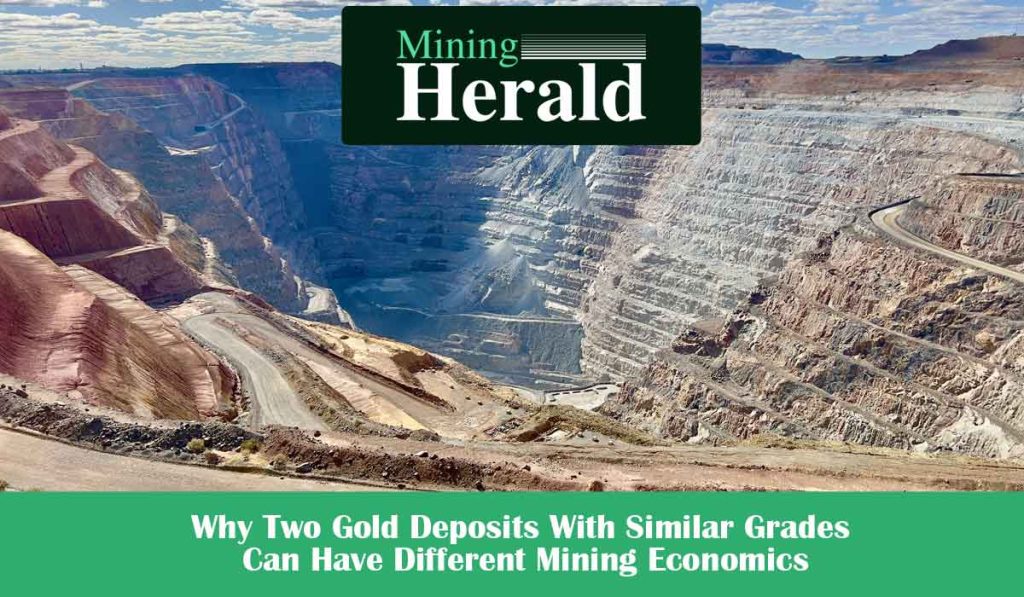
A high assay result tends to dominate the headline. Gold ore grade, however, answers only one question: how much gold sits in the rock.
Two separate mines can have identical grades and provide varying profits. Factors such as recovery, ore types, depths and locations affect the cost of extracting gold. These factors can influence the profit margins of gold extraction companies as much as the headline figures.
Gold Ore Grade Shows What Is in the Rock, Not What Reaches the Bar
An assay measures how much gold is present within a given sample. The Technical Review dated September 22, 2026 stated that this measurement does not indicate which mineral contains the gold. Gold locked in sulphides can be harder to recover than free grains, even at the same gold ore grade.
Refractory Ore Adds a Costly Step Before Leaching
With very little processing, gold from free-milling ore becomes amenable to cyanidation. Free milling ores do not need much processing to make gold amenable to cyanidation. Refractory gold ores require mineral disruption. Once the minerals are disrupted, gold can be easily accessed.
The three major treatment methods are listed in a guide released by the mining industry on Oct 11, 2026. The three methods listed are roasting, pressure oxidation, and bio-oxidation. Each option adds capital cost and complexity to processing. Thus, mines with refractory gold ore often cost more to process than mines with free-milling gold ore at the same grade.
Recovery Rates Separate Strong Operations From Weak Ones
Recovery is the share of contained gold that ends up in a bar. The same guide says a mine recovering 92% of its gold outperforms one recovering 78%, all else being equal.
Geology Makes Grade Uneven Before Mining Starts
Most of the gold is found in the host rock due to hot, mineralised fluid moving through the faults or fractures. According to industry literature, there are many factors that contribute to variability of grades within a given orebody.
- Gold will typically accumulate in shoots and veins, as well as at the crossing of veins that have the strongest fluid flow. The rock alongside these zones usually carries far less.
- Host rocks are affected differently by the mineralising fluid. Since receptive rocks absorb more gold, these areas typically produce richer deposits of gold.
- Coarse gold is patchy. A sample can miss it completely or catch plenty, so grades can jump between one sample and the next.
- Grade distribution can be shifted and rearranged later by overprinting.
The impacts of this are offset by grade control drilling and the selection of ore. Mining feed to the plant is managed by stocking and blending ore.
Deposit Style Sets the Cost and Recovery Profile
One equipment supplier sorts gold deposits into six common styles. Vein deposits carry the richest grades, reported at 5 to 30 grams per tonne. Placer deposits are much leaner, 0.1 to 2 grams per tonne, but cheap to mine.
Porphyry deposits also run low in gold, at 0.2 to 1 gram per tonne. Viability is a function of the copper price, with by-products of copper and molybdenum helping to lower costs.
| Deposit style | Mining cost | Gold recovery |
| Placer | Low | 85 to 90%+ |
| Vein | Medium to high | 90 to 95%+ |
| Disseminated | Medium | 70 to 85% |
| Porphyry copper-gold | Medium | 70 to 75% |
| Volcanic rock | Medium | 80 to 90% |
| Iron oxide | High | 70 to 80% |
Depth, Geometry and Location Move the Cost per Ounce
- Large deposits with modest grades, typically 0.5 to 1.5 grams per tonne, usually go to open pit. The industry guide estimates this method yields around 60 to 70% of the world’s gold by volume.
- Underground mines go after richer ore. They cost more to run per tonne, but each tonne carries more gold, which can balance the books.
- According to a separate exploration article, shallow deposits can be cheaper to drill and simpler to bring into production.
- Remote projects with limited infrastructure face economic hurdles. Ontario’s Ring of Fire illustrates how access to roads, power, labour and services shapes viability.
Two Operating Setups Show How AISC Can Part Ways
Assume two deposits report the same grade. The industry guide contrasts a low-grade open-pit heap leach operation in a favourable location with a remote underground refractory operation. Their AISC outcomes can differ widely. All-in sustaining costs (AISC) include sustaining capital.
| Factor | Deposit A | Deposit B |
| Mining method | Open pit | Underground |
| Processing | Heap leaching | Refractory pre-treatment |
| Location | Favourable | Remote |
| AISC | Well below average | Considerably above average |
Average Recovery Hides Variability the Plant Will Feel
The technical review explains that an 85% average recovery does not mean each tonne will recover 85%. There is variation in the recovery of different populations and projects even if the average recovery is the same.
The plant does not process the average orebody. It receives whatever material the mine schedule delivers at that point. A life-of-mine average can therefore smooth over differences that matter in individual periods.
Four Checks Test a Headline Grade Before Investors Rely on It
The review proposes four due diligence checks. What supports the recovery assumption? How variable are the results? Do the test samples represent the deposit? What controls any variation, and where does it occur?
The review stresses that these questions do not suggest reported grades or estimates are misleading.
The impact falls on how readers compare gold mining economics across projects. Processing route, recovery and AISC need to sit beside grade. Mining Herald will continue to cover how grade, recovery and costs shape gold project outcomes.
ALSO READ: Brightstar Resources Sandstone Drilling: 11 New Targets
FAQs
Q1. Why do similar grades produce different costs?
Ans. Recovery, ore type, depth and location change mining and processing costs.
Q2. What is refractory gold ore?
Ans. Ore with gold locked in sulphides, needing pre-treatment before leaching.
Q3. What does AISC mean?
Ans. All-in sustaining costs, including sustaining capital, per ounce of gold produced.
Q4. Does high grade guarantee strong economics?
Ans. No. Recovery, geometry, infrastructure and processing design also matter.
Disclaimer
This article should be used as a guide only and does not contain any financial advice. For all the data in the article, Mining Herald has sourced all the information from third-party websites. Please check out the complete share price and market data info. Investing carries a high risk, and you should only invest at your own risk. Mining Herald has no involvement in the above-listed companies.
Filed under

About the author
Jonathon Brown
Jonathon Brown began his career as a broadcaster, working across markets in British Columbia before moving into financial journalism. Since 2017, he has specialised in stock market reporting, covering emerging companies across the healthcare, technology, mining and consumer sectors. He brings more than 15 years' experience to his reporting. A graduate of Vancouver Island University and the British Columbia Institute of Technology, Jonathon is focused on delivering clear, balanced reporting for investors.