
Key Takeaways
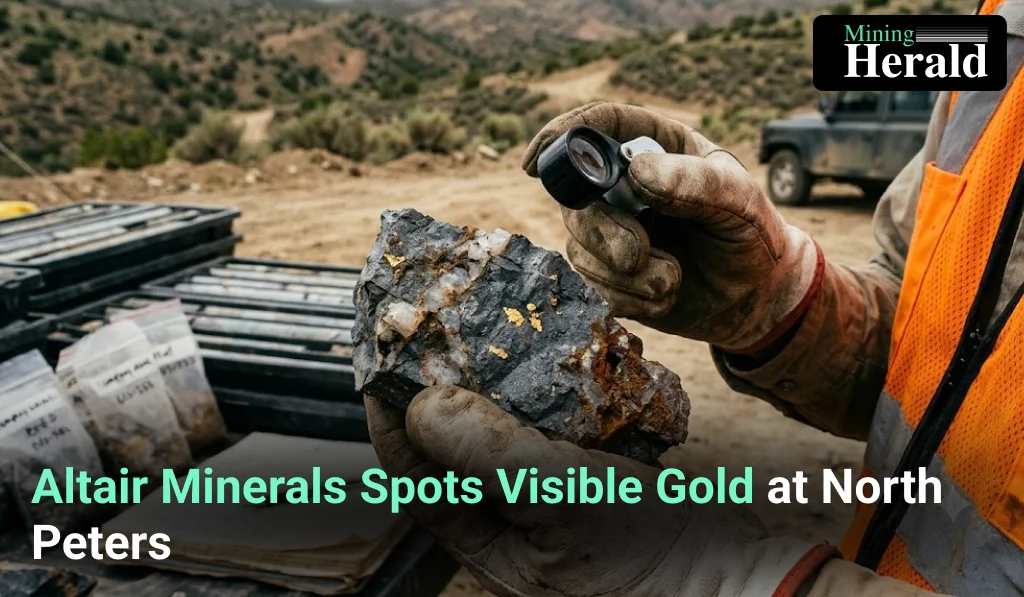
- 01 Upper vein system: Visible gold logged at 45.6 m and 45.7 m.
- 02 Lower vein system: Visible gold logged at 107.4 m and 107.7 m (associated with tourmaline-like needles and pyrite).
- 03 The company remains on track for its larger ~75,000 m program.
Altair Minerals (ASX: ALR) says core from diamond hole NPDD26011 shows visible gold. The hole sits at North Peters, part of the Greater Oko project in Guyana.
Geologists love that sight. It is also the easiest kind of good news to put out.
Visible gold is a sighting, not a grade
A speck of gold in core tells the logger that gold is there. It says nothing about how much.
Coarse gold can sit in one small patch while the rock around it runs thin. Only assays on cut core settle the grade, and a sighting arrives without one.
The market knows this drill. ALR closed at A$0.043 on 10 August, up 10.26%, the day diamond drilling began. Eight days later it fell 6.67% to A$0.042.
A four-cent stock swings on the headline long before the lab reports.
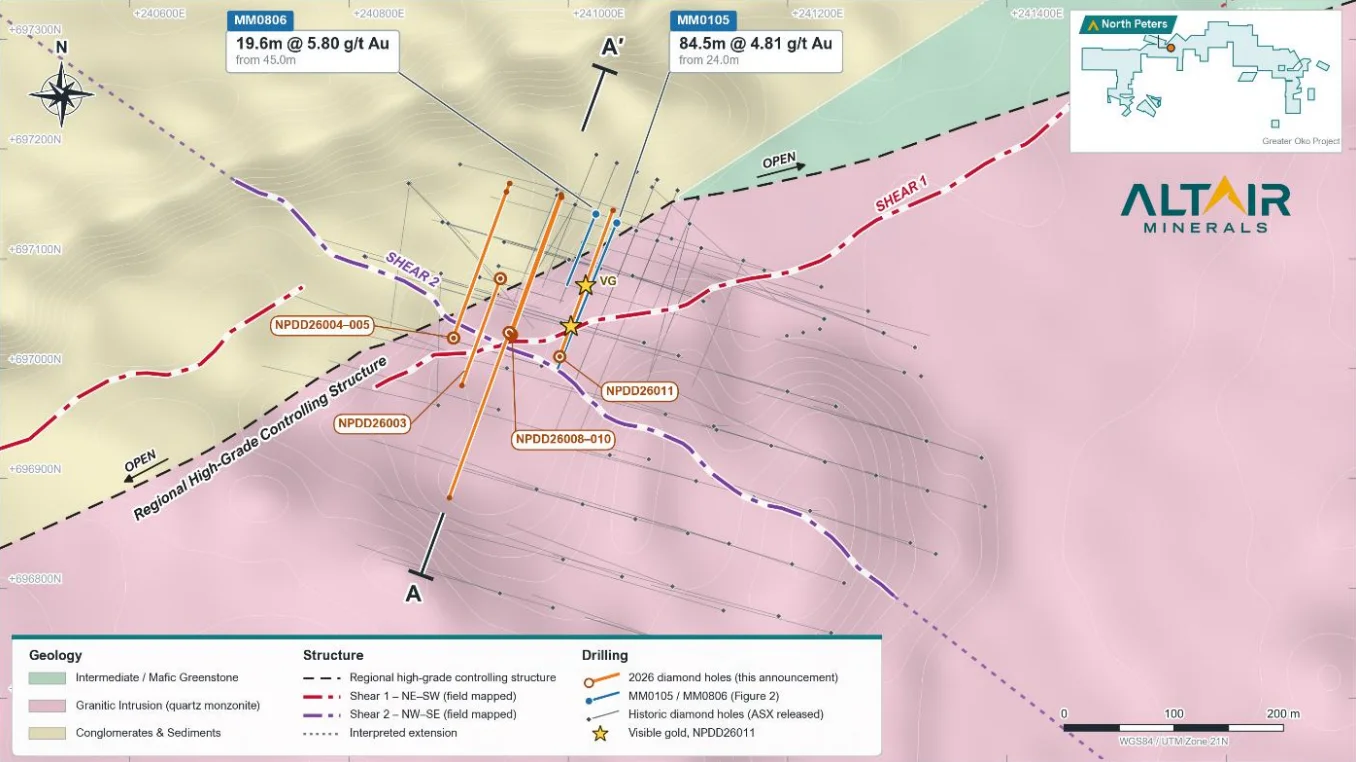
Plan View of NP historic drilling area [ALR]
Diamond drilling at North Peters is checking old numbers
North Peters is Altair’s most advanced target. Earlier drillers left behind some fat intercepts:
- 85m at 4.81g/t Au from 24m (hole MM0105)
- 89m at 2.40g/t Au from 45m, including 24m at 7.17g/t
- 63m at 2.25g/t Au from 55m, including 11m at 8.55g/t
Altair is careful to call these historic. They do not make a JORC-compliant resource.
One detail shows how the team treats old data. Check assays on the 85 metre hole were rerun at ALS Chemex in Canada, and CEO Faheem Ahmed called the outcome “a very positive surprise”.
Rechecking before believing is the right habit for a company leaning on a database it bought rather than drilled.
Phase I at North Peters calls for 5,600 metres of diamond core and 2,000 metres of RC. The diamond holes average about 250 metres deep and infill a 650 metre strike, while the RC holes step out 300 to 800 metres to the southwest.
Relogging has changed the picture as well. Altair now sees two controls on high grade: the contact between a granodiorite and a quartz monzonite porphyry, and a low-angle thrust that cuts across it. The best old intercepts sit beneath that thrust.
So the first question about NPDD26011 is simple. Where in the hole does the gold sit, and how close is it to the thrust?
That depth reading matters more than the sighting itself.
Greater Oko shares a shear with 9.4Moz of gold
Neighbours along the Oko Shear have outlined 9.4 million ounces at an average 2.5g/t across five discoveries, according to Altair’s own filing. Altair holds roughly 15 kilometres of that shear, per Stockhead.
The budget matches the ambition. The Greater Oko plan is 75,000 metres over 18 months, fully funded, and SmallCaps put the company’s cash at about A$38 million.
A neighbour’s ounces are not Altair’s ounces. Location buys a look, not a resource.
Spot gold sat above US$4,350 an ounce in August, a tailwind for every junior with a rig. Readers following other ASX gold explorers drilling this quarter will spot the same pattern: sightings first, assays later.
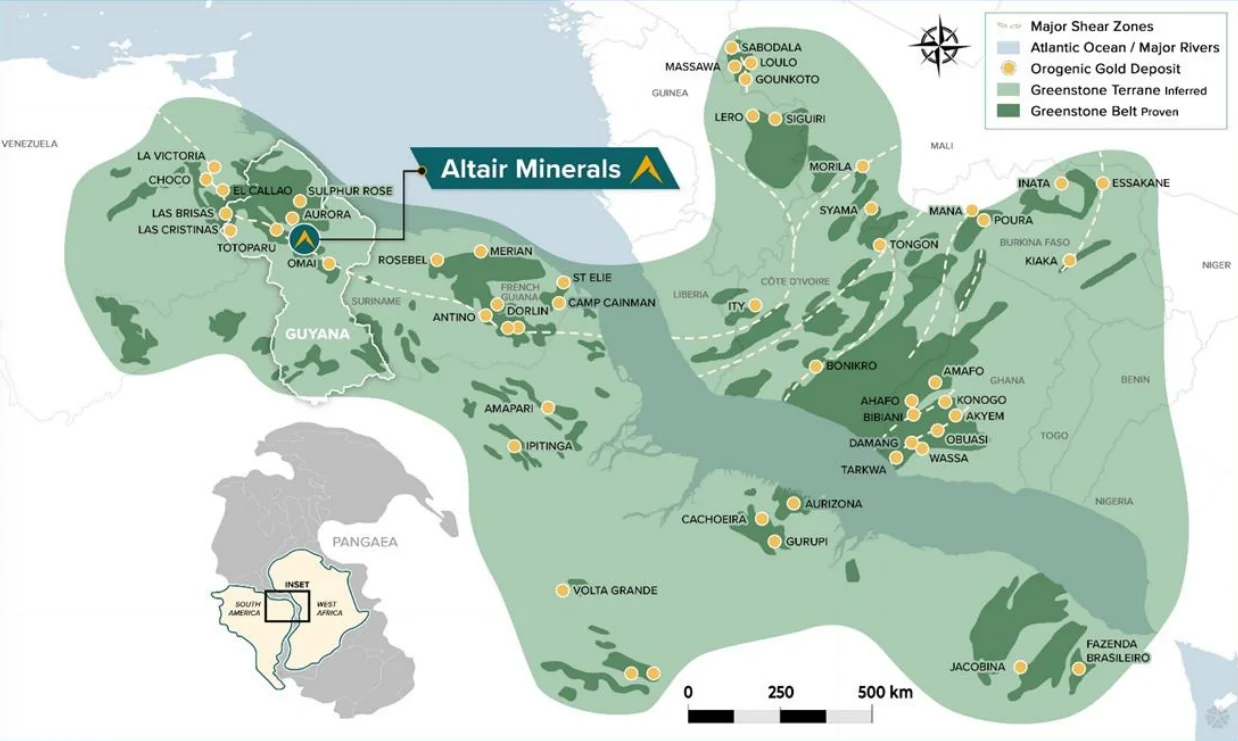
Map of the West African Birimian Shield and extension to Guiana Shield with location of major deposits and projects. [ALR]
Three things will settle whether this sticks
First, the assays. Grade and width over the sighted interval will show whether the gold was a speck or a zone.
Second, repeats. One hole is an anecdote, while visible gold in several holes along the 650 metre strike would be a pattern.
Third, the match to history. Matching widths would make the old database look sound. A clear miss would send the geologists back to redraw the model. For a refresher on reading these numbers, see how to read drilling results.
Altair has plenty of metres left to drill. For now the sighting buys attention, and the assay sheet will set the price.
More on the sector sits in our gold and ASX mining coverage.
FAQs
Q: What does visible gold mean?
A: Gold seen by eye in drill core, with no grade attached.
Q: Where is North Peters?
A: It is a target inside Altair’s Greater Oko project in Guyana.
Q: Does Altair have a JORC resource at Greater Oko?
A: Not yet.
Q: How big is the Greater Oko program?
A: 75,000m over 18 months, fully funded.
Disclaimer:
This article is general information only and is not financial product advice. It does not consider your objectives, financial situation or needs. Exploration stocks carry high risk. Do your own research and speak to a licensed adviser before investing.
Filed under

About the author
Jonathon Brown
Jonathon Brown began his career as a broadcaster, working across markets in British Columbia before moving into financial journalism. Since 2017, he has specialised in stock market reporting, covering emerging companies across the healthcare, technology, mining and consumer sectors. He brings more than 15 years' experience to his reporting. A graduate of Vancouver Island University and the British Columbia Institute of Technology, Jonathon is focused on delivering clear, balanced reporting for investors.