

Key Takeaways
- 01 Capital discipline is reshaping commodity supply curves into 2026.
- 02 AI infrastructure capex is becoming a primary macro variable.
- 03 Central bank policy across AU, CA and US is converging on neutral.
The BHP production report, released on 20 October 2026, recorded copper output of 400,700 tonnes for the September quarter.
Iron ore production reached 66.5 million tonnes, up 4% year on year. Coal volumes also increased against September 2025.
BHP kept its annual guidance unchanged. The immediate task is to improve copper production after maintenance and disruptions. Further ahead, new processing capacity and the Jansen potash project are expected to support growth.
The report also acknowledged the deaths of colleagues at Escondida and Peak Downs. Investigations remain underway.
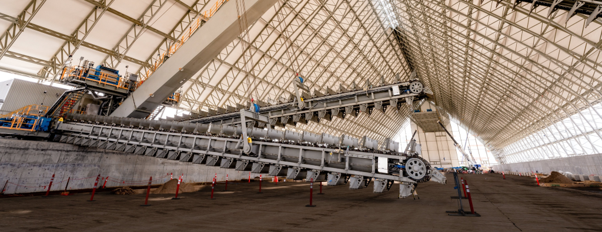
Figure 1: BHP’s Jansen potash project in Saskatchewan, Canada. Archive project photograph. Credit: BHP.
Copper’s Decline Needs to Be Read Mine by Mine
Escondida accounted for the largest part of the copper result. Production fell 23% year on year to 252,600 tonnes on a 100% operation basis.
Other interruptions added to the pressure. Severe weather in July and August constrained logistics and truck use. Mining activities were temporarily suspended following the fatal incident on 23 September.
Escondida’s annual production guidance remains 1–1.1 million tonnes. Its full-year concentrator feed grade forecast is still about 0.70%.
That grade forecast matters. Removing temporary interruptions would help production, but BHP’s annual plan already allows for lower-grade ore.
Spence faced a similar grade issue. Output fell 15% to 47,400 tonnes, with ore variability also affecting concentrate production. Its FY27 volumes are expected to be weighted towards the second half.
Mining Herald’s coverage of BHP’s copper assets and growth plans provides background on the wider portfolio.
Carrapateena’s Conveyor Repair Offers a Near-Term Checkpoint
Copper South Australia produced 60,700 tonnes, down 16% from a year earlier.
The underground conveyor failure at Carrapateena was the main cause. A replacement belt was installed and operational within seven weeks, followed by a gradual increase in activity through September.
BHP says the conveyor is now running at full capacity.
The next report should show how that restoration affects output over a full quarter. Copper South Australia’s FY27 guidance remains 290,000–320,000 tonnes.
Production Snapshot Shows a Mixed Start
The BHP Q1 FY27 results show that the comparison period can change the reading considerably.
Iron ore increased against September 2025 but declined from June 2026. Steelmaking coal followed the same pattern.
| Commodity | Q1 FY27 production | Change from Q1 FY26 | Change from Q4 FY26 |
| Copper | 400,700 tonnes | −19% | −19% |
| Iron ore | 66.5 million tonnes | +4% | −2% |
| Steelmaking coal | 4.9 million tonnes | +1% | −13% |
| Energy coal | 4.4 million tonnes | +26% | +6% |
Figures follow BHP’s reporting basis. Full-operation figures are identified separately where used.
Iron Ore Growth Depends on Keeping the Port Moving
Western Australia Iron Ore delivered 71.9 million tonnes on a 100% basis. BHP’s reported share was 64.3 million tonnes.
The operation set first-quarter records at both mine and port despite substantial planned maintenance.
One constraint remains the rebuild of Car Dumper 4 at Port Hedland. Car dumpers unload ore from rail wagons, making them a necessary link between the mines and ships.
The rebuild reduced quarterly volumes by 1.4 million tonnes on a 100% basis. It was about 40% complete and remained scheduled to finish in the first half of FY27.
BHP is also building a sixth car dumper, due in the fourth quarter of FY28. That equipment is expected to help offset disruption from subsequent dumper renewals and improve blending and screening at the port.
The Western Ridge Crusher is another nearer-term milestone, with first ore scheduled for the first half of FY27.
Higher Copper Prices Help, but Do Not Establish Profit
BHP’s average realised copper price reached US$7.01 per pound, 53% above the corresponding quarter last year.
Iron ore moved the other way. Its realised price fell 9% to US$76.27 per wet metric tonne, free on board.
Those price movements complicate the production picture. Lower copper output was accompanied by a much higher selling price, while additional iron ore tonnes were sold into a weaker price market.
The quarterly update does not establish the resulting group profit. Sales volumes, costs, pricing adjustments and other expenses still need to be considered.
BHP maintained its FY27 unit cost guidance, including US$20.25–21.75 per tonne at WAIO. Those are annual forecasts, rather than costs achieved during September.
The distinction between production growth and investment returns also runs through Mining Herald’s analysis of growth across the ASX materials sector.
Copper Investment Will Take Time to Reach Production
BHP approved US$800 million of pre-commitment funding, on a 100% basis, for the Escondida New Concentrator.
The money supports further engineering, permitting and preparation for execution. It does not mean the concentrator is ready to produce copper.
At Spence, the Concentrator Upgrade Recovery project remains scheduled for first production in FY28. The Chalcopyrite Leaching project is targeting calendar 2028.
Copper South Australia has a longer timetable. These plans give the business room to grow, but they should be kept separate from the tonnes expected this financial year.
Jansen Brings a New Commodity Closer
Jansen Stage 1 was 87% complete at the end of the quarter. First potash production remains targeted for mid-calendar 2027.
The Canadian project has planned annual capacity of 4.15 million tonnes and estimated project expenditure of US$8.4 billion.
Stage 2 was 18% complete, with first production targeted for late FY31.
What to Expect Next?
The BHP production outlook retains the following FY27 ranges:
| Commodity | FY27 production guidance |
| Copper | 1.65–1.80 million tonnes |
| Iron ore | 260–272 million tonnes |
| Steelmaking coal | 18.5–20.5 million tonnes |
| Energy coal | 14–16 million tonnes |
December’s report should provide a clearer view of Carrapateena after the conveyor repair and progress on the Port Hedland rebuild.
Spence and BMA are expected to deliver more heavily in the second half. NSW Energy Coal has the opposite profile, with production weighted towards the first half.
ALSO READ: Mining Weekly Review: Iron Ore Costs and Copper Supply
FAQs
Q1. Why did BHP’s copper production fall?
Ans. Lower planned grades, scheduled maintenance, severe weather, safety-related suspensions and the Carrapateena conveyor failure affected output.
Q2. Did BHP reduce its FY27 guidance?
Ans. No. Production and unit cost guidance remained unchanged.
Q3. Why are the Port Hedland projects important?
Ans. Car dumpers unload ore trains. Rebuilding and adding equipment helps maintain the flow of ore through the port as production grows.
Q4. When is Jansen expected to start producing potash?
Ans. Stage 1 remains scheduled for first production in mid-2027. It was 87% complete at the end of September.
Disclaimer
This page provides general information, not financial advice. Future production forecasts, project timetables, and growth objectives may vary. Readers should read corporate filings before investing. Investing risks loss.
Filed under

About the author
Jonathon Brown
Jonathon Brown began his career as a broadcaster, working across markets in British Columbia before moving into financial journalism. Since 2017, he has specialised in stock market reporting, covering emerging companies across the healthcare, technology, mining and consumer sectors. He brings more than 15 years' experience to his reporting. A graduate of Vancouver Island University and the British Columbia Institute of Technology, Jonathon is focused on delivering clear, balanced reporting for investors.