


Key Takeaways
- 01 Capital discipline is reshaping commodity supply curves into 2026.
- 02 AI infrastructure capex is becoming a primary macro variable.
- 03 Central bank policy across AU, CA and US is converging on neutral.
JPMorgan Chase launched a capital initiative of ten years totalling $1.5 trillion to finance industries that anchor defence and infrastructure. The banking group established this capital allocation programme to direct loans, bonds, and equity towards production facilities, processing plants, and extraction sites. Chief Executive Officer Jamie Dimon framed the programme around industry sovereignty and supply continuity.
The bank will allocate up to $10 billion in equity investments and lending to corporations to expand manufacturing assets. Syndicate desks will distribute credit facilities and structure debt instruments for operators across mineral supply networks.
In the announcement, Jamie Dimon delivered a statement on the necessity of this capital programme. Dimon stated: “It has become painfully clear that the United States has allowed itself to become too reliant on unreliable sources of critical minerals, products and manufacturing – all of which are essential for our national security.” He added: “Our security is predicated on the strength and resiliency of America’s economy. America needs more speed and investment.”
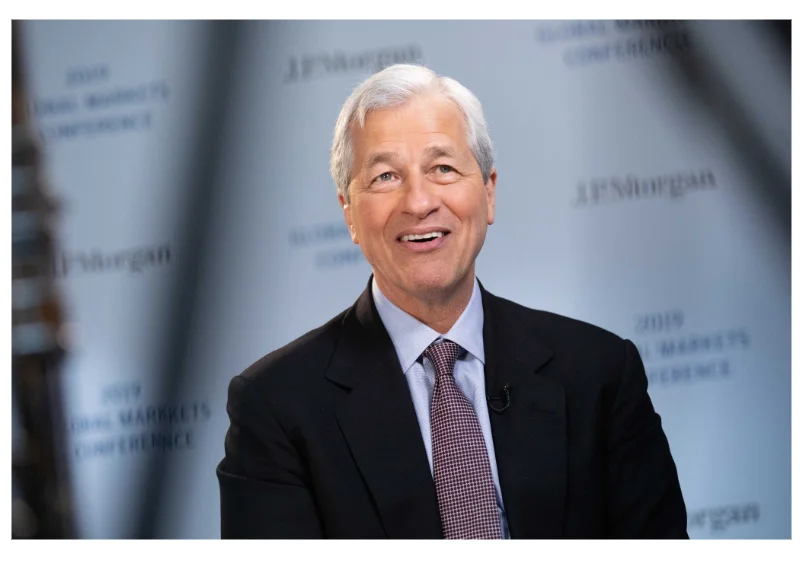
Jamie Dimon, CEO of JPMorgan Chase [Source: Bloomberg via Getty Images]
Why It Matters: Key Takeaways for Everyday Readers
Consumers and businesses face price volatility whenever friction between nations interrupts shipments of minerals from processors abroad. Minerals such as lithium, cobalt, nickel, and graphite power consumer electronics, battery systems, and grid transmission lines. By expanding refining capacity inside the country, this financing programme protects households from product shortages and tariff shocks.
Industry workers and engineering personnel will see job opportunities multiply across processing centres, research hubs, and extraction fields. The deployment of capital accelerates factory construction and expands fabrication plants across communities.
Investors gain access to funding mechanisms for ventures that face multi-year payback periods. Mineral processing inside allied nations also insulates vehicle assembly lines, technology hardware, and power utilities from export quotas.
Key Players: High-Profile Leaders & Key Sectors Behind the Deal
JPMorgan Chase leads this deployment through its Commercial and Investment Bank division. The firm appointed Todd Combs to manage the Strategic Investment Group for the initiative.
The bank created a council for advisory guidance to steer funding decisions and review capital requests. This council brings together leaders from industry, governance, and the armed services:
- Jeff Bezos, Executive Chairman of Amazon, contributes technology insight.
- Robert Gates, former United States Secretary of Defence, advises on national security risks.
- Jim Farley, Chief Executive Officer of Ford Motor Company, details supply constraints for automobile production.
- Phebe Novakovic, Chairman and Chief Executive Officer of General Dynamics, provides defence manufacturing perspective.
- Condoleezza Rice, former United States Secretary of State, outlines diplomacy strategy.
The bank directs capital towards five sectors to reduce supply reliance on foreign monopolies. These sectors comprise supply chains and manufacturing, defence, energy infrastructure, frontier technologies, and health sciences. Within manufacturing, financing teams target mineral extraction, materials science, and processing facilities. This arrangement links mine operators with technology firms and vehicle manufacturers.
Global Reach: Where the Capital Is Heading
JPMorgan Chase announced the initiative from headquarters in New York City. The bank coordinates capital desks from Manhattan while deploying resources to production centres across the United States. Processing sites in states such as Nevada, Arizona, North Carolina, and Texas will absorb loans and debt underwritings.
The reach of the initiative extends beyond United States borders to partner nations including Australia and Canada. JPMorgan Chase arranged a borrowing facility of $500 million to back the Serra Verde rare earth processing venture in Brazil.
Agreements between Washington and Canberra reinforce these financing pathways. Mining firms in Western Australia and Queensland process lithium and rare earths that supply United States factories.
Key Takeaways
- $1.5T Commitment: JPMorgan Chase allocates $1.5 trillion over ten years to critical minerals, defence manufacturing, and industrial supply lines.
- Allied Supply Chains: Capital targets refining assets across the US, Australia, and Canada to eliminate reliance on foreign monopolies.
- Direct Financing: The bank deploys balance-sheet lending, bonds, and equity alongside government procurement contracts.
Timeline: Launching a Decade of Strategic Investment
JPMorgan Chase unveiled the Security and Resiliency Initiative in October 2025 as governments accelerated efforts to onshore production. The bank established a deployment window of ten years that concludes in 2035. Executive leadership reiterated this timeline during shareholder meetings throughout 2026.
The bank initiated equity deployments through its investment group at the start of 2026. Teams review funding allocations each quarter to monitor capital deployment and debt distribution.
Dimon stressed the requirement for urgency during the launch of the initiative. Dimon stated: “Hopefully, once again, as America has in the past, we will all come together to address these immense challenges. We need to act now.”
The Roadmap: How Capital Will Reshape Supply Chains
JPMorgan Chase will combine balance sheet lending, capital syndication, and advisory services to deploy the $1.5 trillion sum. The bank collaborates with government agencies, including the Export-Import Bank of the United States and the Department of Defence, to back mineral ventures. This approach pairs private capital with government procurement agreements.
The firm will execute this strategy through three funding mechanisms across the decade:
- Lending desks provide credit lines to mining operators to purchase processing machinery.
- Debt syndicates underwrite bonds to fund refineries and smelting plants.
- Equity funds purchase shares in technology companies that recycle minerals and manufacture substitute materials.
Bankers will assess projects through purchase agreements and supply security data. Dimon confirmed the persistence of the plan as market dynamics evolve. Dimon stated: “Our support of clients in these industries remains unwavering.”
Over the decade, this capital flow will redirect mineral refining away from single-nation monopolies towards supply chains among allies. As processing plants open, manufacturers will obtain continuous supplies of minerals for batteries, robotics, and defence hardware.
Disclaimer: The information contained in this article is for informational and educational purposes only and does not constitute financial, legal, or investment advice. The capital initiative and strategic investments mentioned are subject to market conditions, regulatory approvals, and corporate updates. Readers should conduct their own research or consult with a qualified professional before making any financial or investment decisions.
Filed under

About the author
Jonathon Brown
Jonathon Brown began his career as a broadcaster, working across markets in British Columbia before moving into financial journalism. Since 2017, he has specialised in stock market reporting, covering emerging companies across the healthcare, technology, mining and consumer sectors. He brings more than 15 years' experience to his reporting. A graduate of Vancouver Island University and the British Columbia Institute of Technology, Jonathon is focused on delivering clear, balanced reporting for investors.