

Key Takeaways
- 01 The Global X Uranium ETF gave back Wednesday's Google and Constellation deal gains in one session.
- 02 A stronger US dollar, higher yields and rate hike bets pressured the whole resources sector.
- 03 Nuclear power stocks remain tied to momentum and risk appetite, not only deal headlines.
In the US session reported on Thursday 8 Oct 2026, the Global X Uranium ETF erased Wednesday’s gains. Those gains followed the Google and Constellation deal. Anyone following uranium stocks Australia has to offer should note how fast sentiment flipped.
The pullback came as the wider resources sector sold off. A firmer US dollar, higher yields and rate hike bets all weighed on markets.
Uranium Reverses a Deal-Driven Rally in a Single Session
Market commentary in the Morning Wrap said uranium stocks tend to trade on momentum and risk appetite. When commodities fall and the US dollar surges, the sector usually suffers.
The uranium fund was the weakest of all industry ETFs listed overnight. Gold, copper and silver miners also fell sharply.
The ASX 200 slipped on Thursday, with materials recording the steepest declines. Seven of 11 sectors traded higher, led by consumer staples.
Four Pressure Points Behind the Uranium Selloff
- US dollar rally: The US Dollar Index rose 0.4% overnight. It has gained 3.5% since early September and sits at its highest level since April 2025.
- Rate hike odds: Minutes from the Fed’s September meeting showed most officials expect another hike by year-end. Odds of a December move rose to 70%, up from 58% a week earlier.
- Bond yields: The US 30-year yield reached its highest level since 2002. Bank of America’s Savita Subramanian said bonds have become a real rival to equities for the first time in decades, as reported by Bloomberg.
- Oil and conflict: Brent held near US$100 a barrel. UK Maritime Trade Operations reported at least nine attacks on tankers in the Strait of Hormuz so far in October.
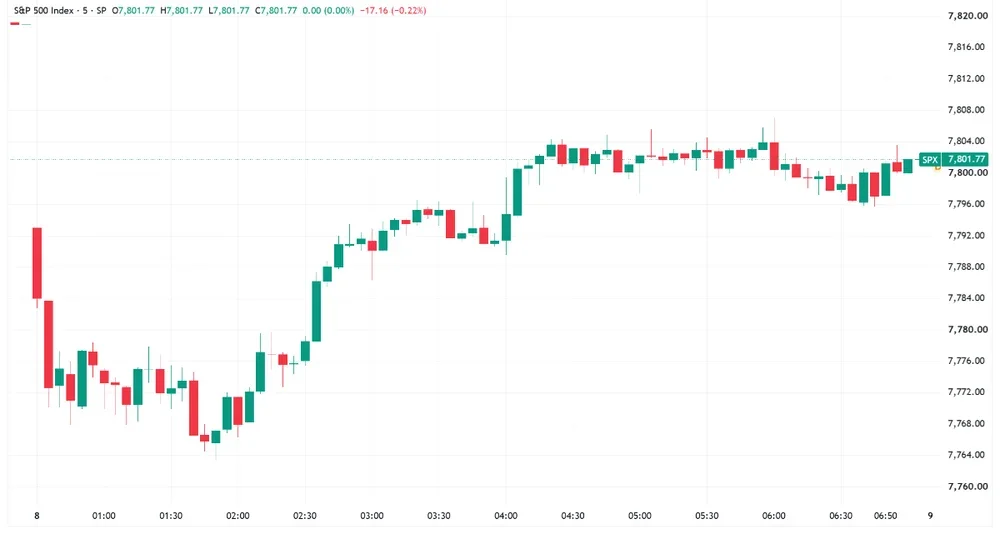
Figure 1: S&P 500 recovers from early lows but still ends the session lower. [Courtesy: TradingView]
A Rising US Dollar Splits the ASX Into Winners and Losers
Thursday’s Morning Wrap cited a December 2023 Citi study on currency effects. It found materials and energy tend to lose when the US dollar rises. Staples and healthcare tend to win.
| Group | Sectors | Companies Named |
|---|---|---|
| Most exposed to a rising US dollar | Materials and energy | Fortescue, BHP, Rio Tinto, MinRes, CBA |
| Tend to outperform | Staples and healthcare | Brambles, CSL, APA, Transurban, Telstra |
Fortescue showed the strongest statistical link, followed by the other names in order. The companies cited do not include uranium producers. The study still frames how currency strength can pressure ASX resources.
Risks That Keep Nuclear Power Stocks Volatile
- Momentum dependence: The Morning Wrap notes uranium stocks tend to trade on momentum, so sharp reversals can follow strong advances.
- Currency headwinds: A stronger USD has weighed broadly on mining equities.
- Rates and yields: Possible Fed hikes and higher bond yields can reduce appetite for risk assets.
- Deal reliance: Better sentiment can come from deal headlines, but macro risk is not removed.
Industry Outlook: Nuclear Growth Depends on Fuel Supply Keeping Pace
The World Nuclear Association says nuclear output reached a record 2,702 TWh in 2025. That covered about 9% of world electricity.
Reactors also ran harder, with the average capacity factor rising to 83.7%.
Tripling global capacity by 2050 would need build rates about six times current levels.
The association warns supply constraints could emerge if uranium exploration and mine development do not expand.
Share Price Snapshot
The funds below trade in the United States. The reports reviewed do not give moves for individual ASX uranium stocks. Figures are as at 8 Oct 2026.
| Instrument | Level | Overnight Move |
|---|---|---|
| Uranium ETF | 39.93 | Down 4.47% |
| Silver Miners ETF | 83.56 | Down 3.54% |
| Gold Miners ETF | 85.46 | Down 3.13% |
| Copper Miners ETF | 83.58 | Down 3.13% |
| Strategic Metals ETF | 61.88 | Down 2.99% |
| Lithium & Battery Tech ETF | 69.51 | Down 2.20% |
| ASX 200 (midday) | 8,675.3 points | Down 0.6% |
Fed Minutes and Dollar Strength Set the Next Test for Nuclear Power Stocks
The next confirmed marker is the Fed’s December meeting. Markets now price a hike at about 70%. That figure is a market estimate, not a decision.
Impact on ASX uranium stocks: the sector stays exposed to US dollar and yield moves. Impact on nuclear power stocks: deal headlines can lift sentiment, but this session shows gains can fade fast.
Mining Herald will keep tracking how these signals shape ASX uranium stocks.
FAQs
Q1. Why did uranium fall after the Google and Constellation rally?
Ans. The Global X Uranium ETF fell 4.4% as the US dollar surged and commodities sold off.
Q2. What are ASX uranium stocks?
Ans. They are ASX-listed companies with uranium exposure. The sources reviewed do not give individual company moves.
Q3. What is driving nuclear power stocks right now?
Ans. Deal headlines, US dollar strength, Fed rate hike odds and bond yields are all in play.
Q4. Which event should investors watch next?
Ans. The Fed’s December meeting, where markets price a hike at about 70%.
Disclaimer
This article is intended for informational purposes only. If you pay attention to the ASX uranium and nuclear power sector as an investor, then all the data in the content is from third-party sources. Please check out the complete share price and market data info. Investing carries a high risk, and you should only invest at your own risk. Mining Herald has no involvement in the above-listed companies.
Filed under

About the author
Jonathon Brown
Jonathon Brown began his career as a broadcaster, working across markets in British Columbia before moving into financial journalism. Since 2017, he has specialised in stock market reporting, covering emerging companies across the healthcare, technology, mining and consumer sectors. He brings more than 15 years' experience to his reporting. A graduate of Vancouver Island University and the British Columbia Institute of Technology, Jonathon is focused on delivering clear, balanced reporting for investors.