

Key Takeaways
- 01 Laboratory testing returned up to 88.4% extraction of total rare earths plus yttrium from a Boland sample.
- 02 Results from Head could widen the material considered suitable for in situ recovery.
- 03 Commercial recovery rates and development costs still need to be established.
A recovery percentage attracts attention, but shareholders need to know what sits behind it. A laboratory sample, a resource estimate and a finished product each tell a different part of the development story.
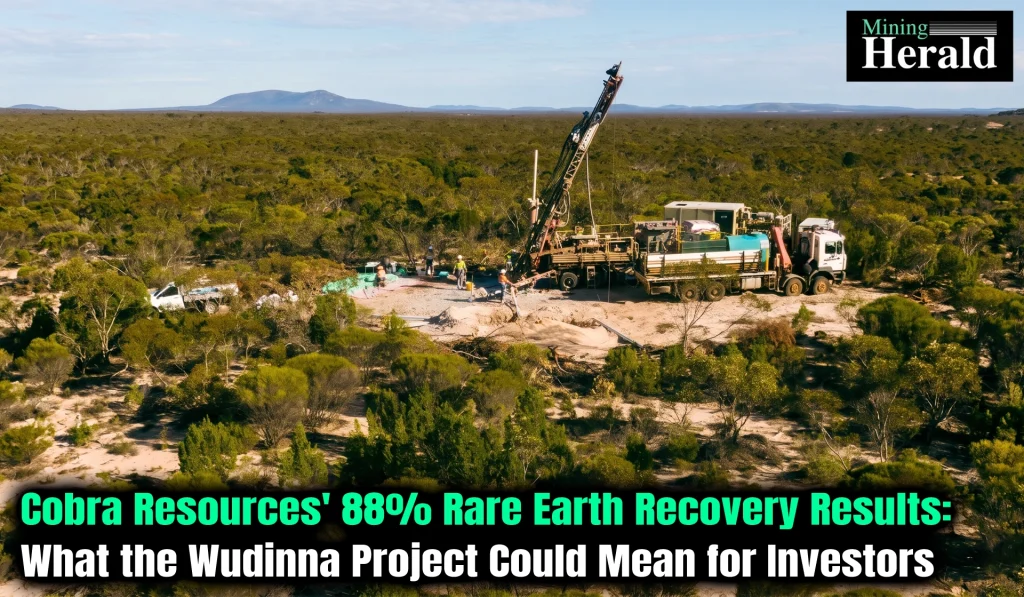
In this article, Mining Herald looks at what Cobra’s results establish, where further work is needed and how those findings could affect the investment case.
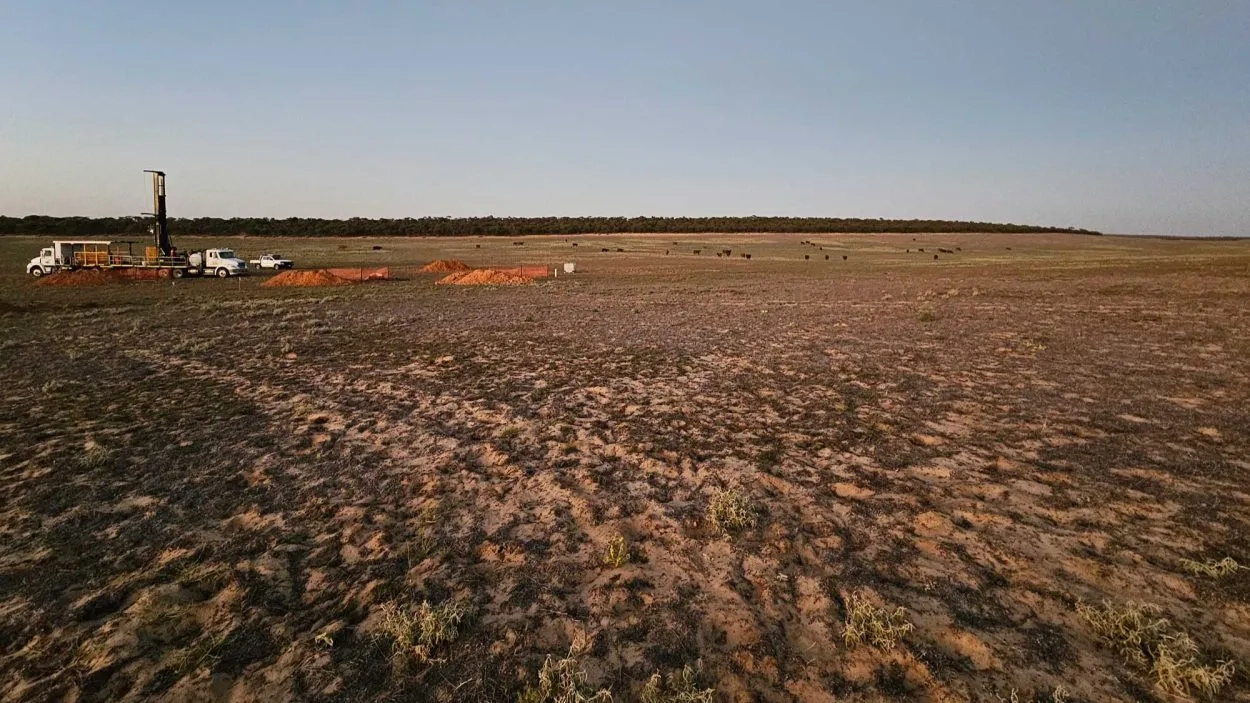
Figure 1: Exploration activity at Boland, part of Cobra’s Wudinna rare earth project in South Australia. Credit: Cobra Resources, via Mining.com.au.
What the Recovery Results Actually Measure
Cobra’s 5 November 2026 announcement covered ANSTO testing of 42 drill-return samples. Tests ran for 24 hours at ambient temperature, using 0.5 molar ammonium sulphate and a target pH of three.
The results varied by location and formation.
| Sample group | Reported maximum TREY extraction |
| Boland – Pidinga formation | 88.4% |
| Head – Pidinga formation | 66% |
| Head – Narlaby formation | 88% |
Using the best result across an entire deposit would make the production estimate look stronger than the evidence supports.
More Material Could Become Suitable for In Situ Recovery
The Narlaby results matter because that material is currently assessed within the open-pit component of the resource. Cobra will investigate whether some or all of it can move into the in situ recovery, or ISR, component.
Further column testing, metallurgical assessment and reagent studies are planned to support the scoping study.
ISR involves circulating a solution through suitable underground material and recovering the dissolved metals through wells.
Changing the proposed recovery method could alter the equipment, earthmoving and infrastructure a project requires. It would also change the engineering questions. How readily does the solution flow? How much mineralisation does it reach? Can the operator control and recover it?
The Resource Gives Scale, but Does Not Set Production
The Wudinna Rare Earth Project received a maiden resource estimate on 26 October 2026.
| Resource measure | Reported figure |
| Total mineral resource | 150 million tonnes |
| Average TREO grade | 470 parts per million |
| Contained rare earth oxides | 70,400 tonnes |
| Indicated resource component | 60 million tonnes at 572ppm TREO |
The estimate considers both ISR and open-pit recovery approaches. Cobra’s stated development strategy includes staged production, commercial partnerships and disciplined financing.
Contained metal is an inventory figure. It does not tell shareholders how many tonnes a future operation could sell each year.
That requires assumptions about the development schedule, recoveries throughout the processing route and the proportion of the resource brought into production. Some material may be available early. Other sections may need more drilling or a different recovery approach.
For that reason, multiplying the entire resource by the best laboratory recovery would not produce a reliable production forecast.
Reagent Use Could Matter as Much as the Highest Recovery
The lower-concentration test recovered less metal. It may nevertheless deserve consideration if the reduction in reagent use outweighs the revenue forgone. That is an economic question, rather than a contest for the highest extraction percentage.
Shareholders following rare earth stocks should look for studies that explain this balance. Useful disclosures would connect chemical consumption, recovery, treatment requirements and product value.
A recovery figure becomes much more informative when the cost of achieving it appears alongside it.
What Could Influence the Cobra Resources Share Price?
For readers tracking the Cobra Resources share price, the practical question is how much uncertainty each announcement removes.
The following disclosures would make the project easier to assess:
| What to examine | Why it matters |
| Representative recovery results | Shows whether performance extends beyond the strongest samples |
| Reagent consumption | Helps connect extraction to operating costs |
| Product specifications | Clarifies what could eventually be sold |
| Development spending estimates | Gives a basis for assessing funding needs |
| Cash and planned expenditure | Shows how far existing funds can carry the programme |
These checks offer more substance than assuming a favourable test must produce a particular share-price response.
What Investors Should Watch Next
Mining Herald’s assessment is that the next useful development will be evidence connecting extraction performance with a workable recovery method.
For Narlaby, that means establishing whether its encouraging chemistry can translate into reliable ISR performance. Across Wudinna, it means understanding the variation between different parts of the deposit and allowing for that variation in the development plan.
Cobra has given investors a reason to examine the project more closely. The eventual investment case will depend on what it costs to recover, process and sell the material and how the company pays to get there.
ALSO READ: Lynas Rare Earths Quarterly Results: Is Growth Sustainable?
FAQs
Q1. Did Cobra achieve 88% commercial recovery?
No. The reported percentages come from laboratory leach testing. They do not establish commercial production performance.
Q2. Why are the Head results important?
They support further investigation into whether additional material could be suitable for in situ recovery.
Q3. Does the resource estimate show how much Cobra will produce?
No. A resource estimates mineralised material and its grade. Production depends on development decisions, recovery performance and operating capacity.
Q4. What should investors look for after the tests?
Results from larger-scale work, processing expenses, product quality, development forecasts, and finance.
Disclaimer
This page offers basic financial information, not advice. Laboratory data do not prove commercial recoveries or profitability. Project estimates need further research, financing, and permissions.
Filed under

About the author
Jonathon Brown
Jonathon Brown began his career as a broadcaster, working across markets in British Columbia before moving into financial journalism. Since 2017, he has specialised in stock market reporting, covering emerging companies across the healthcare, technology, mining and consumer sectors. He brings more than 15 years' experience to his reporting. A graduate of Vancouver Island University and the British Columbia Institute of Technology, Jonathon is focused on delivering clear, balanced reporting for investors.