

Key Takeaways
- 01 Capital discipline is reshaping commodity supply curves into 2026.
- 02 AI infrastructure capex is becoming a primary macro variable.
- 03 Central bank policy across AU, CA and US is converging on neutral.
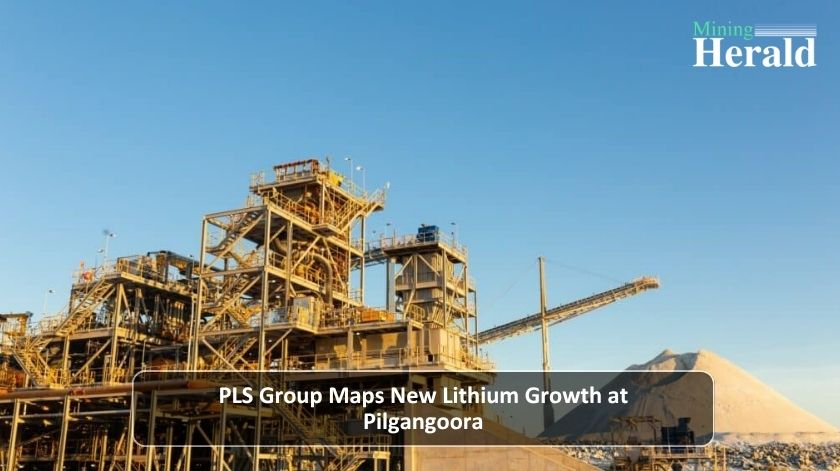
PLS Group Limited (ASX: PLS) has approved the final investment decision for P2000 at its Pilgangoora operation in Western Australia.
The company’s 16 October 2026 presentation sets out approximately A$1.9 billion in project capital spending. It also describes changes to mining and processing that allow more of the deposit to be used.
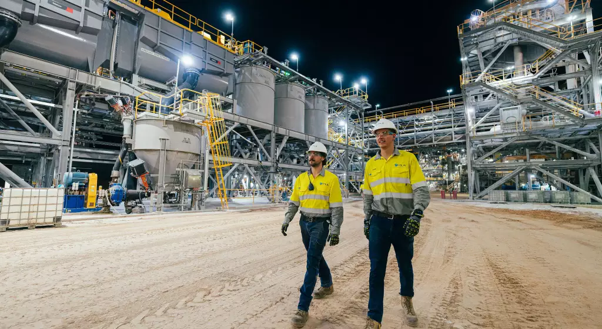
Figure 1: Workers at the Pilgan processing plant at Pilgangoora in Western Australia. Archive image. Credit: PLS Group.
Processing Changes Bring More Rock Into the Mine Plan
Around 67 million tonnes of mineralised contact material, previously classified as waste, can now be included as ore under the revised plan.
Contact material occurs around the boundary between mineralised rock and surrounding host rock. Taking more of it through the mining operation introduces additional material that the processing plant must handle.
PLS Group Lithium Growth plans to use ore sorting and whole-of-ore flotation to make that possible.
Sorting removes unwanted material before wet processing. The flotation circuit then helps recover lithium from the upgraded feed.
The change also reduces the planned life-of-mine open-pit strip ratio from 7.7 to 5.6. That means less waste relative to each tonne of ore in the revised schedule.
Mining Herald’s coverage of ore sorting and Australian mining costs explains how removing waste earlier can change the economics of processing a deposit.
Jimmagunya Gives Pilgangoora a Third Major Processing Facility
The new Jimmagunya plant is designed around this broader range of feed.
Its dry plant will have capacity for 9 million tonnes a year, covering crushing, sorting and a covered coarse-ore stockpile. The wet plant is designed for 6.3 million tonnes annually.
Those figures describe material handled by the plant. They are different from the tonnes of saleable concentrate produced.
Higher-grade coarse ore can be directed to the existing Pilgan plant where appropriate. Ngungaju will remain available as flexible processing capacity.
Together, the arrangement supports a planned ten-year average of approximately 1.97 million tonnes of concentrate annually, at a 5.2% lithium oxide basis. PLS rounds that production target to about 2 million tonnes.
These are concentrate tonnes, not tonnes of pure lithium.
The Reserve Increase Supports a Longer Production Plan
The updated Ore Reserve totals 249.2 million tonnes at 1.24% lithium oxide.
PLS reports a 23% increase in reserve tonnes and a 31% increase in contained lithium. The update incorporates revised processing assumptions and a maiden underground reserve.
| Measure | Reported figure |
| Total Ore Reserve | 249.2Mt |
| Average reserve grade | 1.24% Li₂O |
| Increase in reserve tonnes | 23% |
| Increase in contained lithium | 31% |
| Maiden underground reserve | 46.5Mt at 1.50% Li₂O |
The Pilgangoora Lithium Project therefore has more material available in its reserve-backed planning. How and when that material is mined still depends on the development schedule.
The underground component needs particular care. Its inclusion in reserves does not mean underground construction has been approved.
First Production and Full Output Have Different Dates
PLS targets first production from P2000 in the September quarter of 2029, followed by approximately six months of ramp-up to steady state.
| Project measure | Target or estimate |
| First production | September quarter 2029 |
| Ramp-up period | Approximately six months |
| Concentrate production | Approximately 2Mt annually, ten-year steady-state average |
| Unit operating cost | Approximately A$620/t FOB, real |
| P2000 capital investment | Approximately A$1.9 billion |
Roads, Accommodation and Maintenance Need Separate Spending
The P2000 budget is only part of the planned investment.
PLS has separately outlined A$600 million to A$650 million for infrastructure improvements. These include a sealed access road of approximately 24 kilometres, a permanent 1,200-bed village and an eight-bay mine services facility.
The proposed haulage arrangement is expected to reduce truck movements by about 35% through the use of ultra-quad trucks.
Moving accommodation also frees the current village location for improved waste-landform sequencing and shorter haulage.
These investments serve the existing operation as well as future growth. PLS says their benefits are independent of P2000.
For anyone following Pilbara Minerals Expansion, keeping the two budgets separate helps make subsequent spending updates easier to assess.
Lithium Prices Still Have a Large Say in Returns
PLS estimates an incremental post-tax net present value of A$2.7 billion and an incremental internal rate of return of 29.5%.
Those figures compare the expansion with the company’s latest mine plan without P2000. They are modelled investment returns, rather than cash already earned.
The valuation uses an 8% real discount rate and a price forecast that settles at a long-term US$1,620 per tonne for 6% spodumene concentrate, delivered to China.
Actual prices will change over the project’s life.
Lower prices would leave less room to absorb construction overruns or operating shortfalls. Stronger prices could improve returns, provided the operation delivers the expected volumes and costs.
Mining Herald’s earlier report on Pilbara Minerals and the lithium price rebound provides background on the company’s operating recovery.
Underground Mining Remains a Further Growth Option
The underground pre-feasibility study identifies potential combined production of approximately 2.2 million tonnes annually and a possible operating life beyond 25 years.
A feasibility study is underway.
Any underground development remains subject to that work, market conditions and board approval. Investors should therefore distinguish the approved P2000 expansion from this further opportunity.
The underground reserve gives PLS something substantial to study. It does not settle the construction timetable.
Construction Progress Becomes the Next Test
Once commissioning begins, plant throughput and lithium recovery will become more useful measures of delivery.
Mining Herald’s assessment is that the reserve increase strengthens the production plan, while the processing changes explain how PLS intends to use it. The remaining task is to build and operate the system within the assumptions supporting the investment.
ALSO READ: Ore Sorting Mining: Cutting Australia’s Costs
FAQs
Q1. What has PLS approved at Pilgangoora?
Ans. The company has approved P2000, an expansion targeting approximately 2 million tonnes of annual spodumene concentrate production at steady state.
Q2. When is first production expected?
Ans. PLS targets the September quarter of 2029, followed by approximately six months of ramp-up.
Q3. Does the A$1.9 billion budget cover the infrastructure package?
Ans. No. The separately announced infrastructure investment is estimated at A$600 million to A$650 million.
Q4. Is there approved underground development?
Ans. No. Further underground activity remains subject to feasibility work, market conditions and board sanction.
Disclaimer
For information purposes only, not financial advice. Production targets, costs and development dates are estimates by the company and are subject to change. Please refer to the original announcements and consider your personal circumstances before deciding to invest.
Filed under

About the author
Jonathon Brown
Jonathon Brown began his career as a broadcaster, working across markets in British Columbia before moving into financial journalism. Since 2017, he has specialised in stock market reporting, covering emerging companies across the healthcare, technology, mining and consumer sectors. He brings more than 15 years' experience to his reporting. A graduate of Vancouver Island University and the British Columbia Institute of Technology, Jonathon is focused on delivering clear, balanced reporting for investors.