

Key Takeaways
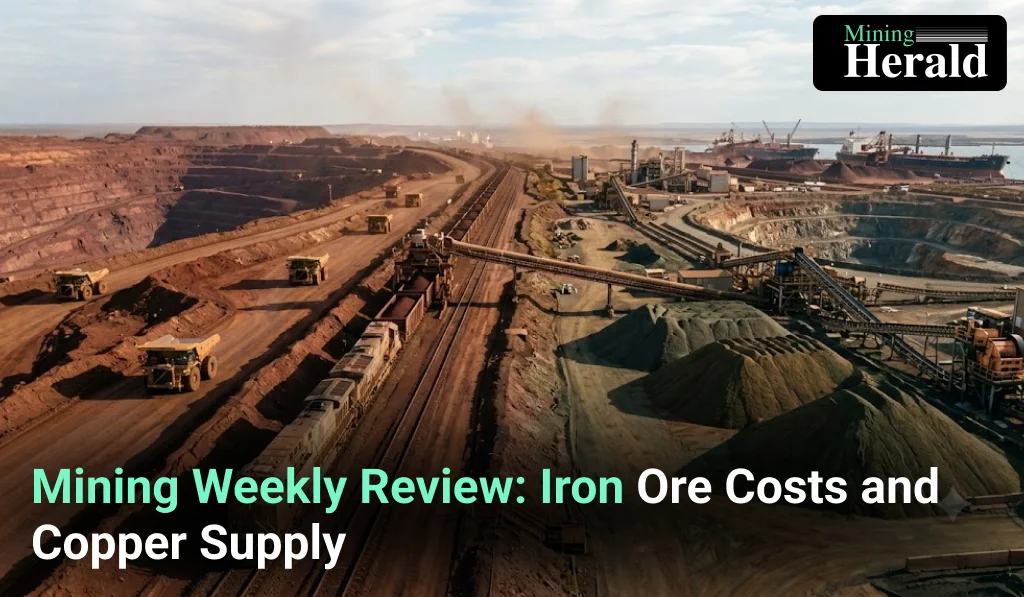
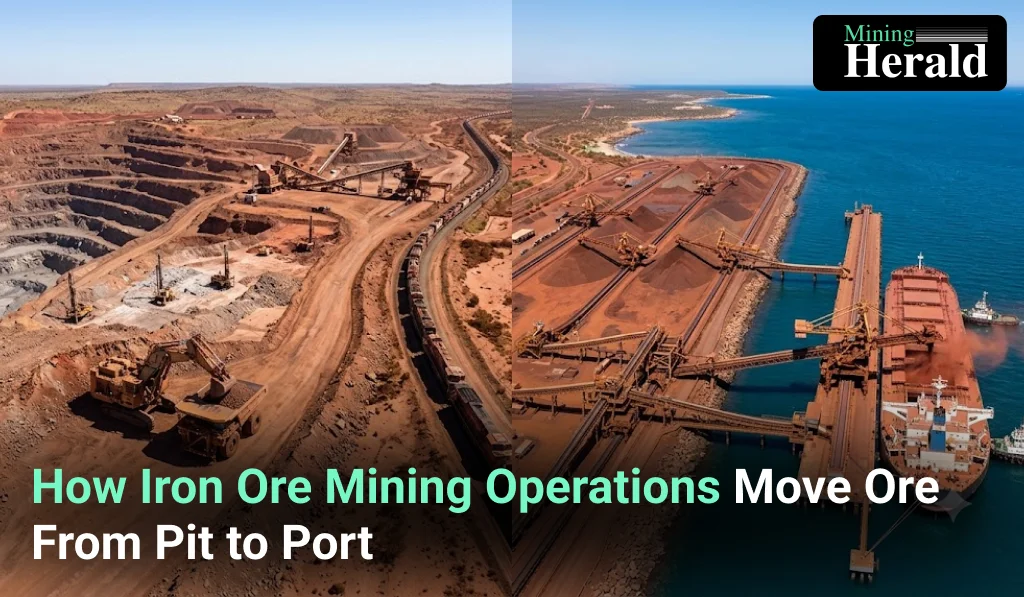
- 01 Iron ore delivery methods comprise of trucks, crushers, rail, car dumps, stockyards, and berths, which essentially create a unified delivery system based on the slowest transport method.
- 02 Reliance upon iron ore delivery in management has proven successful as documented in the latest reports from BHP and Fortescue, which confirm record output and higher production costs.
- 03 By 2026, the amount of iron ore exported through Pilbara Ports was recorded at 759.4 million tons, which ultimately emphasizes the importance of rail and port capacity in the Australian market.
The mining operation of iron ore begins with the drilling and blasting procedure. The blasting creates other raw materials, which are sent via truck to the primary crushing plant. Afterwards, the ore is screened to produce smaller and manageable pieces of ore. The next step is that the ore is sent to the stockyard where operators combine ore from various mines according to the specifications set by customers. The blending of ore depends on the specifications of the iron ore being produced.
Automation is now routine at the pit end. Rio Tinto runs autonomous trucks, trains, plants and drills across its Pilbara mines, rail and ports from a Perth operations centre 1,500 kilometres away. Fortescue’s metals and operations chief executive said autonomy changed how the company operated and helped drive its costs down.
Iron ore transportation by rail sets the cycle time
The mining enterprise Rio Tinto employs its Pilbara railway system to move mineral from 18 sites to 4 terminals along a nearly 2,000-kilometer railway line and treats the whole network as a single port. The firm initiated the AutoHaul project in 2018, presenting it as the world’s first fully automated railway for heavy freight and averring that it is able to deliver over a million ton of material on a daily basis.
The rail cycle, the car dumper at the port end, and the track between them cap how much ore a company can ship, regardless of how many trucks it runs at the pit. BHP’s FY26 filing shows where it is spending. It has started building a new car dumper, CD6, at Port Hedland and continues its Rail Technology Programme to lift rail capacity. BHP also plans major car dumper renewals from FY29. Each renewal takes a dumper out of service, and BHP says CD6 offsets that production hit. Building it now, ahead of the renewals, is a reasonable reading of the timing.
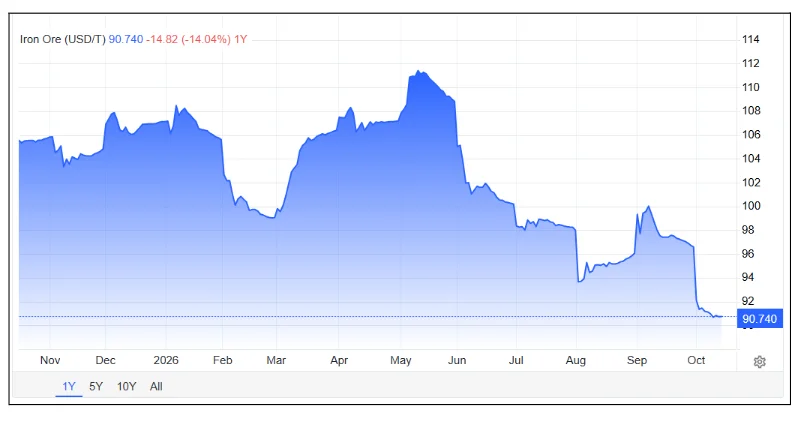
Fig 1: Iron ore price chart [tradingeconomics]
Shipping out of the Pilbara: berths, tides and draft
In FY26, the Pilbara Ports network recorded an increase of 4% of iron ore shipments, reaching 759.4 million tons. In total, the port network received 9499 vessel dockings during this period. Port Hedland handled 580.4 million tons of cargo while Dampier delivered 178.3 million tons. In order to increase loading times at its terminals, Port Hedland introduced some adjustments to the way it handles ships at low water, thus allowing for more shipping windows for bigger vessels, and implemented changes to its system for measuring the distance of ships from the seabed. A rule change on departure timing moves volume without any new steel in the ground.
The port is more than a gate. BHP says CD6 will also improve ore blending and screening at Port Hedland.
Reading ASX Large-cap Iron Ore costs after FY26
BHP attributes its record production and shipments, on a 100 per cent basis, to supply chain performance across mine, rail and port. Record volume has not lowered unit costs. BHP’s Western Australia Iron Ore unit cost rose 6 per cent to US$19.66 a tonne on 257 million tonnes of production, and BHP says its FY27 unit cost guidance moves with the diesel benchmark. Fortescue delivered the highest volume ever of shipments 201.3 million tonnes and saw its hematite C1 cost increase by 4 per cent to US$18.74 a wet metric tonne. It is expecting FY27 C1 costs for Fortescue to fall within US$20.50 to US$21.75 through an exchange rate of US$0.70 for each Australian dollar.
When making comparisons, one should consider the facts. BHP and Fortescue present their own share volume as 257 million tonnes and refer to the achievements at 100 per cent, while Fortescue’s report covers only its 100 per cent achievement as well. The two also report costs differently, and BHP publishes a separate C1 figure of US$16.40 a tonne. Compare each company against its own history. Both guide on an assumed exchange rate, so currency moves the reported cost as well.
Diesel exposure explains the push to electrify haulage. BHP began trials of two Wabtec battery-electric locomotives at Port Hedland and took delivery of two Progress Rail battery-electric locomotives for testing in FY27. Both suppliers are US companies. Fortescue is finalising tests of its Zero power systems ahead of Liebherr T 264 trucks joining operations later this year. Neither company states a payback, so treat the cost benefit as unproven.
FAQs
- Does record volume lower unit costs?
Not in FY26: BHP’s unit cost rose 6 percent and Fortescue’s C1 rose 4 per cent.
- Which link limits iron ore transportation?
BHP’s spending on CD6 and rail points to car dumpers and track, though no filing ranks the links.
- Do autonomous trucks and trains cut cost?
Fortescue says autonomy helped lower its costs, but its FY26 release gives no per-tonne saving.
- Have battery locomotives cut diesel exposure yet?
Not yet: BHP is trialling two Wabtec units and testing two Progress Rail units in FY27, with no payback disclosed.
- What should investors check each quarter?
Compare shipments with production, cost guidance with diesel and exchange rate assumptions, and capital spent on rail and ports.
Disclaimer
This article is meant only for informational purposes. If you are an investor who is watching mineral resources closely, all the data published in the content is sourced from announcements and external sources. Kindly verify all information related to the share price and market data. Any investment should be made at the investor’s own risk.
Sources
Rio Tinto, Pilbara operations (undated live page, retrieved 15 October 2026): https://www.riotinto.com/operations/australia/pilbara
BHP Group Ltd, Form 6-K, financial results for the year ended 30 June 2026 (SEC filing): https://www.sec.gov/Archives/edgar/data/0000811809/000119312526355840/d54971d6k.htm
Fortescue, FY26 Full Year Results, ASX announcement, 20 August 2026: https://announcements.asx.com.au/asxpdf/20260820/pdf/072z3hfv6y7gkr.pdf
Pilbara Ports, FY2025-26 trade results (released 28 July 2026), as reported by Port Technology International: https://www.porttechnology.org/news/global-trade/pilbara-ports-surpasses-800-million-tonnes-for-the-first-time/
Pilbara Ports, February 2026 throughput report, as relayed by Master Mariners of Australia: https://mastermariners.org.au/news-australia-nz/6699-pilbara-ports-logs-third-straight-record-month-as-port-hedland-throughput-hits-40-6mt
Filed under

About the author
Jonathon Brown
Jonathon Brown began his career as a broadcaster, working across markets in British Columbia before moving into financial journalism. Since 2017, he has specialised in stock market reporting, covering emerging companies across the healthcare, technology, mining and consumer sectors. He brings more than 15 years' experience to his reporting. A graduate of Vancouver Island University and the British Columbia Institute of Technology, Jonathon is focused on delivering clear, balanced reporting for investors.