

Key Takeaways
- 01 Capital discipline is reshaping commodity supply curves into 2026.
- 02 AI infrastructure capex is becoming a primary macro variable.
- 03 Central bank policy across AU, CA and US is converging on neutral.
The BlueScope Steel FY2027 outlook brings together two developments that matter to shareholders on different timetables. The US mills are earning more from current trading.
In Western Sydney and New Zealand, much of the construction spending is behind the company, but the equipment has only recently started running. The first explains the stronger December-half forecast. The second will help determine what BlueScope earns after it.
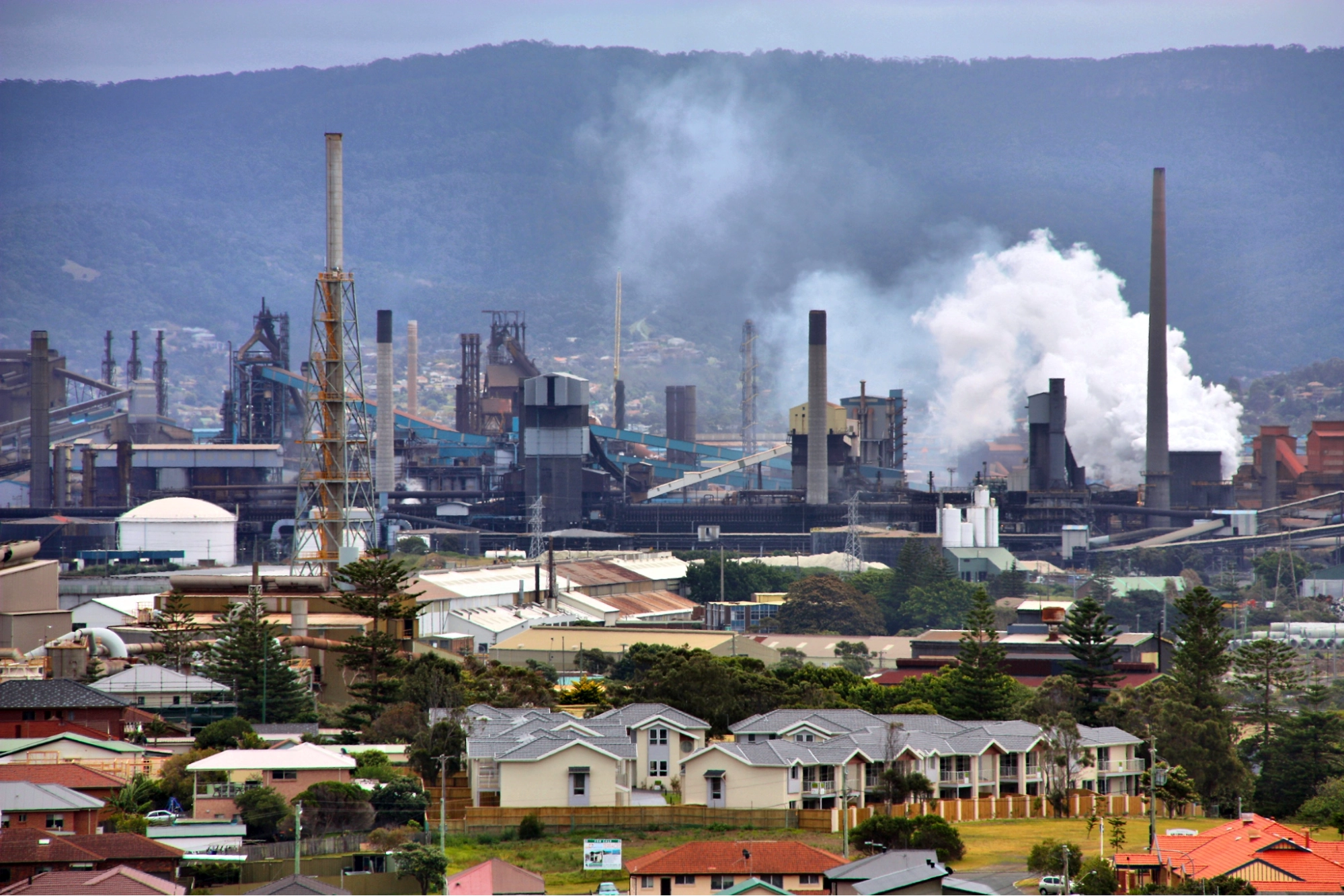
Figure 1: BlueScope’s Port Kembla steelworks in New South Wales, photographed in February 2009. Credit: Marek Ślusarczyk
Stronger US Steel Margins Led the Earnings Upgrade
In August, BlueScope expected first-half underlying EBIT of AUD 860 million to AUD 960 million. On 26 October, it lifted that expectation to a figure approaching AUD 1.1 billion. November’s AGM left the October guidance in place.
North Star benefited from stronger US steel spreads. For a mill, the price of finished steel tells only half the story. What matters is the gap between the price it receives and the cost of the raw material it buys. A wider gap leaves more money per tonne to cover labour, energy and other operating costs. BlueScope said North Star also performed better operationally, so the improvement did not depend on prices alone.
Work to remove production bottlenecks at North Star could allow the mill to make more steel using its existing facilities. That offers a second source of earnings, but it carries a different risk: extra capacity is most valuable when customers want the additional tonnes and the margin on them holds.
Australian Sales and Southeast Asian Operations Broaden the Gains
The BlueScope Steel earnings forecast does not assume that steel markets everywhere are recovering together. Cheap Chinese exports continued to put pressure on Australian Steel Products.
What improved locally was the volume BlueScope sold, including more value-added products. Southeast Asia, meanwhile, entered FY2027 after a record FY2026 performance.
| Operation | What BlueScope reported | What it means for earnings |
| North America | Stronger US steel spreads and better performance at North Star; improvement in Buildings and Coated Products | The main driver of the higher first-half estimate |
| Australian Steel Products | Higher domestic and value-added sales volumes despite export competition from China | More local sales help offset pressure on steel prices |
| Southeast Asia | Record FY2026 performance, with a solid first-half contribution expected | The region continues to support group earnings, although BlueScope gave no separate profit forecast |
| New Zealand | Early signs of demand recovery; the electric arc furnace produced its first steel in August | The furnace gives the business more flexibility to adjust output as orders change |
Australian sales of COLORBOND and TRUECORE steel reached records in FY2026. That gives the new coating line in Western Sydney an established customer market. It does not, however, mean customers have already ordered everything the line can produce.
New Plants Must Turn Capacity Into Sales
Once fully operational, the Western Sydney line is expected to produce about 240,000 tonnes of coated steel a year. The important words are once fully operational. Getting the first strip through the line proves the equipment can run. The earnings test is how consistently it can produce steel to customers’ specifications and how quickly BlueScope can sell it.
The New Zealand investment serves a different purpose. Its electric arc furnace gives the business more scope to match production to demand while lowering emissions. If orders are uneven, that flexibility can matter as much as the ability to make more steel.
BlueScope is also exploring a longer-term route for Pilbara iron ore through the proposed NeoSmelt pilot plant. At the AGM, it was still working with governments on how to move the project into construction.
It is a separate prospect from the plants already operating. Mining Herald’s coverage of how supply costs shape the outlook for Australian iron ore producers explains the economics facing miners further up that supply chain.
Lower Costs Help Returns, but First-Half EBIT Is Only One Measure
BlueScope completed its initial AUD 200 million cost and productivity program and exceeded a further AUD 150 million target. Management said the revised cost base had been in place since July. That gives shareholders a full half-year over which to judge its effect, alongside the benefit of stronger US spreads.
Three figures will help explain how much of that improvement reaches shareholders:
- North Star’s margin and volumes: If US spreads narrow, look for whether the mill sells enough additional steel to offset the lower earnings per tonne.
- Saleable output from the new plants: Actual production and deliveries will say more about the return on construction spending than annual design capacity.
- Cash after capital spending: BlueScope says peak capital expenditure has passed. The next accounts should show how much operating cash remains after the investment bills are paid.
Archibald said BlueScope had delivered AUD 3 per share to shareholders over the preceding 12 months. That is a historical figure. The AGM did not promise another AUD 3 per share in FY2027 or provide a BlueScope Steel share price forecast.
For investors, the immediate question is how much of the stronger US trading result converts into cash. The longer-term one is whether Sydney and New Zealand can sustain better returns when US steel margins are less favourable.
Also Read: Fortescue’s September Quarter: Iron Ore Costs and Sales Explained
FAQs
Is AUD 1.1 Billion BlueScope’s Full-Year Profit Forecast?
No. BlueScope expects underlying EBIT to approach AUD 1.1 billion for the first half of FY2027. EBIT is measured before interest and tax. It is not net profit, and BlueScope did not give a second-half estimate in the CEO’s address.
Did BlueScope Raise Guidance Again at the November AGM?
No. The company raised its forecast on 26 October from the August range of AUD 860 million to AUD 960 million. The 16 November AGM confirmed that revised outlook.
Is the Western Sydney Coating Line Already Producing 240,000 Tonnes a Year?
BlueScope described 240,000 tonnes as the expected annual output at full operation. The milestone reported for August was the first coated strip, not a full year at that production rate.
Does a Stronger Steel Price Always Help BlueScope?
Not necessarily. If raw material costs rise as quickly as finished steel prices, the mill may earn little extra per tonne. At North Star, management specifically identified a wider spread and better operating performance as reasons for the stronger result.
Disclaimer: This article provides general information, not personal financial advice. Earnings guidance reflects BlueScope’s expectations as at 16 November 2026.
Filed under

About the author
Jonathon Brown
Jonathon Brown began his career as a broadcaster, working across markets in British Columbia before moving into financial journalism. Since 2017, he has specialised in stock market reporting, covering emerging companies across the healthcare, technology, mining and consumer sectors. He brings more than 15 years' experience to his reporting. A graduate of Vancouver Island University and the British Columbia Institute of Technology, Jonathon is focused on delivering clear, balanced reporting for investors.