

Key Takeaways
- 01 Head grade measures the gold going into the mill. Recovery measures how much of that gold the plant gets out.
- 02 Fewer ounces sold can push AISC higher even when total spending barely changes.
- 03 A mine can sell gold well above its AISC while its owner reports little net profit. Interest, taxes and the cost of building the next mine still matter.
A tonne of rich ore can earn a mine less than a tonne of lower-grade ore if too much gold stays behind in the mill. Even a strong recovery rate tells only part of the story: the mine still has wages, fuel and equipment to pay for. In this article, we explain how grade, recovery and sustaining costs shape profitability.
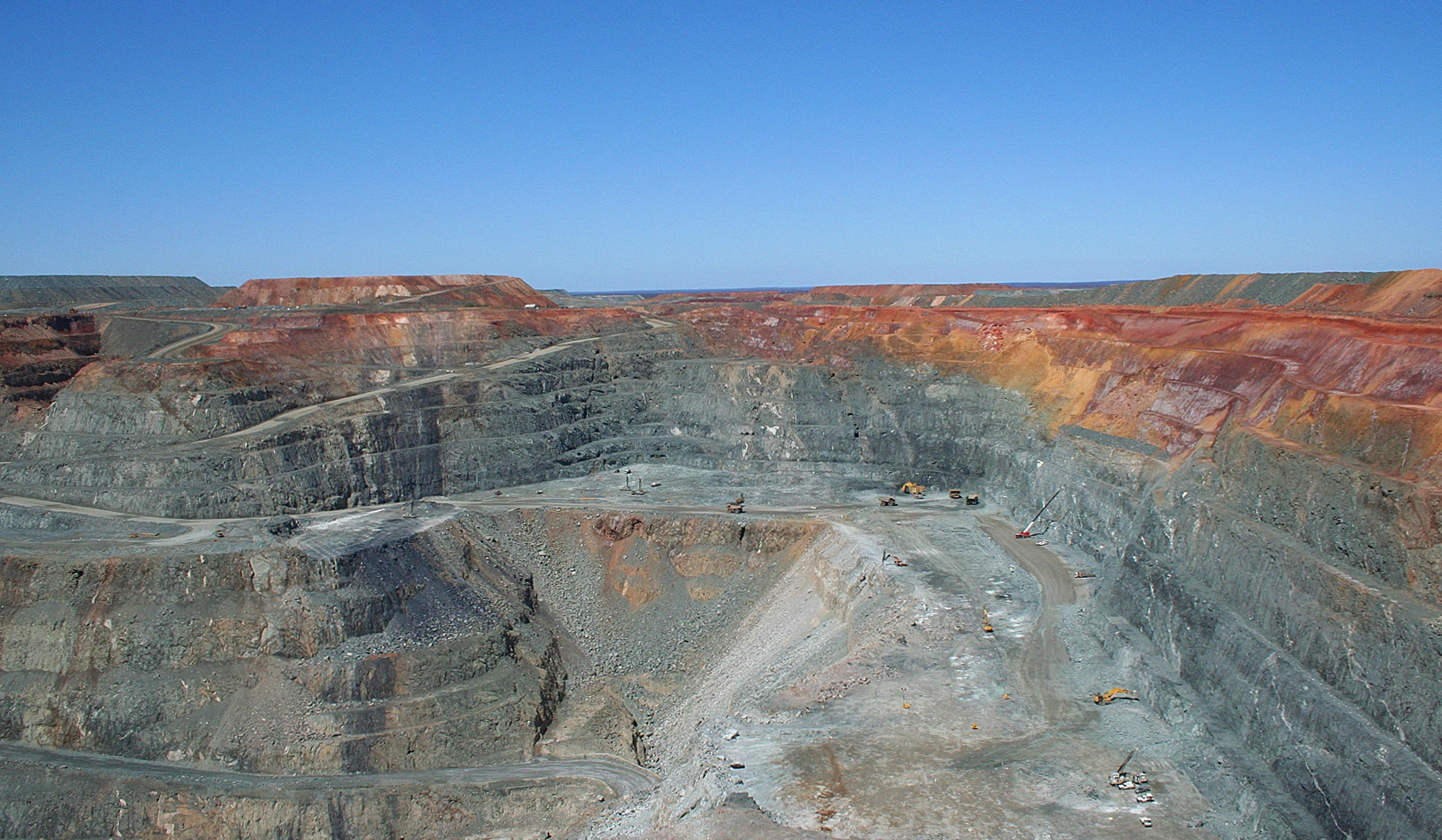
Figure 1: The Super Pit at Kalgoorlie, Western Australia, photographed in 2006. The benches and haul roads show some of the work needed to reach the ore before it enters the mill. Credit: Bäras, via Wikimedia Commons,
How Much Gold Actually Reaches the Mill?
A drill result tells readers what a sample contained. A quarterly production report answers a different question: what grade did the mine actually deliver to the plant? That second figure, the head grade, is the one to use when checking how many ounces the mill should have produced.
Consider a narrow underground vein. The ore itself may be rich, but the crew often has to take some surrounding rock to extract it. That extra rock occupies space in the truck and the mill. If it contains little gold, it brings down the average feed grade. A wide, lower-grade deposit can sometimes be cheaper to work because crews can move more ore with each shift.
Neither mine wins on grade alone. The useful comparison is what it costs to deliver a tonne to the mill and how many grams the plant can recover from it. Mining Herald’s look at why mines with similar ore grades can have different costs explores that distinction across deposit types.
When Can Richer Ore Produce Fewer Ounces?
Suppose a mine can send either of two parcels to the mill. One grades 2.0 grams per tonne and gives up 90% of its gold. The other is 10% richer, but the plant recovers only 80%. Which parcel produces more?
| Measure | First parcel | Richer parcel |
| Ore milled | 1,000 tonnes | 1,000 tonnes |
| Head grade | 2.0 g/t | 2.2 g/t |
| Gold entering the mill | 2,000 grams | 2,200 grams |
| Recovery | 90% | 80% |
| Gold recovered | 1,800 grams | 1,760 grams |
| Recovered gold in troy ounces | 57.9 oz | 56.6 oz |
Illustrative figures, rounded. One troy ounce is approximately 31.1035 grams.
The first parcel wins by 40 grams. That is why gold ore grade and recovery belong together in a production report. It also explains why chasing the highest possible recovery is not always the most profitable choice. Finer grinding might release more gold, for example, but it uses more power. The extra gold has to pay for that extra work.
Why Can Costs per Ounce Rise Without a Bigger Bill?
At Gruyere in Western Australia, heavy rain damaged access roads in March 2024. Diesel and other supplies could not reach the operation as usual. Mining and processing stopped for part of March and April. The mine produced about 287,000 ounces that year, down from 322,000 ounces in 2023.
The disruption illustrates something a grade figure misses. When the mill stops, the mine loses production immediately. Some bills, including salaries and site upkeep, continue. A simple example shows what that does to gold mining costs per ounce: AUD 24 million in sustaining and operating costs spread across 10,000 ounces sold works out to AUD 2,400 an ounce. Sell only 8,000 ounces against the same bill and the figure becomes AUD 3,000.
For an investor reading a quarterly result, the first question after a cost increase is therefore quite specific: did the mine spend more, sell fewer ounces, or both?
What Does All-In Sustaining Cost Leave Out?
AISC counts more than the day-to-day expense of mining and milling. It also captures spending needed to keep the current operation producing, such as replacing worn equipment or developing underground access to the next scheduled mining area. It is usually expressed per ounce sold.
Take a producer receiving AUD 4,000 an ounce and reporting AISC of AUD 2,700. The difference is an AISC margin of AUD 1,300 per ounce sold. Before treating that as shareholder profit, check three things:
- The price received: Use the mine’s realised selling price for the same period and in the same currency as its costs. A spot price quoted today may bear little resemblance to what the miner received last quarter.
- The bills outside AISC: Corporate income tax and financing costs sit outside the measure. Construction of a separate mine can also consume cash even while the existing operation earns a healthy margin.
- The ounces sold: Production and sales can fall in different quarters. A shipment that slips past the reporting date changes the sales figure without necessarily indicating a problem underground.
What Makes a Gold Mine Profitable Over Time?
For a producing mine, start with the ounces it sells, the price it receives and the cost of keeping those sales going. For a proposed mine, there is another hurdle: can the operation earn back the money spent building it before the economic ore runs out?
The distinction matters when comparing two producers. A mine with a strong margin and only two years of reserves faces a different spending decision from one with a decade of planned production. The first may soon need a discovery or an extension simply to keep the mill fed. Its last quarter can look excellent without answering what comes next.
ALSO READ: How Bellevue Gold Is Building a More Consistent Underground Gold Production Model
FAQs
Is There a Minimum Gold Grade That Makes a Mine Profitable?
There is no universal figure. A low-grade deposit near the surface may be economic to mine in bulk. A deeper deposit may need a higher grade to cover underground access, haulage and ventilation.
Does 90% Recovery Mean the Mine Extracts 90% of the Deposit?
No. Plant recovery is the percentage of gold recovered from the ore fed to the processing plant. It does not measure how much of the entire deposit the company can mine.
Is AISC the Break-Even Gold Price?
It is a useful benchmark for the existing operation, but it does not establish the gold price needed to cover every company expense or repay the original construction investment.
Why Can a Mine Produce More Gold but Earn Less Profit?
A mine may produce more ounces by processing lower-grade ore for longer hours. If the extra gold sells for less than the additional cost of hauling, grinding and treating that ore, production rises but profit falls.
Disclaimer: This article is for general information. The worked examples are illustrative and do not represent results or forecasts for Gruyere or the Super Pit.
Filed under

About the author
Jonathon Brown
Jonathon Brown began his career as a broadcaster, working across markets in British Columbia before moving into financial journalism. Since 2017, he has specialised in stock market reporting, covering emerging companies across the healthcare, technology, mining and consumer sectors. He brings more than 15 years' experience to his reporting. A graduate of Vancouver Island University and the British Columbia Institute of Technology, Jonathon is focused on delivering clear, balanced reporting for investors.