



Key Takeaways
- 01 Capital discipline is reshaping commodity supply curves into 2026.
- 02 AI infrastructure capex is becoming a primary macro variable.
- 03 Central bank policy across AU, CA and US is converging on neutral.
Global Power Shift Coal Energy Markets 2026 remains a crucial subject for analysts. Many critics dismiss coal as a fuel of the past. Yet, global consumption doubled over the last three decades. You cannot ignore the resilience of this traditional fuel.
Coal Continues to Lead Global Power Markets through persistent demand in emerging economies. The world witnessed a significant demand decline during the 2020 pandemic lockdowns. However, a strong rebound followed those historic lows. High gas prices after Russia invaded Ukraine drove this recovery.
Producers achieved record global coal production and consumption recently. Coal-fired power generation also hit new all-time highs. Coal power dominance worldwide 2026 shows no immediate signs of vanishing. We must analyse the competing factors shaping this trajectory.
Renewable power capacity experienced formidable expansion during this same period. Solar and wind technologies now threaten the century-long supremacy of coal. Accelerating global electricity demand complicates this transition. This surging demand could give coal another significant boost.
Developed economies continue to electrify their systems rapidly. We must question how quickly their coal use will decline. Analysts closely watch China to see when its consumption will peak. China currently operates as the largest producer and consumer worldwide.
Global coal demand grew by 1% in 2024 to an all-time high. The world consumed 8.77 billion tonnes during that year. The power sector drove this growth. Coal-fired electricity generation reached an unprecedented 10,700 terawatt-hours.
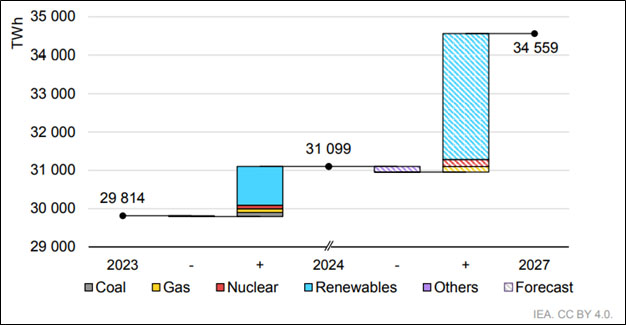
Fig 1: Change in global electricity generation by source, 2023-2027 [iea]
Asia Drives Unprecedented Consumption
China continues to dominate global coal market trends. The nation consumes 30% more coal than the rest of the world combined. A third of all coal burned globally fuels Chinese power plants. Chinese electricity demand grows faster than its gross domestic product.
China expands its renewable capacity at a huge scale. They constantly build new solar, wind, and nuclear plants. However, new industries like artificial intelligence data centres require enormous power. The electrification of mobility also pushes Chinese power demand higher.
Weather patterns create significant short-term demand fluctuations in China. Droughts reduce hydropower output and force reliance on coal. Plentiful rain boosts hydropower and reduces fossil fuel needs. These weather variations increasingly define short-term global trends.
China develops its coal conversion sector alongside power generation. Engineers use coal to produce liquid fuels and synthetic gas. These complex processes require giant amounts of water and energy. China views coal conversion as vital for national energy security.
Southeast Asia shows incredibly robust demand growth. Indonesia accounts for nearly half of regional consumption. Indonesia strategically boosts its domestic nickel production capacity. This nickel processing relies heavily on coal for essential energy.
Mature economies in the Asia Pacific slowly reduce their consumption. Japan plans to phase out inefficient coal power plants soon. Korea increases its nuclear power capacity to displace coal generation. Chinese Taipei aims to boost renewables and phase out nuclear energy.
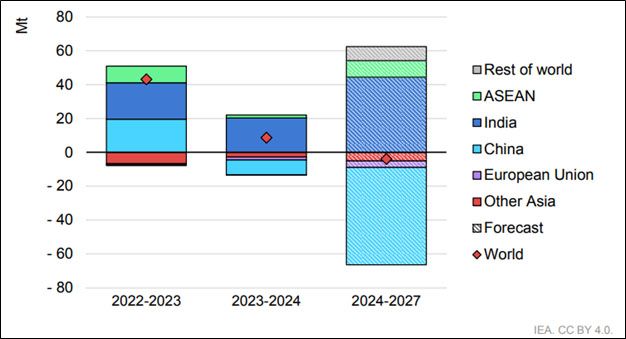
Fig 2: Change in thermal coal and lignite consumption for non-power purposes by region, 2022-2027 [iea]
Developed Nations Accelerate Reductions
Advanced economies tell a completely different story. Coal demand in the European Union and the United States falls steadily. These regions replace coal with cleaner alternatives.
The United Kingdom closed its final coal power plant in 2024. This closure marked a profound symbolic moment for the country. Coal originally powered the British industrial revolution centuries ago. Now, the nation relies entirely on alternative power sources.
Europe previously banned Russian coal imports following the Ukraine invasion. This ban reshuffled global trade flows dramatically. Russian producers shifted their export focus toward eastern markets. European consumers shifted their procurement to other global suppliers.
United States coal consumption declines at a slower pace now. Power plant operators plan significant retirements of aging coal capacity. Domestic gas prices heavily influence the competitiveness of American coal. United States producers export their surplus coal to international buyers.
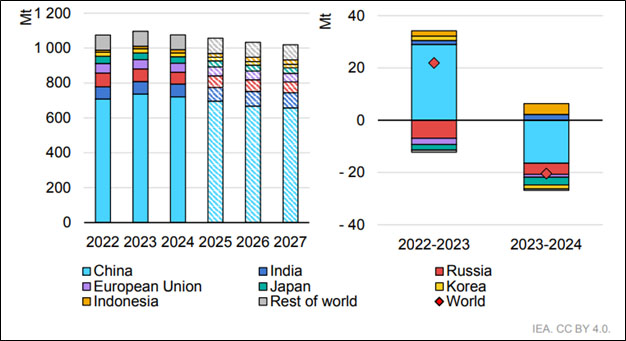
Fig 3: Met coal consumption and annual change by region, 2022-2027 [iea]
Global Production and Trade Dynamics
Global coal production surpassed 9 billion tonnes recently. China, and Indonesia all reached new production records. China produces approximately half of the global total. The Chinese government maintains abundant domestic stockpiles to ensure security.
International trade volumes hit extraordinary new highs. Total seaborne thermal and metallurgical coal broke all previous records. China imported over 500 million tonnes despite holding domestic stocks. Viet Nam recently became the fifth-largest coal importer globally.
Australia maintains its position as a major coal exporter. The country aims to become the fourth-largest producer overall. Australian thermal coal still commands premium prices in international markets. Asian markets eagerly purchase Australian high-quality exports to power industry.
International coal trade relies entirely on immense dry bulk vessels. Ship owners classify these vessels by deadweight tonnage capacity. Freight rates fluctuate rapidly based on route availability and fuel costs. Coal represents roughly a quarter of all dry bulk trade internationally.
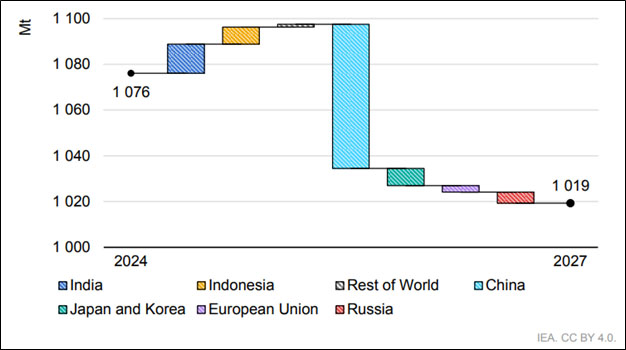
Fig 4: Forecast change in met coal consumption by region, 2024-2027 [iea]
Market Profitability and Shifting Ownership
Coal exporters continue to generate solid profits. International prices remain roughly 50% higher than pre-crisis levels. Russian producers represent the main exception to this profitable trend. International sanctions and rail bottlenecks crush their profit margins completely.
Russian companies sell their coal at steep discounts. Increased rail tariffs and export duties further damage their finances. Some Russian firms now operate at a severe financial loss. Other global producers capture the lucrative market share they abandoned.
Ownership of export-oriented mining capacity shifts rapidly. Some companies sell coal assets to improve their environmental credentials. They want to focus entirely on other clean mineral commodities. Other firms double down and purchase these available coal assets.
Glencore recently acquired Elk Valley Resources in a major deal. Glencore already operates as the largest thermal coal exporter globally. This acquisition made them a major metallurgical coal exporter too. Companies with strong cash reserves confidently expand their fossil portfolios.
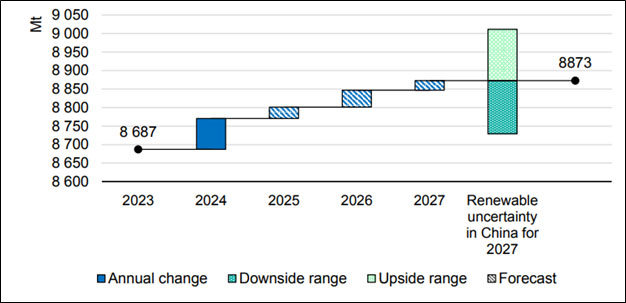
Fig 5: Forecast change in global coal consumption, 2024-2027, and uncertainty range due to Chinese renewable generation [iea]
The Complex Future of Global Coal
Analysts predict coal demand will plateau over the coming years. Carbon capture technology deployment moves far too slowly worldwide. Global carbon dioxide emissions from coal will not decline immediately. Current policy settings indicate a stable near-term emissions trajectory globally.
Emerging economies perfectly offset the demand declines from advanced nations. Indonesia and Viet Nam require more energy for rapid economic growth. They utilise a variety of sources to meet these urgent needs. Coal remains a cheap and highly reliable option for them.
The metallurgical coal sector faces distinct market pressures today. Steelmakers require metallurgical coal for critical blast furnace operations. The ongoing Chinese real estate crisis depresses demand for steel. Consequently, metallurgical coal consumption faces downward pressure globally right now.
Global Power Shift Coal Energy Markets 2026 reveals deep structural contradictions. Advanced nations abandon coal to meet strict domestic climate targets. Developing nations embrace coal to lift their citizens from poverty. These opposing forces keep the global market hovering near historic highs.
Coal power dominance worldwide 2026 highlights the immense scale of the challenge. We cannot replace billions of tonnes of consumption overnight safely. The transition requires unprecedented investment in grid infrastructure and alternative technologies. Until then, coal will firmly hold its vital ground worldwide.
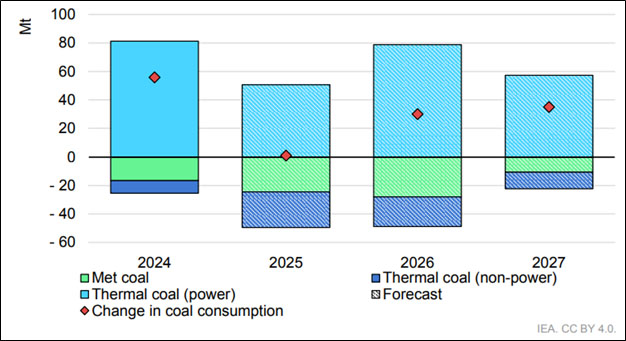
Fig 6: Annual change in coal consumption by grade and use in China, 2024-2027 [iea]
FAQ
Q: Which coal asset class offers stronger downside protection for long-term capital?
A: Metallurgical coal offers safer runways because green steel alternatives like commercial hydrogen remain years away from economic parity.
Q: Why do pure-play operators continue to buy assets while diversified majors divest?
A: Specialist producers snap up cash-generative mines at steep discounts from ESG-constrained sellers to milk outsized yields.
Q: How do emerging Asian economies protect exporter margins against Western retirements?
A: Grid expansion and industrial buildouts across Southeast Asia absorb far more seaborne tonnage than Europe and North America retire.
Also read: Canadian Gold Exploration Heats Up: GoldinX Chases Large-Scale Discovery Upside in Central BC
Disclaimer
This article is meant only for informational purposes. If you are an investor who is watching Mineral Resources Limited closely, all the data published in the content is sourced from ASX announcements and external sources. Kindly verify all information related to the share price and market data. Any investment should be made at the investor’s own risk.
———————————————————–
Source:
https://iea.blob.core.windows.net/assets/a1ee7b75-d555-49b6-b580-17d64ccc8365/Coal2024.pdf
Filed under

About the author
Jonathon Brown
Jonathon Brown began his career as a broadcaster, working across markets in British Columbia before moving into financial journalism. Since 2017, he has specialised in stock market reporting, covering emerging companies across the healthcare, technology, mining and consumer sectors. He brings more than 15 years' experience to his reporting. A graduate of Vancouver Island University and the British Columbia Institute of Technology, Jonathon is focused on delivering clear, balanced reporting for investors.