



Key Takeaways
- 01 Bellevue produced 35,600 ounces in the September quarter. Mined grades were in line with plan, but crews mined fewer tonnes during the underground contractor changeover.
- 02 Five established mining areas give Bellevue more choice over where its next tonnes come from. Deacon North began delivering high-grade ore on schedule.
- 03 Bellevue retained FY27 guidance of 150,000 to 170,000 ounces. Reaching the bottom of that range requires about 38,100 ounces per quarter, on average, over the remaining nine months.
Bellevue Gold mine features five ore-gathering sites. That provides the underground crew choices if a mining section lags. The tougher issue is making those alternatives viable on any shift: people and equipment must be accessible, the next ore block must be ready, and the mill must receive the required quality of material.
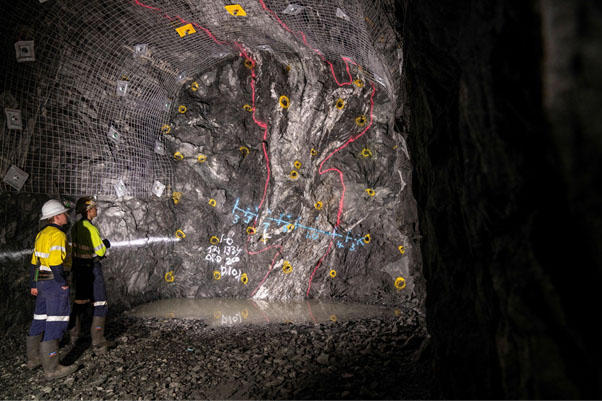
Figure 1: Two workers examine a marked underground rock face. Cover photograph from Bellevue Gold’s November 2026 UBS Mining Conference presentation. Credit: Bellevue Gold Limited.
Five Mining Areas Give Crews an Alternative When One Falls Behind
An underground production schedule is vulnerable when the mill depends heavily on one working area. A delay preparing the next block can leave the plant short of ore even though the gold is there and its grade has not changed.
Bellevue has established five mining areas, with mine designs extending to around 2035. The immediate benefit is flexibility. If work in one area takes longer than expected, planners have other places from which to schedule ore. That matters more to quarterly delivery than the end date on the mine plan.
There is also a practical limit: an established area does not necessarily have ore ready to extract that day. The value of having five areas will show up when a delay in one can be absorbed elsewhere without a noticeable drop in tonnes mined.
Deacon North Adds a Second Source of Higher-Grade Ore
Deacon Main was already established when Deacon North began delivering ore on schedule. Bellevue expects extraction from stopes at Deacon North to build through FY27. A stope is the underground space from which a block of ore is mined.
The useful distinction for Bellevue Gold production is between first ore and regular ore. The first delivery confirms that crews have reached the new area. A succession of stopes delivering close to their planned tonnes and grade would make Deacon North a dependable source of feed alongside Deacon Main.
September provides a useful comparison. Mined grades remained in line with plan, yet the quarter yielded 35,600 ounces because less material was mined during the transition. Deacon North can help sustain the quality of the ore supply. Bellevue still needs enough tonnes from across the mine to meet its annual target.
More Barminco Crews and Equipment Are Intended to Restore Mined Tonnes
Barminco mobilised on 1 August 2026, a month into the September quarter. By the November presentation, the transfer of workers and the build-up of equipment were still under way. Bellevue expected further gains in the December quarter as more workers transferred to the operation.
That timing gives shareholders a specific way to judge the changeover. A higher gold price could improve revenue, and a richer parcel of ore could lift gold output for a quarter. Neither would establish that the contractor had reached the planned mining rate. The more telling figure is underground tonnes mined, read alongside grade.
| FY27 measure | Reported result or company guidance |
| September-quarter production | 35,600 ounces |
| Full-year production guidance | 150,000–170,000 ounces |
| Ounces needed over the remaining nine months | 114,400–134,400 ounces |
| Average needed per remaining quarter | About 38,100–44,800 ounces |
| Full-year all-in sustaining cost guidance | AUD 2,800–3,100 per ounce |
Those quarterly averages are calculations, not December production targets. Bellevue expects more production in the second half of FY27. Even so, repeating September’s output for all four quarters would yield 142,400 ounces, below the guidance range. The plan requires a lift in delivery, not simply a repeat of the first quarter.
Paste Fill Is Designed to Help Crews Sequence the Next Stopes
Extracting a block of ore leaves an underground void. Paste fill places material back into that space. Once the fill reaches the required strength, it can support the sequence for mining adjacent ore. For production planners, the benefit is knowing when the next block can safely enter the schedule.
Bellevue has scheduled paste fill plant commissioning for the third quarter of FY27, the March 2027 quarter. The distinction matters: the plant was still a planned addition at the time of the November presentation. Commissioning will be a milestone; its operating value will become clearer once filling and mining can follow one another on schedule.
The spending comes earlier than much of the expected benefit. Bellevue has budgeted AUD 90 million to AUD 100 million in FY27 growth capital and expects to spend most of it in the first half.
Management expects higher gold output and lower capital spending in the second half. The growth budget is a separate figure from the per-ounce sustaining cost guidance in the table.
The Next Two Quarters Will Test Different Parts of the Plan
For readers following the Bellevue Gold share price, the presentation used a closing price of AUD 1.41 on 6 November 2026. That dated quote says little about whether the underground changes are working. The December and March operating updates have more specific questions to answer.
December should give a clearer view of how many tonnes the expanded Barminco workforce can mine and whether Deacon North is supplying ore more regularly. In March, attention shifts to whether the paste fill plant has reached its scheduled commissioning stage.
The strongest evidence of a more consistent operation would be several mining areas delivering their planned tonnes and grades together, rather than one exceptional quarter carrying the year.
ALSO READ: Why Two Gold Deposits With Similar Grades Can Have Different Mining Economics
FAQs
Did Lower Ore Grades Explain Bellevue’s September Output?
No. Bellevue said mined grades were in line with plan. It attributed the quarter’s production level to lower mined tonnes during the contractor transition.
Is Deacon North Already Producing Ore?
Yes. Deacon North began delivering ore on schedule. Bellevue expects mining from its stopes to increase through FY27.
Does Bellevue Need to Produce the Same Number of Ounces Each Quarter?
No. Its guidance covers the full financial year, and management expects higher production in the second half. The remaining quarterly average shows the scale of the task rather than a fixed quarterly requirement.
When Is the Paste Fill Plant Due to Be Commissioned?
Bellevue scheduled commissioning for the March 2027 quarter. The November presentation did not report the plant as operational.
Disclaimer: This article provides general information, not personal financial advice. Production guidance, expenditure estimates and commissioning dates are company expectations and may change.
Filed under

About the author
Jonathon Brown
Jonathon Brown began his career as a broadcaster, working across markets in British Columbia before moving into financial journalism. Since 2017, he has specialised in stock market reporting, covering emerging companies across the healthcare, technology, mining and consumer sectors. He brings more than 15 years' experience to his reporting. A graduate of Vancouver Island University and the British Columbia Institute of Technology, Jonathon is focused on delivering clear, balanced reporting for investors.