

Key Takeaways
- 01 Capital discipline is reshaping commodity supply curves into 2026.
- 02 AI infrastructure capex is becoming a primary macro variable.
- 03 Central bank policy across AU, CA and US is converging on neutral.
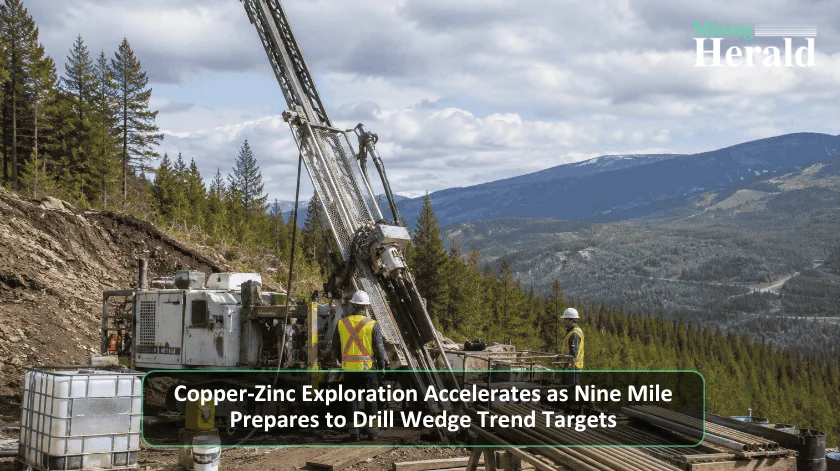
Nine Mile Metals’ copper-zinc exploration programme is moving into another target area within Canada’s Bathurst Mining Camp. The company announced on 1 October that its second rig was on site, with drilling at Tribag expected to begin in the coming days.
The work will test seven modelled electromagnetic conductor plates associated with the Tribag and West Wedge mineral occurrences.
Their location gives the exploration team a reason to investigate. Existing surface mineralisation and shallow historical drilling add further evidence. The coming holes will establish what is causing the deeper geophysical responses.
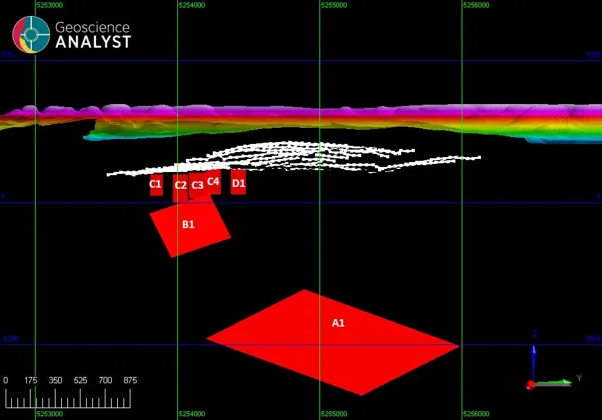
Figure 1: Plan view showing mineral occurrences, the survey grid and modelled conductor plates at Tribag–West Wedge. The plates represent exploration targets. Credit: Nine Mile Metals.
What Changes With the Arrival of a Second Rig?
Nine Mile can now work at Tribag without stopping its drilling at Wedge Mine. That gives the programme two areas of activity: testing the surrounding trend and investigating extensions to the known Wedge mineralisation.
The second rig’s arrival is the immediate operational change. It does not mark a new mineral discovery, and the seven targets themselves were identified before this mobilisation.
The company’s October mobilisation announcement confirms that drilling at Tribag was still expected to commence when the update was issued.
The work is divided between:
- Tribag–West Wedge: Testing modelled conductors associated with known mineral occurrences.
- Wedge Mine: Continuing the drilling programme around the historical deposit.
- Downhole surveys: Gathering information to help position further holes around the Wedge lenses.
Why Have the Tribag Conductors Attracted Attention?
The attraction comes from several pieces of evidence occurring together.
The conductor plates follow the same magnetic trend as Wedge. Mineralisation is already known at surface and in shallow historical holes at Tribag. Six of the seven plates sit at modelled depths of 300–450 metres, giving the team deeper targets to test.
VP Exploration Gary Lohman highlighted this combination of conductors, geological alignment and existing mineralisation when explaining the drilling rationale.
| Target information | Reported detail |
| Number of modelled plates | Seven |
| Plates at 300–450 metres | B1, C1, C2, C3, C4 and D1 |
| Deeper plate | A1 |
| Geological setting | Same magnetic trend as historical Wedge Mine |
| Supporting evidence | Surface mineralisation and shallow historical drilling |
A1 deserves separate treatment. Its size and depth suggest it could reflect a regional geological or structural feature. Its source remains undetermined.
Nine Mile’s original TDEM target announcement provides the background to the modelling. The current Wedge Trend drilling campaign moves that interpretation towards direct testing.
The first holes should help establish whether the models correspond with mineralised rock and whether subsequent drilling needs a different position or angle.
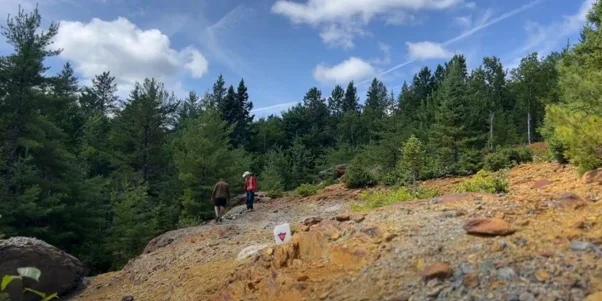
Figure 2: Exploration work at Nine Mile Metals’ Wedge Project in New Brunswick’s Bathurst Mining Camp. Image credit: Nine Mile Metals.
What Would Make the Next Results Significant?
At Tribag, the first task is to identify the source of the conductors. If drilling intersects mineralisation, assays will then establish its metal content across the sampled intervals.
At Wedge Mine, attention remains on how far the known lenses extend and whether further holes support continuity.
The next announcements should help answer three questions:
- Did drilling intersect the modelled target? Hole positions and geological observations will help assess the survey interpretation.
- What grades and lengths were returned? Assays will provide evidence beyond the existing surface sample.
- Where does the evidence point next? Results and downhole surveys should help explain the choice of follow-up targets.
Nine Mile is advancing four VMS projects in the Bathurst Mining Camp: Wedge, Nine Mile Brook, California Lake and Canoe Landing Lake. This update concerns work at Wedge and its associated trend.
The second rig broadens the company’s ability to investigate that ground. Its value will become clearer as drilling replaces modelled targets with geological observations and laboratory results.
For now, the confirmed progress is practical: another rig is on site, deeper targets are ready for testing, and work continues around the historical mine.
FAQs
- Where is Nine Mile’s Wedge Project?
It is in the Bathurst Mining Camp in New Brunswick, Canada. - How many targets will the Tribag–West Wedge work test?
The target area contains seven modelled electromagnetic conductor plates. - Does the surface sample represent the whole target area?
No. Grab samples are selective and may not represent surrounding mineralisation. - Why are borehole electromagnetic surveys being undertaken?
They will help guide drilling around the depth and lateral extensions of the Wedge lenses.
Also Read: Canada Critical Mineral Tax Credits: Expanded Support for Lithium and Copper Investment
Disclaimer
Prepared for Mining Herald for general information only. Geophysical targets and exploration results do not constitute economically viable deposits. Investors should consult company announcements, assay disclosures, and technical qualifications before making investment decisions.
Filed under

About the author
Jonathon Brown
Jonathon Brown began his career as a broadcaster, working across markets in British Columbia before moving into financial journalism. Since 2017, he has specialised in stock market reporting, covering emerging companies across the healthcare, technology, mining and consumer sectors. He brings more than 15 years' experience to his reporting. A graduate of Vancouver Island University and the British Columbia Institute of Technology, Jonathon is focused on delivering clear, balanced reporting for investors.