


Key Takeaways
- 01 Capital discipline is reshaping commodity supply curves into 2026.
- 02 AI infrastructure capex is becoming a primary macro variable.
- 03 Central bank policy across AU, CA and US is converging on neutral.
Biotechnology has been used in mining for a long time but its application has been limited to specific ores and processes. They believe there is potential in mining waste and other discarded materials. Their descriptions also show how far an encouraging trial and an operating plant are apart.
Why Go Back to Material That Has Already Been Written off as Waste?
They didn’t recover all the valuable metals from the material they mined earlier. Some of it remains in tailings, sometimes in amounts that are worth investigating with new methods.
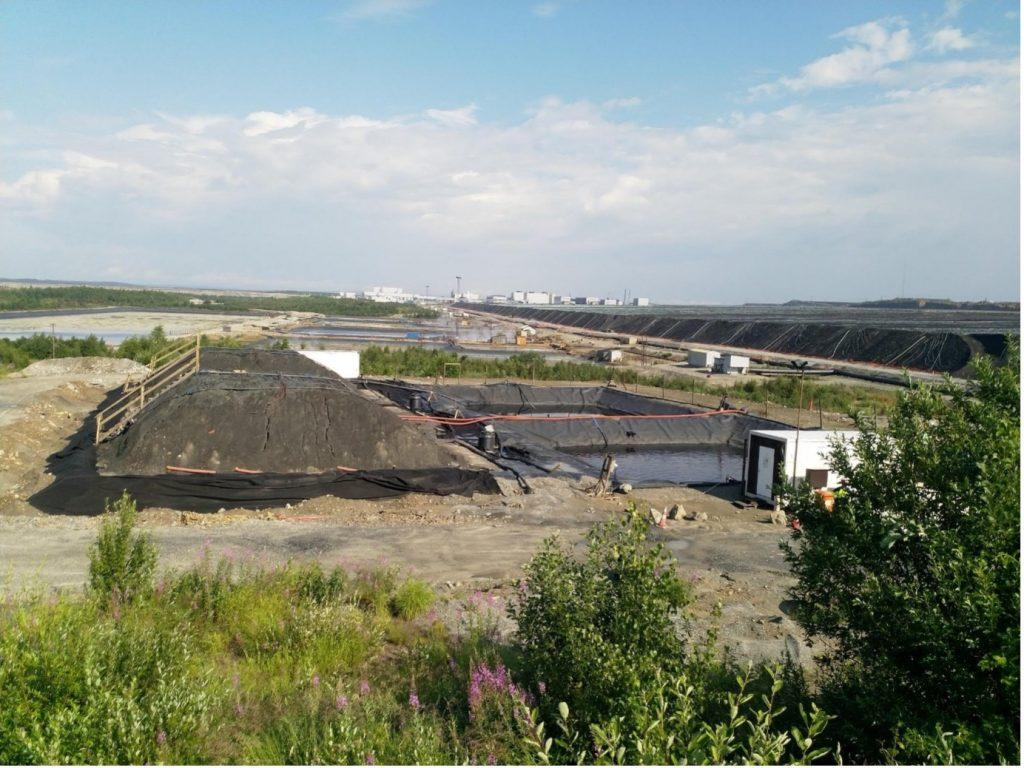
BacTech’s Chief Executive Officer Ross Orr discussed the company’s work with Vale’s historical nickel mining waste in Sudbury, Canada. The objective of the project is to recover nickel, copper and cobalt from sulfide tailings.
BacTech is also looking at how to get valuable products out of the residue that is left after metal recovery. Those development objectives, which are not the same as completed commercial production, are described in its Canadian project synopsis.
Darina Styriakova, Chief Executive Officer of ekolive gave another example. Some tailings in Slovakia have copper concentrations that are higher than what’s being mined elsewhere, she said.
What Needs to be Tested Before Tailings Can be Processed?
That makes the deposits interesting, but more work needs to be done:
- Sampling has to be representative of how the material varies across the site.
- Processing tests should measure recoverable metal, not just contained metal.
- Environmental assessments must consider hazardous materials and their treatment residues.
The attraction is easy to understand. These deposits have already been mined, but not all of their value has been exploited. Whether it is financially worth recovering it depends on the particular deposit and process.
Where Can Bioleaching Improve Resource Efficiency?
One area that is getting attention is selectivity. Joers discussed work on altering microorganisms to more effectively target specific metals.
A more selective process could help operators get what they want, and do less separation work later. That is key to the bioleaching resource efficiency, because dissolving metal is only part of the business of making something useful.
Another problem is energy consumption. Some legacy waste might be attractive for biological treatment because of the lower operating temperatures and lower energy requirements, Joers said.
These benefits need to be measured throughout the operation. Crushing, pumping, aeration and downstream treatment may require much work still.
What Possibilities Need Practical Examination?
| Possibility | Practical examination |
| Extracting metals from waste material | Can enough metal be recovered to pay the expenses? |
| Target specific metals | Is selectivity consistent across representative samples? |
| Lower processing power | Is the entire route more energy intensive? |
| Address historical waste. | Can the remainder of the material be safely discarded? |
The discussion provided does not offer a general recovery rate or cost savings. Its examples are of different materials and technologies, so the results from one project should not be assumed to be transferable elsewhere.
Why Do So Many Trials Stop Before Going into Production?
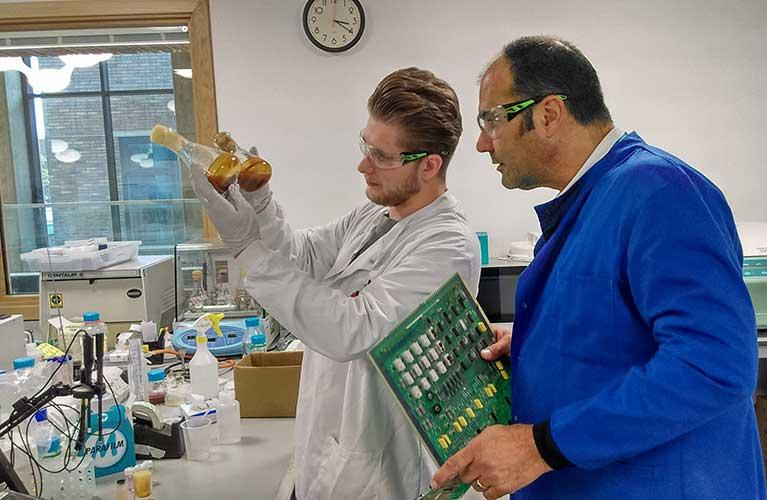
Ekolive has worked with hundreds of mining companies and done many trials and pilot projects, said Štyriaková. There was seldom a lack of interest from potential users. Commercializing the process on a large scale was more challenging.
A trial can show that extraction is possible. A plant has to generate acceptable recovery on a consistent basis while coping with feed changes and meeting production needs.
Or asked the question directly: “Can you really build it?”
BacTech’s approach is to combine proven biological treatment with existing downstream technologies. The company isn’t trying to replace all the stages, but rather to slot bioleaching into a viable processing sequence.
That’s the way operators look at mineral recovery technology. They have to know what goes into the plant, what comes out, how long treatment takes and what it costs.
The biological stage might be fine, but another part of the proposed operation is expensive or difficult. Commercial assessment must take both into account.
Which Milestones Could Strengthen the Commercial Case?
The following useful milestones are:
- Longer term trials with recovery and stability over time.
- Cost estimates for preparation, extraction, final recovery.
- Clear plans for process water, residues and the potentially hazardous elements
“There is growing awareness in industry and among policymakers about the potential to recover critical raw materials from historical waste,” Joers said. Such interest could warrant further investigation particularly where recovery might also enhance the management of old deposits.
What Happens Next?
Biotechnology in mining‘s next step will be determined on a project-by-project basis. More knowledge of microorganisms gives researchers more options. But miners need proof that a chosen process will work reliably with their ore.
A funded plant producing reliable results would be more compelling than another promising lab test.
Frequently Asked Questions
1. What do we mean by bioleaching?
It uses microorganisms to help release metals from suitable materials for subsequent recovery.
2. Is it still used in mining?
Yes. There are existing applications and research is extending its possible applications.
3. Are all tailings appropriate?
No. Suitability is a function of composition, recovery, costs and environmental requirements.
4. Does bioleaching remove other processing?
No. Preparation, metal separation and residue treatment are still generally required.
Also Read: Why Critical Minerals Are Key to the Global Energy Transition
Prepared for Mining Herald solely for informational purposes and not as investment advice. Technology performance and project economics are a function of feedstock and operating conditions; Research findings and proposed developments do not necessarily result in commercial results.
Filed under

About the author
Plamen Vasilev
Plamen Vasilev is a writer and language specialist with over 6 years of experience developing informative and engaging content across multiple industries. He combines strong research skills with a deep understanding of finance, mining, technology, and business topics to create well-crafted articles that connect with readers.