


Key Takeaways
- 01 This article explains how miners work out the all-in sustaining cost of gold mining.
- 02 It breaks the AISC formula into simple steps, with a worked example.
- 03 It shows why investors and mine managers rate AISC above cash cost.
This guide walks through the gold mining cost calculation step by step. It also explains why AISC has become the industry’s preferred yardstick.
What Is AISC?
AISC measures the total cost of producing one ounce of gold. It includes the spending a miner needs to keep operations running year after year.
The World Gold Council introduced the metric in 2013. The council wanted consistent cost reporting across the industry. It also wanted a fuller picture than cash costs alone could give.
How the Gold Mining Cost Calculation Works
The calculation starts with direct cash operating costs. These are the everyday gold mining operating costs of digging, hauling and processing ore.
Miners then add the costs that sustain current operations. A typical AISC includes:
- Mining and ore processing costs
- Site general and administrative (G&A) expenses
- Royalties and mining taxes
- Sustaining capital expenditure
- Exploration or evaluation work that maintains the resource
The miner adds these items together. It then divides the total by the ounces it mines or sells.
Understanding Sustaining Costs
Newcomers into the field are often astonished by the concept of sustaining capital. Sustaining costs are those expenditures that are required to sustain the current production rates, such as purchasing replacement vehicles, expanding tailings facilities, and exploring new mining sites.
Growth capital stays out of AISC. A new mill or a major expansion belongs in a separate bucket. That split keeps the metric focused on sustaining output.
Royalties and mining taxes also count. Royalties often rise with the gold price, so they can push AISC higher in a strong market.
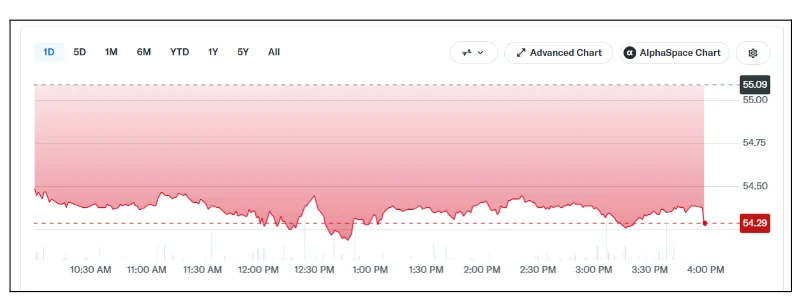
Fig 1: Gold price chart 1D [Yahoo.finance]
The AISC Formula in Plain Terms
The simple version looks like this:
| AISC = cash cost + sustaining capital + sustaining exploration or evaluation cost + attributable G&A, all per ounce. |
This is an example of how it works. A miner informs us that it produces at the cash cost of US$1,100 per ounce, adds US$250 for sustaining capital, US$50 for sustaining exploration, and US$100 for G&A, which gives us an all-in sustaining cost of US$1,500 per ounce.
Some other companies take a different approach. They turn to their financials and deduct all non-cash items from their costs (including depreciation and amortisation) before they add back to the cash they spend on sustaining their operations.
Why AISC Beats Cash Cost
Cash cost makes a mine look cheaper than it is. It leaves out sustaining capital and other recurring spending.
Two mines can show the same cash cost and carry very different burdens. AISC exposes that gap. It gives a fairer comparison between peers.
It also reveals true margin. Subtract AISC from the gold price and you see what each ounce earns after sustaining the mine.
Why Investors and Analysts Prefer AISC
Investors compare AISC with the gold price. A low AISC widens the spread between the two. That spread lifts cash flow and supports dividends.
A low-cost mine also rides out price falls with more confidence. A high-cost mine carries more financial risk when gold drops. AISC makes that risk easy to see.
AISC’s Role in Mining Companies
Companies are able to make both administrative decisions and external relations with shareholders by learning about AISC. For instance, they would look at AISC when considering significant investments for actions such as increasing output.
If the price of gold drops below sustainable levels, AISC provides signs for companies to consider to potentially close down unprofitable mines.
How Companies Use AISC
As AISC is not an IFRS statistic, mining firms are free to report slightly different figures. Therefore, savvy analysts carefully study how each mining company defines AISC before making comparisons between the companies.
Also, they take into account a number of other factors, including ore grades, mine life, and the gold price forecast to form a holistic understanding of the situation.
Final Takeaway
The all-in sustaining cost of gold mining covers the full cost of keeping a mine alive. It goes well beyond day-to-day gold mining operating costs.
That breadth makes AISC the most reliable way to compare peers and judge long-term mine economics. Investors and mine managers rely on it for that reason.
FAQ
Q1. What does a low AISC mean for investors?
A low AISC widens the margin against the gold price, which supports cash flow and dividends.
Q2. How can I estimate a miner’s margin per ounce?
Subtract the AISC from the current gold price to see what each ounce earns.
Q3. Does AISC include growth projects?
No, growth capital for new mills or expansions sits outside AISC.
Q4. Can I compare AISC figures across companies directly?
Check each company’s definition first, because AISC is a non-IFRS measure and miners apply it slightly differently.
Disclaimer
This article is meant only for informational purposes. If you are an investor who is watching mineral resources closely, all the data published in the content is sourced from announcements and external sources. Kindly verify all information related to the share price and market data. Any investment should be made at the investor’s own risk.
Filed under

About the author
Jonathon Brown
Jonathon Brown began his career as a broadcaster, working across markets in British Columbia before moving into financial journalism. Since 2017, he has specialised in stock market reporting, covering emerging companies across the healthcare, technology, mining and consumer sectors. He brings more than 15 years' experience to his reporting. A graduate of Vancouver Island University and the British Columbia Institute of Technology, Jonathon is focused on delivering clear, balanced reporting for investors.